Showing posts with label details. Show all posts

Thursday, October 14, 2021

Supporting Spaghetti

Oh, back again so soon? Well, I guess that’s as much on me as it is on you. But I did have another thought I wanted to bounce off you.

This is something I’ve seen several times in books and in bad B-movies, but it only recently struck me what was actually going on. How the storytellers were twisting things in a really unnatural way to solve a problem. So this may make you (and me) look back at some older posts I’ve done in a slightly different light..

But first, let’s talk about pasta.

I got into cooking during the pandemic. Started watching lots of cooking videos. Trying some things that were kind of new and daring for me. Maybe some of you did too. I’ve found all the prep and cooking kept my mind off other things but still working in creative ways. And now I can make really good stir-fried noodles.

Speaking of noodles, you’ve probably heard of the spaghetti test. When it’s cooked properly and ready to eat, you can throw a strand of spaghetti at the wall and the moisture and starches and, I don’t know, pasta epoxy will make it stick. If it isn’t done cooking yet, it just falls off or does a slow downward tumble like one of those Wacky Wall Walkers.

There’s another phrase you may have heard which grew out of this spaghetti test. “Let’s throw it at the wall and see what sticks.” It shows up a lot in the development stages of all sorts of things. We’ve got thirty ideas and we don’t know which one’s going to work? Well, let’s just do all of them. We throw all the spaghetti at the wall—the whole pot—and everything that sticks is good and ready to go and whatever doesn’t... isn’t. Sound familiar?

I think most of us have tried this sort of blunt, brute force approach on something. I know I’ve rewritten conversations severaltimes to see if it works better with Yakko taking the lead, or Dot, or Wakko, or Phoebe, or... who’s that guy? Let’s see what happens if he takes the lead in this. Same thing with names. Holy crap, Murdoch in Terminus went through sooooo many different names. Sometimes for whole drafts, sometimes just for a page or three. But then I found Murdoch and it was perfect.

Thing is, there’s a weird sort of flipside to this. Or maybe an inverse? Freaky mutant bastard offspring? Anyway, I talked a while back about shotgun art, and I think this is what’s going on here.

Sometimes, in books and movies, we’ll see storytellers who just pile on the characters. One after another after another, many of them with only the thinnest connection to the main plot. It’s the cousin of the best friend of a supporting character in one plot thread. Or, y’know, even less than that. I read one story where we spent two whole chapters with a character who’s only purpose was to bump into one of the main characters in a third chapter. That was it. She served no other purpose in the story except to be that two page delay in his day And, y’know, fill out the page count a bit.

What struck me a few weeks back is when storytellers are doing this—layering on dozens of simple, almost stereotypical characters and conflicts—is they’re taking the spaghetti approach and just throwing everything at the wall. Rather than developing any of these characters or elements to any degree, they’re just giving us lots and lots of quick, shallow ones. I mean why spend time making a complex character when I could just create five characters with only one character trait each? It’s so much less effort, right? I mean, ex-wife, former best friend, alcoholic rival, pregnant woman, aggressive military guy—there’s got to be something there that strikes a chord with my reader, right?

That example I gave up above? The woman who served no purpose except to bump into one of the protagonists? She was late for work. That was it. That was her entire character. I mean, she had a name. She had some dialogue. She had a pet in a tank in her apartment (some kind of lizard, I think). But that was it. The only other thing we knew about her—her alarm didn’t go off, she overslept by almost two hours, and she was late for work. We never learned why her alarm didn’t go off (power outage? forgot to set it? sabotaging pet lizard?). We never learned why she was so tired she overslept by two hours (drastically overworked? got blackout drunk? a wild hookup that left her exhausted?).

Heck, weird as it sounds, we never even found out why being late was a bad thing (on the verge of being fired? abusive boss? big presentation?). We just knew she was late, had to get showered and dressed fast, had to get to work, and that was supposed to be enough for us. Anything else would require more thought about who she was, what she wanted out of life, and what she was actually getting.

And this book had over a dozen characters like her. Seriously. It spent a significant amount of time with people who could be 100% completely summed up with things like “Wakko needs some drugs,” “Dot’s worried about her dog,” or “Yakko is a no-nonsense soldier.” That’s it. That’s all of who they were.

One place you may recognize this from (tis the season after all) is old slasher movies. Okay, and some modern ones. Most of the cast is one note characters with just barely enough depth that we can tell the machete went through them. They’re the bulk filler of the plot. The serious woman. The goofball. The jock. The nice girl. The drunk/ stoner. They just exist to be minor obstacles between our killer and the one or two survivors.

Now, again, the idea is that the reader (or the audience, if this is a B-movie) has to find something more-or-less relatable in these broad stereotypes. I mean... you’ve known somebody who’s late for work before, right? Or was a jock? Or a serious woman? Okay, well... I bet you knew someone who was worried about their dog at some point, right?

I think people do this for two reasons. One is that they’re nervous about creating complex characters. Maybe they don’t think they’ve got the skill to do it, or possibly just not the skill to do it in the number of pages allotted to it. Perhaps they think their plot can’t function with only three or four threads. Or possibly they’re worried about having such a limited number of viewpoints.

I think the other reason is they’re worried about having characters with no traits. Like that woman running the register at the gas station. She doesn’t even have a name tag. She’s just there to sell the protagonist gas and a couple snacks. She’s got no arc or backstory or tragic flaw. That doesn’t seem right. We have to give her something, right? Maybe she could be, I don’t know, late for work or something?

Thing is, no matter what my reasoning is for this flood of one-dimensional characters, this always ends up leading to one of two things. Either we mistake their lack of depth for deliberate avoidance (“Hmmmmmm... why isn’t the writer saying why she was up late last night? Is she the murderer???”) and then we get frustrated when this goes nowhere. Or we recognize these characters don’t actually serve a purpose and get frustrated waiting to go back to someone who’s actually going to affect the plot in some way.

I also think it’s worth noting the three traits of good characters I’ve mentioned here a few dozen times—likable, believable, relatable. And yeah, I’ve also mentioned that supporting characters can sometimes get away with only two of these traits. Catch is, when characters are this flat and undeveloped, they almost always end up unbelievable—their actions and reactions just seem ridiculous because there’s no depth to ground them in. So we’re down one good trait already! Then my shotgun approach means they’re going to be randomly relatable at best, and lots of folks fall back on “snarky jerk” as a default personality, soooooooooooooo... Not a lot going for these folks.

Y’see, Timmy, burying my story in simple characters doesn’t work because it’s forgetting a basic truth of the spaghetti test. All those noodles that didn’t stick to the wall? I don’t sweep them up off the floor and put them back in the pot. The whole point of doing it all was to see what did and didn’t work—to figure out what shouldn’t be in my story.

So said noodles definitely shouldn’t be part of my finished entree.

Everyone gets the food-book metaphor here, right?

Anyway... next time...

Wow. Already halfway through October. I guess next time I could do the obligatory horror post. Or maybe talk about NaNoWriMo? Any preferences?

Either way, go write.

Thursday, July 15, 2021

Don’t Say It

So, there’s something I was hoping we could avoid talking about this week...

Subtext is one of those things that gets mentioned a lot. In fact, I’d hazard a guess it gets mentioned more than it gets defined, and it probably get defined more than people actually give examples of how to do it. Which is weird because it is so important to good writing. It shows up in prose, it should be all through dialogue, it’s just... it’s everywhere

I think we all get a little nervous around subtext because when it’s done well it’s soooo friggin’ good it becomes intimidating. How many college professors went on and on about it? It’s also one of those things where if I dig deep enough, I can find almost any meaning to anything I want. Which then—through the power of the internet—makes it look the author crafted these twelve layers of intricate meaning when they wrote this chapter and holy crap I don’t know about you but I’m intimidated again.

So what is subtext? It’s the conversation beneath the one my characters are having out loud. Or maybe it’s beneath the conversation I’m having with the reader—that I’m telling you this but we both know we’re talking about this. And sometimes it can be that simple. Subtext doesn’t always have to be rich and elaborate and layered with exquisite meaning. There don’t need to be twelve layers. Or even six.

But good dialogue almost always has some kind of subtext, because that’s how people work. We talk around things more than we say them directly. We have in-jokes and shared experiences and understood context and all these things that let us say exactly what we mean without saying... well, what we mean. Without subtext, it’s really tough to do comedy. It’s almost impossible to flirt.

Here’s a few common examples of subtext you’ve probably seen before. Maybe even used before. They’re really simple and even just using these can bump my dialogue up a notch or two. Also, these are just my own names for all of these. I’m sure there’s some literary or psychological theory that gives them a much more accurate name. But I think you’ll know what I’m talking about, and that’s what matters.

The Friend— Let’s start with the most familiar one. So familiar it’s pretty much become a comedy gag. How many times have you read a story or seen a show where someone goes to the pharmacist to pick up their “friend’s” ointment for... their rash.  Or maybe I know this, uhhhh, person from my book club who got really confused by this one Doom level, and was wondering if you could explain how to beat it in simple terms. For him. And the obvious subtext here is that there is no friend, it’s just the character trying to put some distance between them and the embarrassment of needing that ointment. This is an easy form of subtext, because I’m still saying everything, I’m just pushing all the emotions and thoughts onto a different character—even if it’s a nonexistent character.

A close relative of the Friend is the Hypothetical. That's when we're talking about the accursed book of damned souls and I ask you, "well, just for argument's sake, what if I had read a page of the book out loud? What would happen? Not that I did it, I just want to be sure we all understand the stakes here..."

The Metaphor—This is basic subtext 101. It’s the one I mentioned above, when we’re  talking about X but everyone knows we’re really talking about Y. It’s like talking about my friend, but we’re broadening our palette a bit. I’m talking about cleaning out the garage, but it’s really about letting go of the past. Perhaps my co-worker and I are talking about how much we enjoyed doing this project together when it’s clear we’ve fallen in love. Or maybe the boss is telling his new employee about how much he loves the Klingons in Star Trek, and how in their society you advance by taking out the people above you. Ha ha ha, anyway, welcome to the company. Good luck!

Sometimes an example of this sort of subtext gets repeatedly used so much the metaphor becomes a euphemism—it’s so broadly understood, the subtext has essentially become the text. If my partner calls me up at ten at night and asks if I’m up for some Netflix and chill, we all understand she’s not hoping I’ll sit through the first three episodes of Sweet Tooth (although we may have it on in the background).

The Reverse—Another simple way to use subtext is for my character to just declare the exact opposite of what they really mean. At one point or another, we’ve all probably heard something along the lines of “It’s okay, I really didn’t want the promotion. It would’ve been too much work, anyway.” And we all knew Wakko was lying, but we just nodded and politely agreed with him. Or think of Michelle in Spider-Man: Homecoming, who’s not obsessed with Peter Parker or anything, she’s just knows his class schedule because she’s very observant. That’s all.

Worth noting--a lot of times the reverse can be sarcasm, because sarcasm is all about the subtext. Odds are all of us have made a suggestion where one of our friends has rolled their eyes and said “Oh, yeah, I’d love to do that.”

The Next Step—If you’ve ever read about someone ordering a double at the bar before they break some bad news to their tense friend, you know this method. Or maybe when I know the in-laws are coming for dinner, and I take three or four pictures down from the wall and put up other ones. It’s when a character shows they’re one or two steps ahead. She’s not thinking about now, she’s thinking about fifteen minutes or an hour from now, and planning accordingly. Through their words or actions, my character’s saying “I know where this is going and I know how it’s going to end.”

The Blank—This one’s a slightly trickier way of doing subtext. It’s when my character demonstrates their opinion on something by offering no opinion. Sometimes they do it by ignoring the topic, like when Wakko asks his brother’s opinion on Phoebe and his brother instead pointedly wonders aloud how much the DJ gets paid at this club. Other times he might just dance around it, saying he doesn’t know Phoebe that well or giving a very vague non-answer (“Look, how well can you really know anyone, right?”)


And there’s five easy ways I can put a little subtext into my writing. You’ve probably seen a lot of them already. You may already be doing it—good on you.

It’s worth mentioning that all of these methods need a bit of skill and practice, because sometimes people are just really observant. Every now and then we really do just want to relax and watch something on Netflix. And maybe the boss just really likes Star Trek and I wasn’t supposed to shove Dot down that elevator shaft

Y’see, Timmy, the trick with subtext is making sure it’s clear what I really mean. I can’t be so blunt that my characters aren’t really hiding anything, but I also can’t be so subtle that people think my characters... aren’t really hiding anything. It’s a fine balancing act, and it’ll take a few tries to get it right. Nothing to be ashamed of. I have this one friend and none of his early writing had any subtext in it at all.

Next time...

Okay, so, next week, in a world where everyone had masked up last year and gotten vaxxed as fast as they could this year—in that world, next week is SDCC. Alas, we don’t live in that world, so next week is another virtual con with lots of Zoom panels. Which are fantastic, don’t get me wrong, but I’m not doing any of them. In fact, at best, I may do a more public Saturday geekery and watch a couple fun B-movies. Like maybe the MCU Incredible Hulk and Resident Evil: Apocalypse.

I was also thinking about the blog post for that week. Normally I’d just update my “Top Ten B-Movie Mistakes” list (found footage was finally going to get a slot). But that just feels kind of needlessly negative, especially after the past year, and I want this place to be more constructive.

So here’s what I’m thinking about doing...

Next week I’m going to do two posts (Tuesday and Thursday) about how to make a better B-movie. Tuesday’s going to about writing it (based on my experience as a writer, screenwriter, and entertainment journalist) and Thursday’s going to be about filming it (based on my experience working on a few dozen B-movies and TV shows, some of which you’ve actually heard of). It’ll probably just be a “top seven tips” sort of thing, and I doubt anyone from the Asylum will ever see it, but I’ll feel better putting something more positive out into the world. And maybe it’ll help somebody.

Sound like fun? 

Cool.

Until then, go write.

And get your shots!

Thursday, July 8, 2021

Dating Profile

I (finally) wanted to step away from the usual process stuff we talk about here—structure, dialogue, characters, editing, and so on—to talk about another important part of the process.

Dating apps.

When we’re looking to find that partner for life—or, y'know, maybe just for the weekend—these apps can be phenomenal. They’re not perfect, no, but they can save a lot of time by, well... weeding out a lot of folks that aren’t going to work for me. For whatever reason. Maybe I have some really firm personal philosophies. Perhaps I know exactly what kind of relationship I’m looking for right now. Maybe, hey, there’s a certain body type I prefer—or one I don’t. Regardless of what my criteria are, whether they’re right or wrong, these apps can help whittle down my prospects to a manageable size by matching me up with the people who meet my requirements.

Except... well...

Okay, look. Clearly there can be basic misunderstandings now and then. She said she likes football, I said “hey, I like football,” but it turns out she meant soccer and okay, well... this was awkward. Sorry I scheduled our first date during the World Cup.

Or maybe it was a little more deliberate. Maybe I realized I get a lot better matches when my profile says I’m six foot even and 179 pounds with a thick head of dark hair. Which, for the record, is a 100% accurate description of me that I’m just using for this example. Except then we finally meet face to face and now I can’t hide that, okay, yeah, I’m closer to 5’9” and 225 pounds (look, lockdown was very stressful) with a silver-gray widow’s peak that’s pulled back a bit over the past decade or so. But I have a great personality and I’m sure... well, it wouldn’t be much of a surprise if the matchee wasn’t too interested when they finally saw me. They might even be justifiably annoyed. I mean, they spent time looking for a good match on this app.

Hell, maybe I’m just going to be kind of obnoxious about it and rationalize away their criteria. Her profile clearly says she doesn’t want short guys and no sci-fi/superhero geeks, but she’s hot, dammit. I’ll just explain to her how short guys are more dependable (in so many ways) and that Star Wars is actually more in the science-fantasy genre, so we should definitely hook up. I mean, that’s what DMs are for, right? To make my case and skip over all those limitations she’s putting out there to weed out other guys exactly like... me.

Anyway, where were we? Oh, right, why the hell are we talking about dating apps on this here writing page? What’s going on?

Well, as I’m sure a lot of you have already figured out, using a dating app is a lot like submitting my work somewhere. It’s trying to find that perfect person who’s looking for what I’m offering. Either a long term partner like an agent or maybe just a quick, one-time thing like placing a short story in a magazine, anthology, or a contest. And I’m going to have my best results with these submissions if I’m being honest. With myself and with them.

Yeah, sure—there’s always going to be the occasional mistake. I might spell someone’s name wrong or misread a requirement. Hell, one time I submitted to a magazine and the editor politely wrote back and pointed out thanks but they’d gone out of print six months earlier. These aren’t a lack of honesty as much as signs I’m maybe rushing things a bit at times and need to slow down a bit.

But I really don’t want to be lying about what my manuscript is. I shouldn’t reformat it to make it hit a certain page count. I don’t want to call it a romance when it’s a thriller with a minor romance subplot. I definitely shouldn’t say it’s got strong religious themes without being clear the “religion” is a doomsday cult trying to summon the old gods to cleanse the Earth.

I especially don’t want to ignore what they’ve specifically said they want. Yeah, they don’t want urban fantasy novels—but they’ll want mine, dammit! All short stories have to be under 7500 words, but once they read mine they’ll understand why it’s 11,000. No explicit violence toward women or animals... but I mean, they just say that to weed out the real weirdoes, right? And I know I’ve mentioned the guy who sent his sex comedy to a Christian values screenplay competition... ?

If I want to make a connection—a serious one that’s going to lead to something, even if it’s only something short term—I need to be honest. I can’t lie about what I’m offering. I can’t ignore what they want. If I do, I can’t blame them when they toss my manuscript in that big pile on the left.

Or, y’know, if they swipe that way.

Next time, I really want to not talk about something.

Until then, go write.

Friday, May 28, 2021

The World's Changing...

I touched on something a few weeks back that I thought was worth revisiting.

It’s not unusual for us to set stories in fantastic worlds that are close to our own, or maybe not close at all. Maybe it’s our world but with magic. Maybe it’s a futuristic sci-fi utopia or a historical zombie apocalypse. I’ve talked here once or thrice about the Marvel Universe, and how living there would require an entirely different worldview.

There’s a certain kind of worldbuilding we could probably call  “everything you know is wrong” or maybe “revealing the world behind the world.” It’s one of those stories that starts off as the real world, or maybe a real world, except then our heroes come to learn that there’s a lot more to their world than they believed. We establish that we’re here on Earth, in the real world, and then BAM! Aliens are real, and they live among us! Reality is actually a complex computer simulation.  Secret vampire cabals rule the world.

We’ve all seen some version of this, yes? This moment usually comes right before we start our second act. Now that my characters know what the world really is, they can learn what challenges they’re really up against.

That’s what I mentioned before, but wanted to focus on a bit today. The idea that worldbuilding has to happen in the start of my story. I can fill in details later, but the broad strokes stuff needs to happen early on. Definitely in the first half, I’m tempted to say preferably in the first act.  

The reason it needs to happen this early is context. I’ve talked about this a bit before, too. In this case, it’s how we know what’s possible—or what my character thinks is possible—within the world of the story. If we don’t know what’s normal in a story, how do I know what’s supposed to surprise us? I mean, what would be unbelievable in this world? How do I know if my characters are reacting appropriately? If I’m going to keep altering the rules of the world as the story goes on and on, it makes it harder and harder to get invested in the world and the characters.

So if I’m doing some major worldbuilding in act three... it probably means I’m cheating a bit. I’m rewriting the rules in a big way at the last minute. Suddenly, with less than a hundred pages to go, there’s time travel or ghosts or aliens or teleportation or something that puts a whole new spin on everything! And odds are I’m doing it to create some suspense or a new challenge or to get my characters out of a challenge.

And, well... that’s cheating.

Actually, think of it like playing a game. We should have a general sense of all the rules before we really get going. Even if we just handwave over things for now and say “Fighting the basilisk, ehhhh, we’ll get to that one if it ever comes up,” this still tells us there’s the chance of running into a basilisk and there might be special rules for fighting it. So it won’t be a surprise when these rules show up and get explained later. None of us want to play with that person who at the last minute says “Oh, I forgot to mention... I get 100 extra points just for being the blue dwarf.”

But wait, WAIT, says internet guy #23. Hang on! There are LOTS of stories that don’t tell you things up front. That change the rules at the last minute. He was dead all along! They were on Earth the whole time! She’s actually the Viscountess Isabella!

And this is true. Sort of. Third act twists are very common—and freakin’ amazing when they’re done well, BUT...

One of the basic rules of a twist is that it doesn’t violate anything we’ve seen before—it just makes us look at it in a new light. Most of the example twists I just (vaguely) gave don’t change the core premise of their established worlds at all. For example...

SPOILERS!! BIG SPOILERS FOR THE SIXTH SENSE (AMONG OTHERS)!!

When we find out Dr, Malcolm has been dead the whole time, this isn’t new worldbuilding. I mean, we’ve known ghosts are real for most of the movie. We know little Cole can see them. He even flat out told us “some of them don’t even know they’re dead.” The big twist here doesn’t change any rules or limits of the world as they've been explained to us, it just changes how we look at Malcolm and his interactions with it.

Want to use the old classic Planet of the Apes. Or any number of Twilight Zone episodes)? In all of these a key thing is establishing interstellar travel one way or another, so it’s not breaking any rules to say we might be on another planet, or these aliens are from another planet. All of these stories involve the inherent assumption of what planet we’re on. So again, the story isn’t cheating—it’s just playing us because it knows what we’re going to assume about the world we’re being shown.

End Spoilers!!

But if, in his final showdown with Harry, we found out Voldemort was a cyborg alien from the future, that’s breaking the world we’ve established for the past six books. Likewise, if the next season of Picard has him bringing Data back to life using ancient Vulcan sorcery... that just sounds like nonsense on a bunch of levels, doesn’t it?

Go build incredible worlds. Have fun with them. Just don’t cheat.

Anyway, that’s all I’ve got for you.

Next time... well, this Monday’s my birthday. So next time we see each other I’ll be older and wiser. That being the case, I’ll probably have share some of that newly found wisdom with you.

Until then, go write. 

Friday, May 21, 2021

Daily Supplements

I’m going to be honest with all of you. The clown thing isn’t coming together. I’ve got an idea but I haven’t been able to focus on it enough. My attention’s been split a couple of ways with that big pitch document I told you about and a few other things I can’t tell you about (not yet, anyway). Plus, while you’re reading this, there’s a good chance I’m in the twisty line of cars at the Del Mar Fairgrounds while my lovely partner gets her second shot.

Have you gotten your shots? Faster we all get ‘em, the faster we get to an actual herd immunity. Which means faster we get back to Writers Coffeehouses, conventions, book signings, book clubs... all those things where we get to meet face to face. Get vaxxed!

Anyway. No clowns. We’re putting that one on the back burner.

For now, I’ve got another question from Tantilloon, who decided to push their luck and see what other bits of advice I might have. It’s a bit of a submitting/ publishing question... but it also isn’t.

“I've created some drawings, maps, and renderings of things from the story. Do you think these supplemental materials add value when trying to find an agent?”

This is the main question, although Tantilloon also brought up blogs and playlists. And it’s one of those questions that has the answer in it. Which makes it great for me on days like this where I’m a bit behind.

Really, all of this boils down to “supplementary material.” It’s stuff that, well, supplements the work. Stating the obvious, yeah, but it’s one of those things where I think it’s important to make the distinction. Supplemental material, pretty much by definition, is separate material that adds to my work. But it can do this in a couple of different ways...

First off, it’s really common—I’m tempted to say it’s standard—that we create more than we put into a manuscript. We know details about characters that never get used. We write out whole scenes that get cut. We have diagrams in our head showing where and when and how things happen. This is a normal part of the writing process, for all this background material to exist. And, as I mentioned above, for it not to be in the book. But its existence still adds to the book and enhances it.

For example, I scribbled out a bunch of base diagrams for Dead Moon. I knew how the Caretaker bases were laid out. I had three or four diagrams for Luna City—big overall ones and smaller ones that had details for the different streets. And these added to the story because it let me write about Osiris and Luna City as if they were real places.

Which brings me to the second kind of supplemental material. Sometimes this behind the scenes stuff I just mentioned (or other, original stuff) gets used for marketing purposes. Little added bonuses to tease people who haven’t read my book and please those who have. Because I think a lot of folks like seeing that other layer of things. To get a peek behind the curtain, or to get parts of the story from a slightly different point of view. And when it’s so easy to spread things across multiple media... why wouldn’t you? Lots of folks release free short stories involving the settings or characters of their books. Sylvain Neuvel did a fantastic (and very educational!) series of videos about rockets and the space race to promote his latest book, A History of What Comes Next. Hell, I called in a bunch of film favors and created some book trailers for the Ex-Heroes books (about four months before they moved to Broadway Paperbacks). I also made up a side-blog about the Kavach building and its residents for 14. And an early chapter that got cut from Paradox Bound became a digital bonus for a PageHabit promotion.

Important sub-note. If you’re actually a fan of my writing, there’s a good chance you haven’t heard of any of this. This stuff is great, but most of the time getting our bonus material seen takes just as much effort as getting our actual work seen.  Which really means my marketing plans were really more like cautionary tales.

And all of this brings us to the third type of supplemental material. I see... well, I don’t know if I should say “a lot,” but I definitely see a number of folks who view the supplemental stuff as part of the whole storytelling experience. They need this other material to understand the story. The readers will find hidden clues to the mystery if they check out those two or three blogs, more details in the lyrics from my playlists, and a better understanding of the nuances of my protagonists’ relationship if they sign up for the OnlyFans account I created.

The catch here is that what I’m describing is less a book and more of  a... a multi-media experience. Or cross-platform non-linear narrative. Whatever buzzphrase currently describes this kind of thing. Point is, it’s not a complete, contained book. Not if I have to go here to understand the plot and there to make sense of their motivations and subscribe to that if I want Chapter 16 to make any sense whatsoever.

Y’see, Timmy, complete books are what agents represent and publishers buy. Not most of a book. Not 83% of a book but all the character arcs are right over there on a website I set up. If I’m submitting to an agent or an editor—especially as a first time writer—I need to have a coherent, contained manuscript. If this playlist is necessary to understand something in the book, then it needs to be part of the book.

And if I don’t need it... then it’s probably a marketing tool. Nothing wrong with that, but it means nobody needs to see it until after the book’s found a home somewhere. Maybe not for a while after that, even. Even for an agent, that’s real cart-before-the-horse stuff.  I’m talking about wedding venues and they haven’t even decided if they want to go on a first date.

“But... I mean, come on. Won’t they be glad to know I have a plan to market the book? It has to improve my odds a little!”

Look, think about it this way. A publisher’s either going to have their own plan to market the book (one thought up by their marketing and publicity people), in which case my plan’s very likely irrelevant to them. Or they’re going to be expecting me to take care of all the marketing and publicity myself, in which case it’s still irrelevant to them because I’d be doing it no matter what.

And I feel like I’m babbling now. So to end on a slightly happier note... here’s a picture of my friend Tammy dressed as Stealth for those book trailers I mentioned, They’re still up on YouTube if you go look.

Oh, also--this Sunday at 5:00 (Pacific) I'm doing an online interview with my friend Elena Taylor, talking about writing and publishing and whatever else you might have to ask. It's completely free and open to everyone, just sign up to reserve a space and have your questions at the ready.

Next time, I may have a little worldbuilding tip for you. Or maybe I’ll be answering another question. Only one way to find out...

Until then, go write.

Thursday, April 15, 2021

Let's Talk About Sax

Yes, I went there.

So, more than a few times here, I’ve talked about the need to pare away non-essential things. Characters. Names. Descriptions. Maybe whole chapters. These are all things that start to weigh my manuscript down like concrete blocks as it tries to tread water in my reader’s consciousness. Or something like that.

Maybe a better way to think of them is speed bumps. I might not notice one or two, but hitting four or five in a row is going to get annoying really quick. And hitting one once I get going fast... well, it either means slamming on my brakes or possibly crashing. It’s definitely going to be jarring.

But, as I’ve also tried to say once or thrice before, that doesn’t mean I need to strip everything down to a bare skeleton. There’s nothing wrong with elements that don’t tie directly—or even indirectly—to the plot or story of my manuscript. It’s more about being very careful how and when I deploy them.

And to illustrate this point, I’d like to tell you about Tim Cappello.

Tim Cappello’s a well-known-in-the-industry singer and saxophonist who had regular gigs with Ringo Star, Peter Gabriel, and spent over a decade touring with Tina Turner (he’s in the video for “We Don’t Need Another Hero”). But most of you probably know him for an incredibly tiny background part he had in an ‘80s vampire movie. And just putting those clues together, I bet most of you've already figured out who he is. He’s the legendary “Sax Man” from The Lost Boys.

Think about how weird that is, you immediately knowing who I was talking about. The entire concert scene’s maybe two minutes, and it’s super-generous to say he’s on-screen for twenty seconds of that. So running the math real quick (granted, not my strong suit) he’s maybe... one third of one percent of the movie? 

And let’s be honest. The Sax Man doesn’t even do anything, plot-wise. He’s just window dressing that makes the beach concert feel a little more ‘80s. The whole scene’s pretty much just an excuse for Michael to gaze across the crowd at Star.

So... why is Cappello such an excellent background character in The Lost Boys? One that we all remember thirty years later? More than we tend to remember one of the members of the vampire gang was Bill from the Bill & Ted movies. No, seriously. Alex Winter is one of the vampires. He's the one with the denim vest who gets staked in their cave.

Anyway, back on track...

First off, the Sax Man’s not excessive. I mean, okay, yeah he’s an oiled-up bodybuilder singing and doing hard rock saxophone riffs next to a flaming barrel. No denying that. But he’s the lead performer at a nighttime California beach concert in the late ‘80s. He’s not exactly over-the-top in that context. Plus, like I said, not even half a minute of screen time, and that’s broken into five or six shots. We hear him more than we see him, which also helps hint that he’s much more about the background and the setting than the actual story. He doesn’t even have a name. I mean, we all call him “Sax Man,” but apparently the actual credits at the end of the movie call him “Beach Concert Star” and Wikipedia just lists him as “Saxophone Player.”

Also, we kind of get him out of the way early. The beach concert’s just eleven minutes into the movie. We’ve still got 90% of the story to go, and we haven’t even introduced half the characters yet. It’s not like the movie’s bringing things to a halt so we can cut away to the singer at the concert.

Finally... I mean, he’s cool. He’s good-looking guy singing a high-energy song in front of a crowd. He’s having fun, they’re having fun. If I’m going to cut away from my leads and the plot, I want it to be to someone (or something) interesting. And Sax Man is definitely interesting.

So let’s break this down into some rough rules of thumb.

1) I don’t want to spend a lot of time on things that are just colorful set dressing (even if they’re people). As I’ve mentioned before, pages are precious and I only get so many of them. I can spend time on things not related to my plot... but I probably shouldn’t spend a lot of time.

2) I probably want to do it early. Sci-fi and fantasy editors will usually allow a little extra space for worldbuilding, and everyone expects me to set the tone with a few extra descriptions. But by their very nature, these additional details show up early in my story. If I’m doing a lot of worldbuilding in my third act, there’s a good chance something’s gone wrong.

3) If I’m going to use up a paragraph or three describing something... it should probably be something worth describing. Not something mundane, not something we see every day, not the kind of person we see every day. If it’s not something my characters would pay much attention to, why would I force my readers to examine it in detail?

Easy, yes? Three quick rules. They won’t hold in every instance, but they’re probably worth considering in every instance. If I’ve got a random colorful page describing that bus driver or this door frame, and it only kinda-sorta hits one of those guidelines... maybe that page should be used for something else.

Y’know... maybe something related to the story I’m telling.

Next time, I think I’d like to talk with you about creepy clowns, true love, and one of those common geekery movie flaws I see all the time.

Until then, go write.

And hey... you could listen to The Lost Boys soundtrack while you do.

Thursday, November 5, 2020

TMI

So, hey... anything interesting going on in the world?

I kinda touched on this a month or so back, but since we’re all suffering from a bit of information overload right now, I thought it’d be a good topic to talk about. I mean, we’re all familiar with this feeling, right? Dealing with that person who just feels the need to tell us a little too much about things. Seriously, I get that Wakko’s excited about having a kid but do we need that many details about how the child was conceived? No, I completely understand why you thought she couldn’t get pregnant while she had her no y’know what, let’s just stop there.

Actually, let me stay here for another paragraph or three so I can tell you a porn story.

Years ago I was mildly obsessed with a little Canadian show called The X-Files. Maybe you’ve heard of it. It was kind of famous for bold storytelling choices. Multi-part stories and arcs. Realistic lighting. And some bold tricks for getting around the standards and practices rules for what you could show on television. As someone working on a television show at the time, I was amazed by some of the things they did. Especially one time when a recurring character killed a man by pistol-whipping him until he dropped to his knees, pressing the gun against the man’s head, and blowing his brain out.

Of course, we didn’t actually see this. Seeing something like that on broadcast television in the early 90s was strictly verboten, as Kurt Wagner would say. So the X-Files had Mr. X drag the nameless thug around a corner and we saw all this action the same way Mulder did, playing out on the walls as shadows and half-muffled sounds. You can probably picture it in your mind, even if you haven’t seen it. They showed less and did so much more.

The next day at work I was lamenting to my boss, Brad, that we never did anything this cool. Our little martial arts show was kind of... blunt. In the sense that sledgehammers are blunt. Brad just shrugged and said “It’s because all we do here is porn. Doesn’t matter what kind of show it is. Porn is when you show everything. That’s all anyone here knows how to do.”

That was many, many years ago, but I’ve always remembered it. I mean, porn really is the ultimate TMI situation, isn’t it? It’s pretty clear those two (or three) people went off to the poolhouse to have sex, but in porn we see... well, all of it. Every minute. From multiple angles.

Sometimes... our writing leans into porn. I’m not talking about sex, but like Brad said, we start showing everything.  We explain things that don’t need to be explained. Sometimes with far too much detail. A distracting amount of detail. Can you imagine if Ant-Man & The Wasp had a ten minute scene explaining how Pym particles work? Or how Hope controls her wings? Not only would it slow thing to a crawl and break the flow, but I bet anyone with even a thin grasp of science and physics would be able to punch a dozen holes in it.

But there’s another aspect to TMI as well. Experiencing a story is a personal thing. We’re reading it, but we’re feeling it in our gut and filling in a lot of details ourselves. As writers, we try to guide (and maybe even manipulate) how readers imagine things, but in the end a lot of it’s going to be very individual. If you’ve ever read a Jack Reacher book, you’re probably not picturing Tom Cruise, but you’re also not picturing the same person I am. The way I picture Danielle in the Ex-Heroes books probably isn’t the same way you picture her, and I probably don’t envision Veek from the Threshold books the same way you do.

So when I start describing too much, things stop meshing in my reader’s mind. I’m breaking the flow again. I’m repeating “six foot blonde” again and again while you’ve already decided Phoebe should be a brunette.

And there’s another way too much information hinders things. In the bigger, overall world of the story, we like having space to wonder and imagine. Especially in speculative fiction. We enjoy filling in some of the blanks ourselves.

For example, when I was a little kid growing up on Star Wars, I assumed the Rebellion was poor (like me) and couldn’t afford to buy cool new ships to fight the Empire. So most of what they had—the X-wings and Y-wings—was essentially kitbashed stuff they cobbled together. They had the basic instructions and diagrams, and they just made the ships out of whatever parts they had (which is why they all had little differences). Heck, I was so convinced of this, I assumed when the Rebellion started using A-wings in Return of the Jedi they were retrofitted snowspeeder hulls, now with airtight canopies and stronger engines. 

Was I right? It didn’t matter—the story had space for me to fill things in on my own. Which is a big part of what I loved about it. Sometimes, leaving things unanswered and unexplained is good. It leaves room for my reader (or my audience) to fill things in on their own and create their own mythology.

Not to mention, it gets harder to tell stories. A good story is about things we don’t know. It’s about the characters (and us) learning and experiencing new things. But the more I know about a character or event, the harder it is to tell a really strong story about them. All the information’s already out there. People give Disney a lot of crap for wiping the Star Wars slate clean and starting over, but the simple truth is it opened up tons of storytelling opportunities. Most of the great Star Wars stories of the past eight years couldn’t’ve been told before, because all those spaces had been filled up and sanded smooth. There were no gaps of knowledge left to fill in.

This can be tough, the idea of not explaining things. There’s a lot of empathy needed. I really need to understand what information my readers will want to know, what they’ll enjoy figuring out for themselves, and when they’ll be fine with nothing more than a handwave explanation of me saying “the flux capacitor is what makes time travel possible.”

It’s also tough because—like with research—sometimes we’ve worked out a really cool explanation or some ironclad reasoning, and we want to share it. We want people to see how clever it is and how well we thought it out. We want them to know we’ve thought of everything.

And let’s be very honest with each other... sometimes we want to fill pages. Nothing wrong with that. Filling pages is kind of the job. I mean, pretty much the first 100 pages of The Fold is scientists and engineers talking about how their little project works. But I’ve also never explained how the Cerberus armor works in the Ex-Heroes books or how Barry turns into Zzzap. And nobody’s complained yet.

Y’see, Timmy, I shouldn’t be scared about not explaining things. Look at some of the explanations and descriptions in your book. It might be new information, but is it necessary information? Does the story need it or does it maybe run a little smoother without it?

Next time... I’d like to talk about how we start things.

Yeah, I know. Great post to do halfway through NaNoWriMo.

Until then, wear your mask, wash your hands, and go write.

Thursday, October 1, 2020

Allow Me to Explain...

 There’s a storytelling idea, sort of a method, I suppose, that I’d been batting around for a while as a possible topic. Something I see crop up enough that it was worth mentioning in that “something else to keep in mind...” way. I decided to add it to my list of topics here and then, in a weird synchronicity, said problem showed up in a TV miniseries I finally got around to watching and a book I was reading (some formats may be changed to protect... you know).

The miniseries I mentioned involved an aggressive computer virus. And it explained how the virus worked. In detail. It used a few specifics and a few generalities, but it spent three whole scenes explaining this virus, the logic behind how it worked and how it selected targets.

The problem was... even as I was watching this, I could see a bunch of holes in the explanation. Holes that were only pulled wider as the story went on. And my computer skills more or less peaked in the very early 00’s. But I still knew enough to know the virus wouldn’t work the way it was described. Couldn’t. If it chose targets this way, why didn’t it go after that or that? If it propagated like that, how had it reached here and here?

For a brief time I was wondering if this was some sort of foreshadowing that there was more to the virus than was being let on. Maybe some sort of AI or a living virus that had been transcribed but then... mutated or something? But no, in the end it was just a computer virus that didn’t make any sense.

Which was doubly annoying because the virus didn’t really need to be explained in this story. The plot was much more about the repercussions of this thing being loose on the web and how it was affecting lives, society, and so on. The explanation slowed things down.

And, yeah, sure—part of this is on me. Any genre story is going to involve a degree of suspension of disbelief. Nobody wants to be the guy picking apart the energy requirements of a lightsaber or arguing how the Hulk can’t be that strong because his muscle/bone density would mean he’d sink into the earth. And as for Mjolnir, look...

Okay, yeah... there are some people out there who love being that guy.

(looking at you, Neil...)

But here’s the thing. I couldn’t’ve picked it apart if the writer hadn’t put so much down in front of me. I wouldn’t’ve had anything to pick apart. I can’t complain about your wardrobe if you never show me your wardrobe. But this writer decided they needed a whole scene (three scenes, really) explaining the computer virus in detail. And the details didn’t match up.

So what does this mean for me if my story needs explanation? I mean, speculative fiction is filled with different forms of technobabble. It’s got FTL drives and magic systems and AI computer viruses and alien life cycles and bringing dinosaurs back with cloning and mutant superheroes and... I mean, I’ve got to explain it all somehow, right?

Maybe? Consider Jurassic Park. How much does Crichton (or Spielberg and Koepp) actually tell us about the process of recreating dinosaurs? No, seriously—what do they tell us? If you look back, it’s actually a pretty bare-bones explanation of what’s a fairly complicated process (especially twenty-five years ago!). In fact, it encourages us to fill in a lot of the blanks ourselves and make it seem more complete.

So here’s a few things to keep in mind as I’m writing out that long explanation...

First, be clear if the story really needs this explanation. Is this what the story’s actually about, or is this a minor element I can handwave away or just skip over? Back to the Future gets away with a ridiculously simple explanation of time travel because it’s not really about the time travel. It’s about actions and consequences, and becoming a better person. Time travel’s just the mechanism that lets it happen. It’s just short of being a MacGuffin. We don’t need that explanation the same way we don’t need to read about someone hitting every step on the staircase, how many keystrokes it took to log into their cloud account, or a list of every item of clothing they put on when they got dressed (in order). The reader will fill it in.

Second, if I decide I really need to explain this at length, it’s got to be solid. I’ve waived the right to say “just trust me, it works” and now I need to make this as rigorous and believable as possible. I need to do my research, double-check my logic, triple-check my numbers, and let it marinate overnight in plain-old common sense. Trust me when I say if I get a fact wrong or use garbage science or make a math mistake... people will let me know. I don't even have to ask them. Not only that, but...

Third, I need to keep in mind the more something gets explained, the easier it is to punch holes in that explanation. Like in the example I first mentioned. As the characters went into more and more detail about the computer virus, the flaws in that explanation became more and more apparent. How often have we seen the person digging themselves deeper and deeper because they won’t stop talking? It’s soooooo tempting when we’ve done all that sweet, cool research, but I need to figure out how much explanation my story really needs and stop there. I’ve mentioned screenwriter Bruce Joel Rubin here onceor thrice, and his idea that we experience stories in our gut, but we analyze them in our head. I never, ever want my explanation to drive people into their heads.

Fourth, closely related to the last one, is that this sort of explanation is almost always going to be exposition. Yes, even if I try to work it into a conversation or presentation or something like that. As we’ve talked about here a bunch of times, exposition gets boring really fast because so much of it is either things we already know or things we don’t need to know. For our purposes here, there’s a chance the reader doesn’t even want to know. So if I decide I need this explanation in my story, I need to make sure it’s going to be clever and engaging for the reader.

And that’s me explaining how to explain things.

Next time, I’d like to talk about if you should be reading next week’s post.

Until then, go write.

Thursday, August 27, 2020

On the Third Day...

I got a request from Rhyen, which is great because I still haven’t really hammered those ideas on endings or comedy quite into shape. So that’s still some stuff for the future. Or, y’know, somebody else could ask something.

Anyway...

Rhyen wanted to know about worldbuilding. Not just “our world, but with secret werewolves” but full-on, hardcore fantasy worlds, sci-fi worlds, and so on. How (and when) do you come up with histories, cultures, and all that other stuff?

Y’know what? Let’s make this post super-active rather than me blathering away. Right here, right now, let’s look at werewolf world. The other version of it where everybody knows werewolves are real.

Now, I know, we said we were going to do more hardcore settings but just go with me for a minute.

I’ve mentioned Charlie Jane Anders once or thrice before, and her little note that there’s no such thing as “a world just like ours, except...” because any noteworthy “except” is going to change everything. If there really were werewolves and everybody knew about them, so much would be different in the world. Tons of things.

Don’t believe me? Let’s go over a few things real quick. Just off the top of my head...

Here’s an easy change. There probably wouldn’t be any silver coins. In WereWorld anything with even a scrap of silver would’ve been gathered up and turned into anti-werewolf weapons or defenses. The government would be treating silver like uranium. 

Which, hey... how would warfare be different? Forget atom bombs... imagine if the Manhattan Project involved deliberately infecting a hundred or so troops with lycanthropy and then dropping them all on Nagasaki and Hiroshima on the night of the full moon. A hundred unstoppable killing machines running wild in each city. That’s a terror weapon, right there. And of course, if the Japanese capture two or three alive, now they’ve got their own werewolves.

But now without the US pouring all that money into nuclear warfare and missile programs... where does it all go? Infrastructure? Social programs? Schools? Would there be a Cold War? A Bay of Pigs? And if the Soviet Union leaned into werewolf warfare... what kind of arms races would there be? Would the USSR have financially collapsed?

And we haven’t even talked about dating or sex in WereWorld. Hunting laws? Home security? Profiling? Legal issues—if I kill someone as a werewolf, am I legally responsible? Is it murder, which requires a degree of forethought, since the werewolf’s essentially an animal (or is it?)?

And all of these assume we just “discovered” werewolves somehow back in the early 1940s. What if it was even earlier? How would global exploration and trade have gone differently five hundred years ago if every twenty-nine days  one of your crew members might kill everyone on the ship? How different would the world map look right now?

Again, this is all off the top of my head. Seriously, I’ve spent maybe ten minutes on this. But I’ve completely rewritten the world, just by being aware that things would inevitably change in this situation.

So, with that in mind...

Creating a setting, any setting, is a lot like creating a character. I want to know them backwards and forwards. It’s fantastic if I have lots and lots of factoids about them easily on hand (you may remember that back before we all took the pandemic plunge, I talked about characters and their underwear choices).

I’ve mentioned character sketches once or thrice before, and I think worldbuilding can be approached the same way. We come up with the bare basics and then we start fleshing it out by asking questions and maybe following a few paths to their logical outcome. Like I did up above with WereWorld.

Or let’s do something even more divorced from our world. Let’s say it’s going to be a fantasy world, maybe one with some gearpunk elements. So, easy one—is there actual magic in this fantasy world? Is it kind of rare or very common? Does it need components? Are they rare or common? Do people have spell-component gardens the way we might have an herb garden?

How about the gear-tech? How precise is it? Do you need mathematically perfect brass gears or do lots of people carve wooden ones after dinner? What do they use for power? Springs? Counterweights? Two or three big guys turning a crank?

Does magic dominate the gear-tech, or vice versa? Is one notably newer than the other? Does either have detractors, vocal or secretive? Are magic and/or gear-tech novelties or parts of everyday life? Do they ever cross-pollinate, so to speak? Are they expensive or so common everyone has access to some aspect of them?

Considering all of this, now... is this mostly an agrarian world? Are more people farmers? Hunters? Are there gearpunk tractors or crossbows? Magic millstones or knives that can skin anything? And if none of this ever filters down to the common folk... how do they feel about that?

Has the magic or gear-tech made travel easier? Are people still isolated in villages or are there much bigger cities, made possible because of these advances? Do people know more about the world?

Heck, how fantasy is this world? Are there supernatural or mythological creatures? Are they common? Domesticated? Are there things we know or all-new creatures? Does the farmer have a six-legged hexox dragging his plow? Are there gods? Demons? How do they feel about humans playing with magic and gear-tech?

Or heck... is it even humans? Is this about magical halflings or gearpunk elves? I just pictured a gearpunk lizardman and that seemed pretty cool.

If you’ve answered a lot of those questions, I bet you’ve got the beginnings of a pretty solid world in your head. And probably spun off a question or three of your own. Enough so that you can start setting up your plot.

And one thing to keep in mind—just like with characters, this might change as I go along. As the story grows and progresses, I might change a lot. I might add even more. It’s an ongoing process. Halfway through my outline or my first draft, I might realize I need to address currency. And, hey,  maybe this world has a really crappy exchange rate, so it matters if you’re getting paid with glowing quartz or brass gear-coins.

Again, the world is here to serve the story. You’re going to change and tweak it as you go. Maybe all the way up to your last draft. And just like with characters, you’ll keep coming up with cool little details and anecdotes.

Now... there’s three key things to remember...

First, I know I talk about editing things down a lot, but we can all breathe a small sigh of relief here. If I’ve got a story set in another world—a drastically different world—most editors are going to give me a little bit of leeway, word-count wise. They understand I’ll need a few extra pages to explain why Yakko is riding a gearpunk tractor powered by magical crystals.

This doesn’t mean I can go crazy listing details. Or that I can be really blunt with them. No pausing for two pages to randomly describe the wooden sun-and-planet gears in Yakko’s trailer. Or the long history of the mining guild that provides those magic crystals. One more time—say it with me—the world is here to serve the story. It’s okay to have a little extra flavor here and there, but I shouldn’t lose track of what my book is actually about.

Which brings me to my second point. Whenever I create a character, there’s a lot of things about them that are never going to come up in the book. Or maybe they come up, but they’re never explained. I might have tons of rich backstory and weird little details, but a lot of it just never becomes relevant.

For example, in the Threshold books, I know a ton of things about Veek. I know why she’s abrasive with most people. Why she likes wearing men’s suits and ties over women’s power suits. Heck, I made a note of when/how she lost her virginity. But the truth is, none of this has been relevant to any of the books she’s been in. It’s stuff I know, and it helps me make her feel more three dimensional on the page, but ultimately... it’s all kind of irrelevant if it doesn’t have anything to do with this book—with the plot I’m telling and the character’s arc through that plot.

Worldbuilding is the same way. No matter how fantastic or amazing the details of this world might be, they only matter if they’re going to have some kind of impact. While it may be very interesting how this society ended up with a hexadecimal/base sixteen number system, do we need to know any of that history for this story? Yes, WereWorld does have eleven continents and there’s a fascinating story behind it... which has nothing to do with this book.

And even then, I’d argue that if there’s no real reason for something to be different... maybe it shouldn’t be. I think one thing that confuses some people is they see this rich, historied world that the story’s set in and forget the world only exists to serve the story, not the other way around. If you look back at my A2Q discussion about the world Phoebe and Luna live in, I made choices based on what would be interesting for the plot and story, not what would make for an interesting world.

So I shouldn’t be coming up with (and using) new things just to come up with new, different things. I mean George RR Martin just uses leagues for distance in worldbuiding heavyweight A Song of Fire and Ice (perhaps better known by it’s Hollywood stage name, Game of Thrones). It sounds good, a little archaic, and he doesn’t have to waste half a page explaining what hekkrets are.

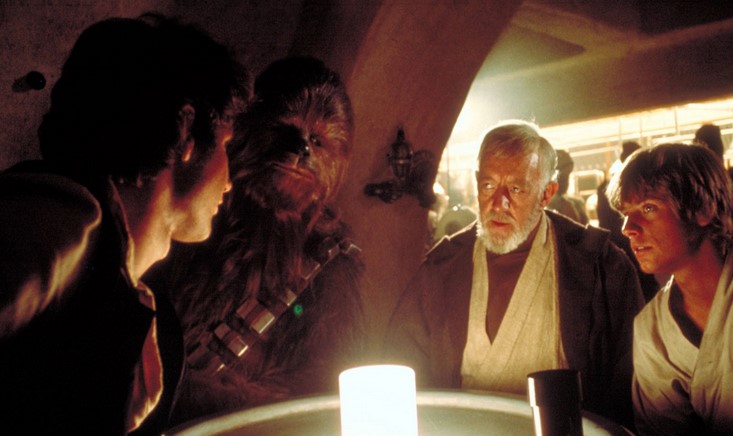
Or heck, here’s another example... any of you remember that old 70’s indie movie, Star Wars? There’s a great scene where Ben and his would-be-protégé are trying to hire a ship from some lowlife smuggler. And Ben tells him “We can pay you two thousand now plus fifteen... when we reach Alderaan.” Remember that?

So... two thousand what?

No, no, no. Don’t run to novelisations or books or articles that retconned this. Right there in the movie you watched... two thousand what?

Truth is, it doesn’t say and it doesn’t matter. For this story, the type of currency’s irrelevant. I don’t care if it’s Imperial credits or Old Republic scrip or gold-press latinum or Jawa skulls. Okay, I might care if it’s Jawa skulls because WTF Kenobi why do you have two thousand of these laying around?! What the hell have you been up to out in your little desert hut?

Anyway... no, all we need to know is that two thousand is a good amount (judging off everyone’s reactions) and fifteen more makes it a very good amount. Past that, we just don’t need to know why Solo wants all these Jawa skulls Kenobi’s collected. It’s not important. The dialogue’s solid and sounds believable, which is far more important that a brief segue to explain the various types of Galactic currency and their exchange rates.

This brings me to my third and final point.

Worldbuilding is, in my opinion, a really easy trap to fall into. Because worldbuilding is fun. Seriously. That question game we played up above? We can do that for weeks with worldbuilding. Months. Maybe even years. My world is going to be so huge and so complex with so many races and creeds and economies and social structures and seriously we can spend so much time doing this instead of...

Y’know, actually writing the story.

And that’s how I generally approach worldbuilding. You may need to change this approach a bit, depending on your own story and the kid of setting you want for it, but hopefully this’ll get you a little further down that path. Or help you find your own path.

Next time... endings.

Maybe.

Until then, go write.