Showing posts with label vocabulary. Show all posts

Thursday, March 10, 2022

I've Been Framed!

This week’s random topic is something that’s been gnawing at me for a while. I’ve been batting it around, trying to come up with a good way to explain it, and I think the catch is there really isn’t a good way to do it. This is one of those slightly-more-advanced writing things I either understand or I don’t. If I do... I probably already know to avoid it.

Anyway let’s see if I can stumble through some analogies and examples and hopefully make this a little clearer.

You’ve probably heard the term framing once or twice. It has to do with how I choose to present things in a story. If my character is talking about something, how they’re saying it is part of the framing. So is how people react to it—in both out loud and unspoken ways. How I choose to describe it in the text says a lot about it, too. Framing can involve a lot of subtext, and a lot of not-so-sub text.

(also, just to be clear, we're not taking about frame stories which are something else altogether that I've meant to ramble on about for a while now)

So let’s jump storytelling forms for a moment and I’ll give our first example.

In moviemaking (and photography) people talk about framing a shot. This is a very similar idea. If I’ve got Phoebe on camera, it’s how I’m choosing to set up this shot. How are going to set the edges of the shot? What’s in the background or foreground? How close are we to her? What angle are we seeing her from? Is the camera static or moving? And if it’s moving, how is it moving?

How I frame the shot affects how we, the audience, perceive this shot. It’s an added layer of meaning. A sort of visual subtext, if you will.

Here’s an example I’ve given you a few times before. Let’s say our scene is the young lovers dashing up to the bedroom. One pushes the other down on the bed and then does a sexy, laughing striptease for them. Easy to picture, yes?
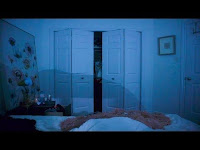
However... we’re going to frame this with a handheld camera, looking though the crack between the closet doors. As the shirt gets tossed and those pants are wiggled out of, the camera can tilt one way or another, so the audience can see as much as possible. Where things land, what state of undress people are in. But, y’know... all through that narrow crack.

And this has suddenly become different scene, hasn’t it? Not so fun and sexy anymore. Now we’re just waiting to see who—or what—comes bursting out of that closet. because there’s definitely something in that closet, right? They wouldn’t be framing the shot this way if there wasn’t somebody in there watching all this happen.

That’s kind of the key point I’m awkwardly getting at here. Things can get weird in movies when there’s a big disconnect between what’s going on in the scene and what the subtext tells us is going on in the scene. One of them will usually override the other, and since movies are a visual format, the camerawork—the framing—can override any spoken text pretty easily.

Now, a lot of time this is deliberate. That scene I just described above (and a few hundred just like it) is a pretty standard horror movie shot, especially for slasher movies. The unknown killer watches from the closet. Or maybe just that pervy voyeur they’ll yell at when he stumbles out of the closet (and then they’ll throw him out of the room and he’ll be the one who gets killed). Point is, the storytellers (in this case, the filmmakers) are deliberately subverting what should be a sexy scene by framing it in a way that make it very creepy.

Thing is... it isn’t always that way. If you’ve ever followed along with Saturday geekery on Twitter, you know one of my common complaints is when inexperienced filmmakers try to copy a shot from another movie without really understanding why it worked in that movie. I’ve seen folks do the “peeking out of the closet” shot or the “looking through the window from outside” shot and they did it because, well, that’s how you film sexy scenes in horror movies, right? Wasn’t it super hot when she was swaying at the end of the bed and pulling open her...wait, what? You thought it was ominous? Why? Now suddenly the film is stumbling because the sexy scene is creepy as hell but it was supposed to just be... well, sexy.

And the audience will sense this screw-up. Even if we don’t always know the syntax or conjugation, so to speak, we know enough filmic language to realize something wasn’t landing right there. We’ll figure out eventually from context (y’know, when something doesn’t come out of the closet), but that stumble is going to break the flow and throw us out of the movie as we try to figure out what’s actually going on. Was this a creepy scene or a sexy scene or what? How were we supposed to feel about it?
And we can frame things in our writing, too. We can layer in that subtext through our characters and their reactions, our story structure, even just with with our vocabulary choices. We can make insults sound like compliments, word something innocent so it could be flirty, make it really clear how weak that guy making the loud, angry speech is.

But...
If we’re not careful when we do this, we can end up with that same stumble I was just talking about inexperienced filmmakers causing. If Yakko just insulted Phoebe but my word choice makes it sounds a little too much like a compliment, even though we know Yakko wouldn’t compliment her... well, wait, what’s going on? Or if everything structure-wise says this is when I learn if Phoebe is the super-werewolf or not and instead it’s revealed that we first went to the Moon in 1969... I mean, that’s not remotely the answer we were looking for. It’s not even really an answer. It’s just a random fact. Is it even relevant to this story? And why is it in italics? Why are we emphasizing it? Did somebody think the Moon landing was in some other year?

I know this is one of those things that sounds kind of silly and self-apparent, but I’m surprised now often I’ll come across it. A writer pretty clearly trying to do X, but they’ve set everything up as Y. Unusual framing. Odd vocabulary. Weird emphasis. Things that feel like they’re meant for a different version of this scene. And like with the films, I think these writers are trying to copy something they saw work, but haven't quite worked out why it worked.

And that’s why this is a tough thing to explain. It’s hard for me to say “make sure you’re using the right subtext for your scene” when I don’t know the scene or the subtext you’re currently using or the effect you’re trying to create with it. It’s going to be different for every writer, every project, every scene.

Okay, I know this hasn’t been super-helpful, so let me toss out a few last suggestions that should make it easier to avoid this issue.

1) Know what words mean—This should be a serious basic for any writer. A bad habit most of us start with is running across words we don’t know and kinda getting their meaning from context, and then using them as we kinda think they’re intended. Which, no surprise, can cause real confusion for people who actually know what the word means. And that’s not even taking into account that I might spell it wrong and spellcheck swaps in some other word altogether. Which I also don’t know.

2) Know how this is supposed to make my readers feel-- is this a sexy page or a scary page? Funny or creepy? Should my readers be tense or fascinated? If I don’t know how this bit’s supposed to make them feel, how can I get any sort of emotion across on the page? Bonus—knowing this should also help me figure out if any moments are particularly jarring. Not in the way I might want.

3) Work on my Empathy-- I’ve said it before and it’s still true. I need to understand how other people are going to react to things. If I don’t have a good, honest sense of how this character’s going to be received, how that line of dialogue’s going to go over, how my readers will react to this beat or that reveal... well, it’s going to be tough to tell a story. I need to be able to put myself in other people’s shoes so I can take a look at my work and say “Wow... if I do it like this, the readers are totally going to think someone’s in the closet watching Chris and Pat.”

Anyway... this was a little rambly, but hopefully you got something out of it.
Next time... look, I’ll be honest. I’m not sure there’s going to be a post next week because I’ve got a four or five hour drive on Friday and then a talk about worldbuilding. Plus—if you hadn’t heard-- I had a new book come out last week and I’ve been a bit overwhelmed. Which means now I’m playing a bit of catch-up. But I’ll try to get something out, if time allows.

Until then... go write.

Monday, December 20, 2021

Going With It

Holy crap how is this year almost over? Why is time moving so fast? What did all of you do? Who touched the red button?!?!

So, not to keep mining the past, but I wanted to talk about one more thing that came up at the SDCC Writers Coffeehouse. During the Q & A someone asked what I generally think of as an “impossible” question—although just looking at that written out I really should find a better term. See, it’s not so much that these questions are impossible to answer, it’s that there’s really only one person who can give a definitive answer. And it’s usually the person asking the question.

Y’see, there are questions that are very specific to my story, and the “correct” answer for me probably isn’t going to be the same correct answer for you. Things like, how many characters should I have in an ensemble? What’s the correct point of view to use? How much sex is too much? How much detail do I really need? See what I mean? There’s no real way to answer that unless I know the whole story, how it’s written, the context things are happening in...

Somebody at the Coffeehouse asked (paraphrasing from memory here) “how many made up words can you have in your first couple pages before an editor stops reading?” And my immediate answer was, well, I couldn’t really answer that. Again, the right answer for me won’t be the right answer for you, and said answer’s going to change from book to book.

But about a week later it struck me there is a way that we, as writers, can at least get a sense of if something’s disruptive or not. And that’s by being aware of the flow of our work. So let’s talk about that a little bit.

I think we’re all aware of flow on one level or another. I first heard the term from a writing coach named Drusilla Campbell, but I knew what she was talking about as she explained it. Paraphrasing a bit more, she described it as why some books you can’t put down and other books make you think about how  the laundry needs folding.

I’d say flow is equal parts pacing, tone, and empathy. It’s about me understanding what’s going to jar my reader, either by nature of structure or material or vocabulary. What’s going to make them pause to remember these are just words on a page and not actual events. It’s about me stepping out of the way and not trying to be seen as the author. Letting people read my story rather than analyzing it. Really simply put, flow is what keeps people in my story instead of, well, knocking them out of it.

And that brings us to using words we’ve made up. Could be a simple portmanteau or clever bit of wordplay. Maybe terms from a technology we made up. Or a secret dark order. Maybe even a whole language. But I have to be careful, because  there’s a good chance I could kawonk someone right out of the story if I’m using a lot of words I’ve made up.

You all see what I did there, right? Or maybe you didn’t. Kawonk is a nonsense pile of letters I threw together, but in context you kind of understood what I was saying with it almost immediately. Some of you may not even have really registered it as a made up word and just read it as a funny onomatopoeic sound effect or something.

But something can only work in context when I understand the context. So the more words I swap out with made up ones, the less chance there is of my readers understanding what I’m trying to say. Like if I told you we needed to kawonk this dreeenil ptoob before we niknik ptar the cheegles. I mean, if we hit a sentence like that we’re going to instinctively stop and start parsing the structure to figure out what this whoa I just broke the flow, didn’t I?

And even if there is plenty of context, it can get annoying to read something where I’ve decided to substitute existing words with made up ones for no real reason. Say, for example, people in my fantasy world all duel with scheevs. Some are cheap and crudely made, some are works of art, but most people have one. You see, a scheev is a narrow, double-edged blade about 24 to 30 inches long (originally iron or bronze, but mostly steel now), with a strong grip, some sort of protective guard or crosspiece between the blade and the grip, and often a small counterweight at the base that also locks the blade in place. And if you’re thinking, wait, did I just spend a whole paragraph describing a sword you are correct.

Except here they’re called scheevs. For... reasons.

And again, imagine how frustrating that paragraph would be if instead of bronze and steel it talked about droker and ogyed, flokks instead of inches, and an oppomass instead of a counterweight. Hopefully I didn’t make up my own numerical system, Think about pausing to dig through all of that and try to glean a meaning out of it and realizing we’re just talking about goddamn swords.

I don’t know about you, but that’d bring things to dead halt for me as I groan and rub my eyes.

‘Cause here’s the thing we always to remember. Weird as it may sound, the words I use don’t really matter. I mean, of course they’re important and they’ll bring nuance to the story. But that’s my point—the story is what matters. The characters matter. The plot matters. The actual words are just a delivery device. They’re the corn chip getting all that delicious salsa and guacamole into or mouths. And if I’m focusing a lot of my time and energy on coming up with a new way to say corn chip, that’s a good sign something’s probably going wrong in my writing.

I’m not saying don’t make up words. I mean, I put squale out there into the world. But there should be a reason for them being in my story, and the reason should be better than “I wanted to make things sound different.” Ultimately, they should be adding to my story, not distracting from it. Definitely not knocking me out of it to diagram sentences, glean meaning, or just grind my teeth in frustration.

Next time...

Okay, this was super late, so next time will be in three days. And I’ll probably be talking about the holidays.

Until then, go write.

Let’s be honest, we’re not going to get a lot more in before 2022, so try to make it count.

Thursday, April 1, 2021

Assorted Magical Spills

The comments section has been pretty dry lately, so I’ve gone digging through my list of “things to talk about,” trying to come up with a semi-interesting topic. I was about to fall back on recycling some general writing/publishing stuff from one of the other blogs I used to keep and then I thought “hey, you know what we haven’t talked about lately? Spelling!”

More importantly, when computers try to spell.

Three really common features these days are autocomplete, autocorrect, and spellcheckers. I’m betting the device you’re reading this on has at least two of them. Maybe all three. There’s also a good chance you’ve shut at least one of them off. Because.... well, they’re not that ducking great when you get down to it. Yeah, sure, some of them build up custom dictionaries or preferences, but even those can have issues.

Truth is, the more complex and nuanced we get with language, the less these things work. Because they’re tools. And that’s what tools do. They don’t replace skills, they just help focus them.

Think of it this way. I’m guessing you’ve got a hammer, right? Maybe it’s in that drawer in the kitchen (or was it in the office...?). Maybe you’ve got a little emergency toolbox with some basics in it. Maybe you’ve got a big rolling tool chest out in your garage with four different hammers and a rubber mallet and that other hammer you loan out to people who come over and ask if they can  borrow your tools. Anyway, wherever it is, you’ve got a hammer, right?

But we accept that a hammer only does so much. Owning a hammer doesn’t instantly mean I can now build a bookshelf or a rocking chair or a new deck out back. I’m more handy than some folks thanks to a few years of film and theater work, but I’ve got two friends who are professional carpenters and they both make me look completely unqualified to even own a toolbox.

And we all get this, right? The tool doesn’t amplify ability or replace it. It just allows me to use that existing ability better. If I didn’t have the skills to build a rocking chair before buying a hammer, owning one’s not going to change anything. And if I’m convinced holding a hammer suddenly does give me abilities and skills... well, I’m probably about to hurt myself.

(weird fun fact—the majority of cases where men lose a finger or toe involve them using a new tool. Seriously)

Spellchecker is a tool. So is autocorrect. And autocomplete. They can make things faster and more efficient, but only if I know what I’m doing in the first place.

For example...

faze vs. phase – one of these you grow out of

feet vs. feat – one of these is a measurement

losing vs. loosing –one of these is a release

week vs. weak—one of these is not that strong

bear vs. bare—one of these is a bit revealing

sconces vs. scones—one of these you eat

All of these are words I’ve seen recently in articles, headlines, and so on. And in every one of these cases... they should’ve been using the other one. But if I’m trusting my spellchecker to know more than me, it’s just not going to end well.

Seriously, computers are ducking idiots. They really are. Remember when I talked about Watson, the IBM supercomputer that was specifically built to understand language and nuance and crush opponents on Jeopardy? Do you remember how his success rate ended up working out?

If Watson isn’t going to be able to pick up the slack, why would I think the spellchecker they bolted on to my word processor at the last minute is going to be better?

Learn to spell. If I want to do this professionally, it’s not enough to have the tools. I need the knowledge that makes them useful. Cause if not... I’m just hammering away wildly.

Next time...

Honestly, the next thing on my list is an overdue update of the FAQ. But to be honest, nothing’s really changed since the last time I updated it (well, nothing I can talk about, anyway). So I’ve got... hmmmmmm, well a question about plot we didn’t get to during the WonderCon Writers Coffeehouse. Or maybe talk about my old trunk novel a bit?

Any preferences? Drop ‘em down below.

And then go write.

Thursday, January 28, 2021

Keeping Our Heads Down

This is something I’ve talked about several times here on the ol’ ranty writing blog, but I realized I haven’t talked specifically about it in, well, many years. Too many years, really. Definitely not since I’ve tried to lean away from the more ranty, accusatory tone I tended to write in back at the start of this.

Look, reading all those movie scripts made me pull out a lot of hair.

I talked a month or so back about the idea of a contract between author and reader. There’s one other aspect to that contract, a sub clause, and I think it’s one of those “so obvious we don’t think about it” sort of things. To be blunt, nobody’s picking up one of my books to hear from me. Or to see me.

I mean, sure, they like a lot of the characters and worlds I’ve created. Some folks probably (hopefully!) like my style enough that they’re willing to try something new from me. But they still don’t want to see me. They want the story, and they definitely don’t want me getting between them and it.

Now, this doesn’t mean I’m going to follow you home from the bookstore and stick my hand between you and the page or sing nonsense in your ear. It’s just that nobody wants me distracting them from the fact they’re reading my story. They just want to sink into that world and get lost.

Yeah, of course, on one level you know I crafted each of those sentences and paragraphs, chose where all

the breaks

should go, but we have this quiet understanding that I won’t be leaning over your shoulder asking “Did you like that? Did you see what I did there? Wasn’t that clever?” You just want to immerse yourself and forget about the world for a little bit. Or at least get to look at it from a neater angle.

That was jarring, wasn’t it? That weird paragraph break? It was only two lines, but it broke the flow for a second, and you stopped hearing my voice and started hearing your own instead. Probably saying something like “was that a mistake? Is he doing beat poetry? Was he trying to do something funny there?”

And this is the worst thing that can happen to a writer. I don’t want you thinking about me. I want you to be thinking about Hector and Natalie and the people they’re running away from. If you’re noticing me, thinking about what I’m doing... it means I’ve done something wrong.

Think of it this way. It’s the difference between the tough guy in a story who commits unimaginable acts of excessive violence to look tough... and the tough guy who doesn’t need to commit those acts. The one we understand is more impressive without seeing a blatant demonstration. Being able to restrain myself is usually more impressive than how excessive I can be. Less of us is more of the story.

So here’s four easy ways I can keep my literary head down.

Vocabulary— When I started out, I know I desperately wanted to show I had a better vocabulary than the average person. Because that’s a hallmark of a good writer, yes? I didn’t want to use common, pedestrian words, the words just anyone would use. I was a skilled anecdotist, after all, not some mere amanuensis.

And let’s be honest—I wasn’t alone. This is a phase a lot of us go through as we’re starting out. We latch onto (or more often, look up) obscure and flowery words for our literary masterpiece, as if we’re going to get a quarter every time the reader has to look something up. And if the reader doesn’t enjoy going to the Miriam-Webster site every three paragraphs? Well that sounds like their problem, doesn’t it? Not my fault you’ve got such a limited vocabulary.

Truth is, any word I choose just to get attention—to prove I don’t need to use a common word—is the wrong word. Any word that makes my reader stop reading and start analyzing from context is the wrong word. I can try to justify my word choice any way I like, but nobody’s picking up my book hoping for a vocabulary lesson. When a reader can’t figure out what’s being said for the fourth or fifth time and just decides to toss my manuscript in the big pile on the left... there’s only one person to blame.

(It’s not them, in case you had any lingering thoughts on the matter)

Structure-- Just like obscure vocabulary, convoluted structure’s another common sign of writer ego. One of the most common forms of this is insisting on grammatical perfection. This usually mean a lot of rigid, formal text and very stiff dialogue. It’s when I get so insistent on proving I know the correct way to structure a sentence my words end up sounding forced and artificial. Also worth noting the flipside of this which is insisting I don’t need to follow any grammar or spelling conventions. Punctuation? Capitalization? Those are tired tropes for losers.

The second most common sign is needless complication. I can admit I used to write—or try to write—sprawling, impenetrable prose. Sentences that went on and on. Descriptions that never ended. It took someone two pages to step through a doorway because we had to know what kind of socks and underwear they were wearing and what flavor toothpaste they preferred. If they were mentioned in the text, I had to remind you of these facts and how they were posed at the exact moment they spoke. Believe me, if something could be explained or described in less than ten words, I’d find a way to do it in at least fifty.

And while I never got quite that bad, there are also some writers who choose arcane story structures or points of view or tenses. Just because they can. Things will go from non-linear first person musings to omniscient third person flashbacks to second person song lyrics and then to a telepathic gestalt mind that only speaks in one of those single, three page sentences I was just talking about. There’s nothing wrong with any of these things, in a general sense, but so often they’re not there to serve the story. It’s just an attempt to look cool and do cool things. If I want to do something like this, I should be able to explain why I’m doing it. And the explanation needs to better than “y’know... reasons,” or I’m just going to leave my readers confused and frustrated as they get knocked out of my story again and again.

Said—Sad admission, kind of going with the vocabulary point up above. For many, many years I didn’t use said. Said was, in my opinion, the lowest common denominator of dialogue descriptors. It’s the kind of word used by writers who weren’t going places, writers not destined for greatness, like I clearly was. Not only that, I’d try to never us the same descriptor on a page twice. So in my early work my characters would respond, retort, exclaim, demand, muse, mutter, sneer, snap, shout, snarl, grumble, growl, whimper, whisper, hiss, yelp, yell, exclaim, or ejaculate. 

Oh, grow up. It was a common dialogue descriptor for years. Really.

Of course, once I finally got to sit down and talk with a professional editor and show him a few pages, this was the very first thing he commented on. Truth is, nobody notices said on the page. It’s an invisible word. Yeah, of course there’s going to be times when my characters are hissing or shouting or gasping. But I should save those words for then so their impact hasn’t been used up and weakened. The vast majority of the  time... stick to said.

Names—If used in moderation, names are also invisible. If you think about it, they’re just a shorthand note for the mental image of my character or MacGuffin or whatever. And they help us keep things straight if I’ve got a bunch of people all talking together.

It’s worth mentioning many fledgling sci-fi or fantasy writers feel the need to rename a lot of things. Or everything. Characters have all-new, correct-for-this-world names and so do their pets. And their gods. And their elements. And their system of weights and measures, their money, their units of time...  It’s great worldbuilding, but I’d guess 83% of the time this is just wasted words.  My elaborate sci-fi empire won’t collapse if I call mind-to-mind communication telepathy, but it might if I keep calling it intralobeech, which, as we all know, is short for “intralobe speech.”

Which, as we all know, is telepathy.

Always remember that moderation is key. Even a simple name like Bob can stack up and get distracting really quick. Which is why the ancient ones created...

Pronouns--when those proper names start to stack up, we switch to pronouns.  Just like names are shorthand for story elements, pronouns are shorthand for those names. When nouns start to clutter up my writing, they’re there to leap in and shoulder the weight.  It’s how Hector becomes he, that mysterious island becomes there, and a Hudson Hornet becomes it.

The catch here is I need to make sure my pronouns are clear. No questions exceptionally clear, ‘cause the moment someone gets confused about which her I’m referring to, they’re going to stop reading my story and start studying the page. We’ve all had to do that, right? Feel our way though a paragraph so we’re clear who she is. Or work backwards through the dialogue, trying to figure out who’s speaking which lines. I’m always super-careful with pronouns, because I don’t want that happening to anyone in my books.

Again—pronouns good. Pronoun confusion—bad. And it’s a writing rule you can apply to real life.

So there they are.  Four simple ways to keep our collective heads down so readers don’t see us standing there. Staring at them. Waiting to be noticed.

Y’see, Timmy, every time I make my reader hesitate or pause just for a second, I’m breaking the flow of the story. I’m encouraging them to skim at best, put the book down at worst. My reader should forget they’re paging through the latest Peter Clines novel, hopefully forget they’re reading altogether. And the easiest way to make that happen is for them not to see the writing.

It’s tempting to wave our arms and shout and try to get the reader to admit they can see us, but all this does is ruin things for everyone. It’s like Sherlock Holmes showing how he came to his amazing deductions or a magician explaining their greatest illusion. That moment is when the whole thing falls apart.

As writers, we need to go unnoticed. We want our characters to be seen and our dialogue to be heard, yeah. We want our action and passion and suspense to leave people breathless, absolutely.

But we’re just distractions.

Next time... hmmmmm. Not sure. I’m open to requests or suggestions if anyone has any. If not, I might tell you about a conversation I recently had with someone about getting published.

Until then... don’t let me see you writing.

Thursday, September 17, 2020

Around Here We Call That...

I wanted to take a minute or two to talk about a certain type of talking.

We all have our own unique voice based on where we grew up or maybe where we ended up. It’s partly accent, partly regional vocabulary. I think we’ve talked about the whole pop vs. soda vs. cola thing before, right? Plus some of you weirdos who just call everything a coke. But there are tons of little things like that. For example, does your street have a parkway, a common, an easement, or a road strip?

Everyone has their own personal vocabulary, and their own preferred words. It’s a way we can identify people (and characters). And it’s a way we can learn a little more about them.

For example... I grew up in New England (mostly Maine, but a fair amount of time in Massachusetts), and I’ve been told my accent really comes out on certain words (like drawer). Plus my particular part of Maine has a unique term for tourists—goatropers—that my tongue still tries to fling out now and then. But at this point I’ve now spent (wow) half my life in southern California, so I’ve also picked up the odd habit of using “the” with freeway and highway numbers. And I started calling that strip of land the devil strip, just because I saw it explained that way once and fell in love with it. And my partner and I’ve been watching a lot of British gardening shows lately, so I’m pretty sure we’re using a lot of their terminology now.

And that last bit is what I wanted to talk about.

I’m betting most of you have had a job at some point with its own special vocabulary. Certain terms and phrases unique to that business. Sometimes they refer to specialized equipment, other times to certain practices or methods. If you were in retail, I bet you had to deal with a lot of terms that came down from some corporate desk, right?

And that’s another aspect of this. At that job, there were probably all the “correct” terms and phrases and names to use... and then there were the ones that actually got used on the job. I’m sure you know what I’m talking about. There’s the way we get told it works, the way the people up top say it works... and there’s the way everybody down on the ground floor actually does it.

For example, again... most of you know I worked in the film industry for several years (a good chunk of that “half my life in Southern California” time). The film industry has a lot of special equipment and does a lot of things other jobs don’t, so it stands to reason there are a lot of special terms that get used. But... the terms that get used on a film set very often aren’t the ones that get taught at film school. Again and again I’d meet people who “knew” the industry, but were baffled by the actual terms used by the crew. Terms like needing a stinger, turning around, the abby singer, or the martini. And sometimes, yeah, it’s annoying but that martini gets an olive.

But it’s not like the film industry’s that rare. The military has a lot of their own terminology, and a lot of jargon that gets used in place of that terminology. So does the medical community. I’ve talked with my scientist-turned-urban-fantasy-author friend Kristi Charish numerous times about the language and phrases used in a lab. I have a bunch of friends in the game industry who’ve let jargon slide out now and then. I worked at a Walgreens through most of high school, a suit store for a year after college, and a few theaters in San Diego when I first moved to California. And all of these places had their own way of talking and referring to things. Even the same things.

Weird as it may sound, this is why I like having beta readers with different backgrounds than me. And why I like talking with people who work in all sorts  of fields. Because so often they’ll tell me “this isn’t how Wakko would say this,” or “Dot would probably call this a...”

It’s also why I love talking to people in person (or these days, on Zoom) when I’m asking them questions about things. A lot of the time when they’re speaking (rather than writing it out), they’ll fall back on that jargon first because it’s the natural way they speak about things. And that’s what I want to know—how would my characters naturally talk about these topics. What parts of their work vocabulary leak into their day-to-day conversations?

Of course, this is all just for flavor. I don’t want to bury my dialogue in jargon for the same reason I probably don’t want to write out an extreme accent—I don’t want my readers to get lost or confused in the dialogue. Believe me, back when I was in the film industry, I brought many Thanksgiving dinners to a dead halt as I tried to explain “things that happened at work” to my family. Because these were casual, everyday terms for me, but they had no idea what I was talking about.

I want my readers to be able to flow past odd spellings or to figure out unusual terms from context. And I want the readers who know this jargon to see that I’ve done my research, for them to feel instantly familiar with the characters they should be identifying with the most. Again, just that dash of flavor that makes something perfect.

So learn those odd terms and casual phrases. Make characters talk like the people they’re supposed to be, in the jobs they’re supposed to have. Because it’ll grab your readers and pull them deeper into the story.

And personally, I like it when my writing pulls readers deeper into the story.

Next time, I thought I might go back over a few basics.

Until then, go write.

Thursday, April 9, 2020

A2Q Part Nine—Editing

Well, if all goes well, we’re making a big time jump here. All the past things I’ve been blathering on about—plot, characters, story, theme—these are all elements that we can spend a day or three on. Maybe even less, if they’ve been fermenting in my head.

But between last week and this week, well... hypothetically a lot of time has passed. I’m really, really hoping you didn’t write an entire first draft in a week. If you did... well, that’s another issue we need to discuss. I’m hoping you took your time, within reason, and we are—hypothetically—a month or two or maybe even six later.

You have a first draft now. And it’s a beautiful thing. Maybe the file is so big it’s an entire meg on your computer. An entire megabyte of your words. I know that might sound laughable or dismissive, but seriously—you need a lot to hit a one megabyte Word file.

But...

(yeah, here comes the but)

...it needs editing. No probably. There’s a chance you wrote a perfect, flawless first draft, but more than likely... you didn’t. I haven’t yet and I’ve been doing this for a while.

It’s okay, though. Everybody needs to edit. Everyone. Anyone who says they don’t is either A) lying to you or 2) delusional. Our work needs editing and revising. If you remember waaaay back at the beginning of the A2Q, I talked about how ideas need to be cut and polished like diamonds? Well, that’s what we’re doing now. Figuring out what needs to be cut and then giving it all a good polish.

Again... this is okay. Don’t worry. Every book you’ve ever loved has gone through this process. And we’re going to go through it so this book can be one other people can love.

Ready?

First up, the easy part. This is a 100% complete draft, right? Beginning,middle, and end? I’m not going to get a hundred pages in and find blank space or notes to myself like [FIND WHAT THESE ARE REALLY CALLED] or [ASK ELLEN HOW TO DO THIS]. There’s nothing wrong with doing that on a first pass—I do it all the time—but before I start editing I need to fill in those spaces in my book with actual, y’know, book.

So, again... this is a 100% complete draft, right?

Fantastic.

Before diving in, may I suggest taking some time away from your book. You don’t want to finish a draft, then turn right around and start the next one. We want to get a little space, and let things fade in our mind a bit. I don’t want to be looking at the manuscript in my head, I want to be seeing the one in front of me—the one everybody else is going to see. We’re going to need some stark honestly for this, so I want to be clear what’s really there.

One tip for this—I’d suggest switching the font. Go from Times Roman to Courier. If you’re one of those folks who likes to write in Comic Sans, switch it back to Times. A different font is going to make everything sit differently on the page and it’ll make you actually read what’s on the page. You’ll become very aware of what is and isn’t there, and catch a lot of stuff that’s been sliding past you.

Once you’ve taken some time away, changed the format... read it. Just read through this new manuscript with those fresh eyes. Maybe make some quick notes, but for now just read it. Again—don’t remember it, read it. Try to see what’s really there on the page.

Now, I’ve talked about editing a bunch of times. It’s a big umbrella that a lot of things fall under, many of which I think can get broken down into three categories or types. It is my humble opinion that one of the big reasons people have issues with editing is they get these different types confused because they never get more specific than “editing.” I want to talk about each of these three types of editing and maybe give a few examples of each. You may have heard of one or two of them.

First up is story editing. This is when we try to improve the plot and story by reorganizing different elements, clarifying them, maybe even adding to them. Sometimes we might even add all-new elements.

Second is what I’m going to call reductive editing. This is when we’re cutting things, usually to tighten up dialogue, descriptions, and maybe even to simplify larger elements a bit. Sometimes, in all honesty, we’re just cutting to get closer to a certain word count.

Third is copyediting. This is when we’re correcting things throughout the manuscript. Formatting. Spelling. Grammar. The nuts and bolts things that are still important because they’re holding things together.

You may notice there seems to a bit of overlap here. I’d say it’s a little less “overlap” and a little more “weaving between lanes in high traffic,” as we’ll see. You may have also heard different names or definitions for these. Look, I never claimed to be an English major or anything. If you’ve heard it called something else, cool. I’m just trying to make this easy to distinguish.

Anyway... let’s go through these in a little more detail.

We’ve kind of talked about story editing already, in a sense. When we first had that pile of ideas and notes and we started sifting and arranging them into an outline—that was story editing. Trying to find the best order for things, the best way to introduce different elements, and so on. That’s what this is—taking what we’ve already got and figuring out if we can make it even better.

Yeah, we’ve already done that. But now we’ve written everything out. We’ve got a better sense of the characters and the size of the events and how they’re going to land with my audience. Maybe that needed a little more description than we thought and that bit needs a lot less. And maybe we’ve realized some of this... doesn’t really serve any purpose.

This is one of the reasons we want to look at this with fresh eyes. So I can see where problems have developed. Or maybe they were there all along, but I couldn’t recognize them until it was all here in front of me.

F’r example, now that I’ve looked at all of this again, does it have a good dramatic structure? Does the tension start low and rise throughout the book(maybe with a few dips and drops here and there for our heroes)? How’s the pacing? Does it feel like there are any slow parts that just stretch on a little too long with nothing actually happening?

That’s a good one right there? Are things happening? Are events pushing the plot and my characters’ stories along? Or are they stalling out in places. Are people talking or thinking about doing things more than they’re... y’know, doing things?

This is story editing. Taking an honest look and deciding what story elements do and don’t need to be there. Or maybe just need to shift to somewhere else.

Also—don’t get scared here if it looks like you need to make big changes. If it turns out my outline was wrong, then it was wrong. So what? The first draft’s done. Make a new outline if you want and then write to that one. I’ve written a complete first draft and then gone back and completely rewritten the ending, or ripped out whole chapters. It happens. Don’t worry if it does.

Next up is what I’m calling reductive editing. This is something I’ve talked about a lot here on the ranty blog. We all get a little wordy in our first drafts. We use a few too many adverbs. We describe things with a bit too much detail. We let conversations go on and on. And we also tend to...

Okay, a thought exercise for you. If I said you no-questions had to get rid of three characters in this book—three characters with names and/or dialogue, who would you pick? Why did they jump right to mind? Is it because you knew getting rid of Wakko wouldn’t mean too much rewriting? Or because Dot and Yakko could be merged into one character (Dakko? Yot?) pretty easily? Because really... they don’t do that much.

We all do this. We bulk up characters and their descriptions and subplots, letting them take up a lot more space on the page than their actual contributions might warrant. I’m not saying every single character has to be a vital linchpin to the plot, but... well, how fast did you come up with three characters you could cut?

And I’m sure some folks reading this are thinking “Ha ha, good thing there’s absolutely no literary fat in my manuscript. Every single element is perfectly balanced and artistically necessary.” Which, yeah, there’s a chance it is. Maybe.

But remember this. As a first time author—hell, even as a successful one—the odds of a sale are better with a smaller, tighter book. No one’s saying a publisher won’t look at something big, but if I can trim two or three thousand words off my manuscript it can make a difference. Even just a psychological difference, when they look at that cover page and see 98K words instead of 101K words.

Finally, there’s copyediting. The often long and painful process of going through a manuscript line by line, word by word, and making sure everything’s correct. I’m using the correct words, spelled the right way. I’ve got commas where I need them and all my dialogue’s got quotation marks at both ends. Indents and spacing and page numbers.

People get contentious about this for a few reasons. Some folks will declare writing doesn’t have rules and they can do whatever they want, however they want. Others say it’s irrelevant because the genius of their writing will shine past all that to illuminate the heart and soul of the reader. And still others say, well... I mean, isn’t that the publisher’s job? They’ve got people for that, and they know this isn’t going to be perfect.

There’s a bunch of problems with all these views, biggest among them... what if I plan on publishing it myself? If I’m the publisher I need to be able to do all of this. And if I want someone else to publish it... well, why would they bother to look at it if I can’t be bothered to give them my best work? I mean, if they get those first fifty pages and it’s clear I didn’t even bother to fix my spelling mistakes, what else didn’t I bother with?

And to be clear—there are times my story might require typos and odd grammar. I occasionally spell words in odd ways. I sometimes take certain stylistic liberties with commas when I write. So do a lot of writers I know. But it’s always very clear this is a deliberate thing—I know I’m doing it and why I’m doing it. But these are exceptions, and exceptions by their very nature are rare things.

So there’s a bunch of editing thoughts. Let’s apply some of them. Remember that first page and a half  of our werewolf novel I wrote last time...?

++++++++++
Chapter One

            “Luna!”
            Phoebe sifted through the laundry pile again, willing the black top to appear even though it hadn’t the last three times she’d looked. “Luna,” she bellowed again.
            Upstairs the sound of the shower finally stopped and she heard the thump of feet on the wooden floor. The bathroom door creaked open. “What?”
            “Where’s my black top? The one with the ribbing?”
            “I’m trying to get ready,” her little sister growled. “I’m going out!”
            “So am I! Where is it?”
            “How should I know?”
            “You borrowed it last night. You promised you’d wash it.”
            Silence. Then the bathroom door creaked again quietly.
            “Luna!”
            What?” Her voice echoed in the small house.
            “Where is it?”
            A sigh echoed down the stairs. “I’ll get you a new one.”
            “You’ll what?”
            “I kind of... misplaced it.”
            “You what?”
            “I lost it, okay. I said I’ll get you a new one.”
            “Goddammit. I wanted it tonight. It fits under my armor.” She looked at the leather sleeves, vest, and gorget piled on the bed. Her mom's old hand-me-down armor. Stained dark brown with years of oil and sweat and blood that sank in before it could be cleaned off.
            “Wear the green one.”
            “It’s long-sleeved and I wore it last night. It stinks.”
            “It’s not like anyone’s going to complain.”
            Phoebe bit back a sigh of her own sigh and marched over to the hamper of dirty clothes. “How did you ‘misplace’ lose it?”
            “I was at a party.”
            “That’s not an answer.”
            “Yes it is,” Luna sang down the stairs. “I’m getting back in the shower now.”
            “We’re going to talk about this later.”
            “Whatever.” The bathroom door creaked shut and hot water started to gush flowed again.
            They’d have to talk about that too. The water bill and the gas bill had been high last month. Phoebe felt pretty sure Luna’s long showers were a major big part of that.
            She pulled the green top from the hamper. It had been warm last night, especially under all the leather, and she’d sweated a lot. The top was still damp, and it reeked. But it was that or she could try to find a Henley or turtleneck that wouldn’t bunch up under the armor and slow her down.
            She sure as hell wasn’t going to be some B-movie cliché, hunting werewolves with nothing on but a leather vest.
++++++++++

Let’s talk about some of the tweaks.

As far as story editing goes, you’ll notice I changed “mom’s old armor” to “hand-me-down armor.” Now it feels less sentimental and more a necessity from lack of funds—a subtle hint at their financial status.

For reductive editing, I snipped some adverbs and redundant words. Only seven altogether (when we count what I added in). Doesn’t seem like much, but this was only a page and a half. At that rate, we're talking about 1,400 words cut out of a 300 page manuscript—closer to 294 pages at that point. And those were really minimal cuts, weren’t they?

There wasn’t a lot to copyedit because, well, I checked it all as a regular part of the blog post last time. But I remember there were two or three typos in it, because I scribbled that all out really fast. One of them was my thumb not hitting the space bar hard enough so two words ran together.

Also worth mentioning you don’t have to do all of this at once. Some people like to just work in a single document through the whole process. Others write, save it as a draft, do an editing pass, save it as a draft, do another editing pass, save a draft, and so on. I’ve talked about my own method before, but figure out what works for you.

Y’see Timmy, that’s one of the toughest thing about trying to explain editing—even just these small tweaks. A lot of it does just come down to figuring it out. Yeah, we can study grammar, but so much of the raw art of it is just experience. Being honest with myself about my own work. Writing a lot. Reading a lot. Making mistakes. Learning from them. It’s how we get a sense of which words fit and which ones don’t. And like so much of this, it’s a flexible thing. Just because it worked last time doesn’t mean it’ll work every time.

In the end, the goal is to make this the best I possibly can. Not the best first draft or the best it can before I get bored. Ugly truth is, it’s going to be work, it’s going to take time and there’ll be points when you go back and forth about cutting or keeping things. That’s just the way it goes. But it’ll get slightly easier every time. I promise.

...at least, until you try to write a more complex book.

But we’ll get to that another time.

I think I’ve still two or three post left in this whole big process thing. Hopefully you’re still interested to read them. But next time I may take a quick break from the A2Q to talk about some related ideas.

Until then, go write.

And edit.

Thursday, February 6, 2020

Vocabulary Time Again...

Holy crap this is post #600 here on the ranty blog. Six. Hundred. Take that, some other blog with less posts.

Anyway, we’re overdue to discuss that most favorite of topics... spelling. I know it seems silly that I keep revisiting this again and again.  But there’s a reason for it--I’ve simply got to have a solid vocabulary if I want to be a writer. I need to know what words mean. I have to know how to spell them. I have to be able to tell them apart.

Over the course of my writing career, I’ve talked with lots of editors, a couple of agents, and a double-handful of directors for screenwriting contests.  Pretty much across the board, they named spelling as the most common mistake they saw. Not subject matter. Not formatting. Spelling was the problem they saw again and again and again.

Which is why I tend to bring it up here at least once a year. If I’m spelling and using words correctly, I’ve just eliminated the most common problem from my manuscript. Seriously, think how many people that puts me ahead of in the selection process.

Check out this little list of words... and the words they were supposed to be. They’re from assorted books and articles I’ve stumbled across. Things that we can consider published (I’m not going to give anyone crap for typos in a tweet). The important thing is all of these are from people claiming to be professional writers.

going or gong
canon or cannon
fair or fare
right or rite
taking or talking
possible or posable
root or route
milk toast or milquetoast

Personally, I think certain technologies have made spelling a hard problem for some folks to acknowledge. If you’ve been following the ranty blog for a while, you might remember me using this sentence a few times before...

Inn odor two kell a vampire yew most half a would steak.

While the first instinct is to say pretty much every word in that sentence is spelled wrong, the truth is—like the list above—none of them are.  Oh, most of them aren’t the right word, yeah, but they’re all spelled correctly.

That’s what I’m talking about with technology. I ran this post through a spellchecker and it leaped right over that sentence. Because there aren’t any spelling mistakes in it. And so technology leads a lot of people to believe they’re much better spellers than they really are.

If I don’t know the difference between they’retheir, and there, I’m going to have a tough time as a writer. Same thing with its and it’s.  If I think I know what anathema means (deadly poison, right?), but never bother to actually learn what it means (something I really dislike), odd are I’ll be using it wrong a lot. 

And again, when I make these mistakes, my spellchecker’s still going to tell me my manuscript is fine. So some folks who are really awful at spelling never improve.  They see no need to. After all, the computer’s got them covered and it told them all their words were correct.

That kinda blind faith is when things can get ridicules. Sometimes the spelling will be so off on a word the spellchecker flails for a second and throws out its best guess. And if I don’t know how to spell or what words really mean, I’ll probably just accept whatever the computer tells me. 

Like up above. I meant ridiculous at the top of that last paragraph, typed out radekulos to make my point, and the computer thought the best match was ridicules. Because it doesn’t know what I’m actually trying for. I’ve mentioned once or thrice the manuscript I saw where the writer was trying for corpulent but assumed the spellchecker had made the right choice when it gave him corporeal.

I need to be able to spell. I need to understand the words I’m spelling. I can’t depend on my computer to do it for me because at the end of the day, computers are idiots. And idiots make lousy writing partners.
           
Next time... it’s Valentine’s Day, so let’s talk about what you’ve got on under there.

Until then... go write.

Thursday, December 12, 2019

Some Artsy Thoughts

It’s getting near the end of the year and I figured I could get out one or two of the Deep Thoughts About Writing that have been marinating in my brain for a few months. Will they be any good? I don’t know. Marinating can be tricky sometimes. Leave stuff in to long and it just becomes this weird-tasting mush.

Anyway...

If you’ve followed this collection of rants for a while, you’ve probably noticed that I don’t talk about the art of writing that much. It’s not an accident. I believe that most art is highly subjective. I’m also a big believer that this subjectivity means any attempt to deliberately create Art (capital A) is usually wasted effort and, well, kinda pretentious. I also tend to think that sometimes when people talk about Art they’re... hmmmmmmm how to say this politely?

I think they’re making excuses. I think sometimes Art becomes an easy shield to protect a writer from criticism. If art is highly subjective in and of itself, whether or not it’s any good is very subjective. And if any of you have ever visited the internet (surprise—you’re there now) you’ve probably encountered one or two thousand people who are more than willing to explain how and why THIS is the greatest achievement of all mankind. Don’t agree? Well then you just don’t get it.

What I wanted to do was talk a little bit about where I think most attempts at Art go off the rails. Not all attempts, sure, because there’s a bunch of ways, but maybe the top two. Out of, y’know... a hundred and eight or so.

Also, as I have once or thrice in the past, you may see me using tale a lot here. I’m not trying to sound epic or artsy (oh the irony), I’m just trying to cut down on confusion in a couple places. Consider this your warning.

Once or thrice I’ve mentioned Shane Black and his ideas on plot vs. story. I’ve explored them a few different ways, but for time’s sake let’s just say plot is what’s going on outside my character, story is what goes on inside my characters. My own corollary to this is that plot tends to be active, whereas story tends to be reactive.

Now, again, it’s not a 100% every time thing (maybe 83%), but I’ve noticed that most attempts to be artistic lean really heavily on the story side of things. Plot is all but ignored in favor of long monologues about feelings and relationships and purpose and maybe even Art (yeah, seriously meta, I know). In the movie world these sometimes get called character pieces, and they’re usually about people sitting around airports or restaurants or taking long road trips and just... talking.

Nothing ever really happens in these stories. People talk about things that did happen, or might happen, or they’d like to happen, but at the end of the day.. they’re just talking. A key sign is that the characters in most of these tales have no arc, mostly because there’s no plot pushing them to change or develop. Their story never really goes anywhere because, without a plot, there’s no reason for it to go anywhere.

And that’s the catch. Every tale worth telling is a careful balance between plot and story. It’s the things happening outside that my characters are actively engaging in, and how these things are actively affecting and changing my characters. Key word there—active. When I upset that balance, things stop happening. Either my character stops doing things or they stop developing. Or both.

For the record, either one of these is bad. Both is just downright awful. We want active characters who grow and change. I mean... everybody gets that, right?

The other big thing in attempts to be artistic is language. Excessively elaborate descriptions using increasingly arcane vocabulary. Labyrinthine sentence structure in which one could perhaps lose a minotaur. Like, a full-size minotaur.

There’s probably something to be said for the fact that most attempts at writing art lean toward complexity over simplicity. And again, this is one of those times when defensive writers tend to whip around and say this failure is the reader’s fault. “Do you think I should lower the quality of my writing just because you got such a pathetic education you don’t know what uxorious, mytacism, or atramentous mean?”

When I’m writing my primary goal has to be that my readers understand what I’m trying to say. If they don’t understand page one, I can’t blame them for not going to page two. There are ways to make these things work, sure, but I’ve got to accept nobody’s picking up my books hoping for a vocabulary lesson or that they'll need a spreadsheet to keep track of my spiraling plot.

Fun note. When I went looking for the most obscure adjectives I could find, one of the first results was a list titled “100 Exquisite Adjectives” (emphasis mine) which I’d guess was about 20% rare and obscure words most readers wouldn’t know. So let me just ask you... how exquisite is sallisthorian as words go? Do you think most readers would find me pretentious for describing a character that way? Is it too on the nose? If they’ve got no idea what it means, is it their fault for not knowing or my fault for using it?

Oh, and for the record, I just made up sallisthorian while writing this. I’m saying it means “like the Man-Thing” (who was, of course, known as Ted Sallis when he was human). And if anybody wants to argue about how were we supposed to know what that means... well, that’s kinda my point, isn’t it?

Y’see, Timmy, that’s the catch with all these sort of artistic additions. I can stick in deep, emotional monologues or elaborate descriptions or super-obscure words just to show how smart or artistic I am, but at the end of the day there needs to be an actual story that my readers understand. It’s a lot like easter eggs—in the end, my story needs to work despite all this stuff. If I’m hoping my story’s going to get by on pretty vocabulary and one long speech about what freedom means to me... it’s probably not going to happen.

Next time, it’s the season and all, so I’d like to talk to you about the holiday season.

Until then, go write.