Showing posts with label fantasy. Show all posts

Thursday, August 27, 2020

On the Third Day...

I got a request from Rhyen, which is great because I still haven’t really hammered those ideas on endings or comedy quite into shape. So that’s still some stuff for the future. Or, y’know, somebody else could ask something.

Anyway...

Rhyen wanted to know about worldbuilding. Not just “our world, but with secret werewolves” but full-on, hardcore fantasy worlds, sci-fi worlds, and so on. How (and when) do you come up with histories, cultures, and all that other stuff?

Y’know what? Let’s make this post super-active rather than me blathering away. Right here, right now, let’s look at werewolf world. The other version of it where everybody knows werewolves are real.

Now, I know, we said we were going to do more hardcore settings but just go with me for a minute.

I’ve mentioned Charlie Jane Anders once or thrice before, and her little note that there’s no such thing as “a world just like ours, except...” because any noteworthy “except” is going to change everything. If there really were werewolves and everybody knew about them, so much would be different in the world. Tons of things.

Don’t believe me? Let’s go over a few things real quick. Just off the top of my head...

Here’s an easy change. There probably wouldn’t be any silver coins. In WereWorld anything with even a scrap of silver would’ve been gathered up and turned into anti-werewolf weapons or defenses. The government would be treating silver like uranium. 

Which, hey... how would warfare be different? Forget atom bombs... imagine if the Manhattan Project involved deliberately infecting a hundred or so troops with lycanthropy and then dropping them all on Nagasaki and Hiroshima on the night of the full moon. A hundred unstoppable killing machines running wild in each city. That’s a terror weapon, right there. And of course, if the Japanese capture two or three alive, now they’ve got their own werewolves.

But now without the US pouring all that money into nuclear warfare and missile programs... where does it all go? Infrastructure? Social programs? Schools? Would there be a Cold War? A Bay of Pigs? And if the Soviet Union leaned into werewolf warfare... what kind of arms races would there be? Would the USSR have financially collapsed?

And we haven’t even talked about dating or sex in WereWorld. Hunting laws? Home security? Profiling? Legal issues—if I kill someone as a werewolf, am I legally responsible? Is it murder, which requires a degree of forethought, since the werewolf’s essentially an animal (or is it?)?

And all of these assume we just “discovered” werewolves somehow back in the early 1940s. What if it was even earlier? How would global exploration and trade have gone differently five hundred years ago if every twenty-nine days  one of your crew members might kill everyone on the ship? How different would the world map look right now?

Again, this is all off the top of my head. Seriously, I’ve spent maybe ten minutes on this. But I’ve completely rewritten the world, just by being aware that things would inevitably change in this situation.

So, with that in mind...

Creating a setting, any setting, is a lot like creating a character. I want to know them backwards and forwards. It’s fantastic if I have lots and lots of factoids about them easily on hand (you may remember that back before we all took the pandemic plunge, I talked about characters and their underwear choices).

I’ve mentioned character sketches once or thrice before, and I think worldbuilding can be approached the same way. We come up with the bare basics and then we start fleshing it out by asking questions and maybe following a few paths to their logical outcome. Like I did up above with WereWorld.

Or let’s do something even more divorced from our world. Let’s say it’s going to be a fantasy world, maybe one with some gearpunk elements. So, easy one—is there actual magic in this fantasy world? Is it kind of rare or very common? Does it need components? Are they rare or common? Do people have spell-component gardens the way we might have an herb garden?

How about the gear-tech? How precise is it? Do you need mathematically perfect brass gears or do lots of people carve wooden ones after dinner? What do they use for power? Springs? Counterweights? Two or three big guys turning a crank?

Does magic dominate the gear-tech, or vice versa? Is one notably newer than the other? Does either have detractors, vocal or secretive? Are magic and/or gear-tech novelties or parts of everyday life? Do they ever cross-pollinate, so to speak? Are they expensive or so common everyone has access to some aspect of them?

Considering all of this, now... is this mostly an agrarian world? Are more people farmers? Hunters? Are there gearpunk tractors or crossbows? Magic millstones or knives that can skin anything? And if none of this ever filters down to the common folk... how do they feel about that?

Has the magic or gear-tech made travel easier? Are people still isolated in villages or are there much bigger cities, made possible because of these advances? Do people know more about the world?

Heck, how fantasy is this world? Are there supernatural or mythological creatures? Are they common? Domesticated? Are there things we know or all-new creatures? Does the farmer have a six-legged hexox dragging his plow? Are there gods? Demons? How do they feel about humans playing with magic and gear-tech?

Or heck... is it even humans? Is this about magical halflings or gearpunk elves? I just pictured a gearpunk lizardman and that seemed pretty cool.

If you’ve answered a lot of those questions, I bet you’ve got the beginnings of a pretty solid world in your head. And probably spun off a question or three of your own. Enough so that you can start setting up your plot.

And one thing to keep in mind—just like with characters, this might change as I go along. As the story grows and progresses, I might change a lot. I might add even more. It’s an ongoing process. Halfway through my outline or my first draft, I might realize I need to address currency. And, hey,  maybe this world has a really crappy exchange rate, so it matters if you’re getting paid with glowing quartz or brass gear-coins.

Again, the world is here to serve the story. You’re going to change and tweak it as you go. Maybe all the way up to your last draft. And just like with characters, you’ll keep coming up with cool little details and anecdotes.

Now... there’s three key things to remember...

First, I know I talk about editing things down a lot, but we can all breathe a small sigh of relief here. If I’ve got a story set in another world—a drastically different world—most editors are going to give me a little bit of leeway, word-count wise. They understand I’ll need a few extra pages to explain why Yakko is riding a gearpunk tractor powered by magical crystals.

This doesn’t mean I can go crazy listing details. Or that I can be really blunt with them. No pausing for two pages to randomly describe the wooden sun-and-planet gears in Yakko’s trailer. Or the long history of the mining guild that provides those magic crystals. One more time—say it with me—the world is here to serve the story. It’s okay to have a little extra flavor here and there, but I shouldn’t lose track of what my book is actually about.

Which brings me to my second point. Whenever I create a character, there’s a lot of things about them that are never going to come up in the book. Or maybe they come up, but they’re never explained. I might have tons of rich backstory and weird little details, but a lot of it just never becomes relevant.

For example, in the Threshold books, I know a ton of things about Veek. I know why she’s abrasive with most people. Why she likes wearing men’s suits and ties over women’s power suits. Heck, I made a note of when/how she lost her virginity. But the truth is, none of this has been relevant to any of the books she’s been in. It’s stuff I know, and it helps me make her feel more three dimensional on the page, but ultimately... it’s all kind of irrelevant if it doesn’t have anything to do with this book—with the plot I’m telling and the character’s arc through that plot.

Worldbuilding is the same way. No matter how fantastic or amazing the details of this world might be, they only matter if they’re going to have some kind of impact. While it may be very interesting how this society ended up with a hexadecimal/base sixteen number system, do we need to know any of that history for this story? Yes, WereWorld does have eleven continents and there’s a fascinating story behind it... which has nothing to do with this book.

And even then, I’d argue that if there’s no real reason for something to be different... maybe it shouldn’t be. I think one thing that confuses some people is they see this rich, historied world that the story’s set in and forget the world only exists to serve the story, not the other way around. If you look back at my A2Q discussion about the world Phoebe and Luna live in, I made choices based on what would be interesting for the plot and story, not what would make for an interesting world.

So I shouldn’t be coming up with (and using) new things just to come up with new, different things. I mean George RR Martin just uses leagues for distance in worldbuiding heavyweight A Song of Fire and Ice (perhaps better known by it’s Hollywood stage name, Game of Thrones). It sounds good, a little archaic, and he doesn’t have to waste half a page explaining what hekkrets are.

Or heck, here’s another example... any of you remember that old 70’s indie movie, Star Wars? There’s a great scene where Ben and his would-be-protégé are trying to hire a ship from some lowlife smuggler. And Ben tells him “We can pay you two thousand now plus fifteen... when we reach Alderaan.” Remember that?

So... two thousand what?

No, no, no. Don’t run to novelisations or books or articles that retconned this. Right there in the movie you watched... two thousand what?
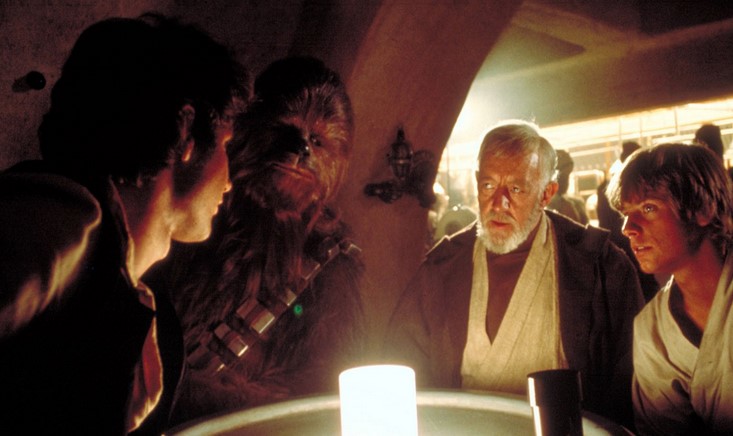
Truth is, it doesn’t say and it doesn’t matter. For this story, the type of currency’s irrelevant. I don’t care if it’s Imperial credits or Old Republic scrip or gold-press latinum or Jawa skulls. Okay, I might care if it’s Jawa skulls because WTF Kenobi why do you have two thousand of these laying around?! What the hell have you been up to out in your little desert hut?

Anyway... no, all we need to know is that two thousand is a good amount (judging off everyone’s reactions) and fifteen more makes it a very good amount. Past that, we just don’t need to know why Solo wants all these Jawa skulls Kenobi’s collected. It’s not important. The dialogue’s solid and sounds believable, which is far more important that a brief segue to explain the various types of Galactic currency and their exchange rates.

This brings me to my third and final point.

Worldbuilding is, in my opinion, a really easy trap to fall into. Because worldbuilding is fun. Seriously. That question game we played up above? We can do that for weeks with worldbuilding. Months. Maybe even years. My world is going to be so huge and so complex with so many races and creeds and economies and social structures and seriously we can spend so much time doing this instead of...

Y’know, actually writing the story.

And that’s how I generally approach worldbuilding. You may need to change this approach a bit, depending on your own story and the kid of setting you want for it, but hopefully this’ll get you a little further down that path. Or help you find your own path.

Next time... endings.

Maybe.

Until then, go write.

Thursday, July 16, 2020

A Compass That Doesn’t Point North

A few weeks back I talked about things getting their genres mid-identified, and afterwards somebody asked an interesting follow up. Namely, how do we identify genres? What are the benchmarks? How do we decide if something’s sci-fi or a techo-thriller or a romance that just happens to be set in a sci-fi world?

I know this sounds like a simple question, but it isn’t. For a couple reasons. Which I shall go over now.

First and foremost thing to remember—I shouldn’t worry about genre while I’m writing. Genre’s really a marketing tool more than anything else, so it doesn’t have a lot of use on the creative/ artistic side of things. In fact, if I’m worrying a lot about the guidelines of a given genre while I’m writing, I may want to take a step back and make sure I’m not just trying to jump on a trend. In my experience... that doesn’t work out most of the time.

With that in mind... what even is genre? A great way to think of it is a compass (many thanks to Pierce Brown for this analogy). Genre points you in the general direction of things you’re looking for. You want to head south-west? Just keep going that way. You want to find horror novels? They’re all over there.

And that leads us to another good way to think of it, maybe an even more relatable one. Where would my book get stocked in the bookstore? Don’t think about getting misshelved or getting featured on that best-sellers endcap. No excuses, no avoiding the question. Picture your favorite store and decide where would it be shelved in that store. 

If I can’t answer this... I have a problem. Because this is how an agent’s going to try to sell my book. “It’s something new to go here.” Even if I’m just planning on self-publishing an ebook, Amazon’s going to want to know how to categorize it.

Let me tell you one last little story. My first published book was Ex-Heroes, which ended up becoming a series of books set in that world and all involving the same basic theme—superheroes fighting zombies in post-apocalyptic Los Angeles. When the series originally came out, it was through a small press that specialized in apocalyptic fiction, specifically zombie fiction. That was their niche, and they filled it perfectly. So they heavily emphasized the zombie/ post-apocalyptic aspects of the book in their publicity for it. That’s the direction their compass pointed.

But... by book three the series had moved to Broadway Paperbacks at Random House, and they wanted something that would promote well at comic conventions. So... the superheroes became the new focus. And so the compass needle for the books swung from the horror section (in the few stores the small press had gotten them into) to the sci-fi section.

My point being... life finds a way.

No, sorry, my point is that in both cases, the genre gave people a good idea what they’d find when they opened the book. Post-apocalyptic zombies. Superheroes.

So, that said... let’s talk very rough guidelines for a few basic genres. I won’t be able to touch on every genre (and may not even do a fantastic job with these), but I figure if you’re here looking for advice from me, there’s a semi-decent chance you’re writing the same kind of stuff you read. Which is me arrogantly assuming you ended up here because you read a couple of my books and liked them.

Science-Fiction—this is when my fictional elements have a rational, scientific explanation behind them. They don’t need to be explained (although hard science fans love it when you can), but they need to fall within a range of believability.

Science-Fantasy—This is when my story elements are hypothetically grounded in science, but (to paraphrase Arthur C. Clarke) they’re so far advanced they’re beyond all possible understanding and essentially magic.

Fantasy—This is when some aspect of the rules of reality are tossed out the window. It might mean magic. It might mean new races or species (dragons, elves, orcs, owlbears, what have you). Fantasy tends to have less technologically-developed settings.

Urban Fantasy—A subgenre I thought was worth mentioning. Here we’re still tossing some of the reality-rules out the window, but we’re specifically doing it in a modern (or near-modern), real-world setting, often with more modern technology alongside it.

Horror—Might sound obvious, but many aspects of these stories involve fear for both the characters and the reader. Depending on my exact subgenre, that fear can have many different causes and intensities.

Romance—again, might sound obvious, but in romance most of the elements revolve around two characters developing a relationship despite various challenges. There may or may not be a sexual element (of varying explicitness) again depending on my subgenre.

Mystery—This is when the main thrust is trying to find answers to a problem—very often (but not always) involving a crime of some sorts. Another good rule of thumb for mysteries—they tend to center around something that already happened. The mystery is past tense.

Thriller—Somewhat similar to mysteries, this is when the plot elements involve a current, ongoing problem. Because of this, thrillers also tend to have a strong action component and fast pacing. The rule of thumb—thrillers are happening right now.

That’s not all possible genres (not even close), and there are sooo many sub-genres, but it’s enough to get you started.

One last thing to tag onto this. You’ve probably heard of terms like young adult or middle grade. It’s worth noting these aren’t actually genres in and of themselves, but additional guidelines that get applied to a given story. It’s not about my story as much as it is about how I’m choosing to tell that story.

All of this leads me to my final bit of advice, which kind of ties back to that earlier post. If I had to give a one or two sentence elevator pitch about my story, what would be in that pitch? What would I be focusing on? Would I be talking about space elevators and moon colonies, or would I be emphasizing the zombie hordes rising from their graves? Remember—I’ve only got two sentences, and they can’t be run-ons. Elevator pitch. Very fast, very clear.

Consider Twilight. It has vampires and werewolves and more than a few deaths... but it’s not a horror story. It barely counts as urban fantasy. The thing we’d emphasize in our elevator pitch is the high schooler who falls in love with a vampire. It’s a romance novel. Supernatural romance if we want to start focusing down.

And remember—there may be elements to my story that’d normally be immediate signs of one genre, but they don’t come up in that elevator pitch. That’s okay. I shouldn’t try to cram them in. Tamsyn Muir’s Gideon the Ninth has lots of raunchy jokes and a few spaceships, but I’d bet 99% of the people who’ve read it don’t think of it as a comedy or a sci-fi novel--their minds jump right to the necromancy and the murder mystery.

And that’s all I’ve got to say about genre. Unless anyone has any specific questions?

Next time...
Well, in some beautiful, alternate world we all sheltered in place all through March and April, wore our masks for May, and now it’s perfectly safe for all of us to attend San Diego Comic Con next week! YAY!

But in this world, alas, SDCC was cancelled because of folks who refused to do those things. There are still going to be some virtual events, though. I’m doing a panel on sci-fi writing next Friday at 4:00. I’m hoping to have a new Coffeehouse video up by then. And I’m also going to be doing a special Saturday Geekery, live-tweeting a few B-movie classics with some friends. You should come join us.

And all this means that next time, I may revisit and revise my list of top B-movie mistakes.

So until then, go write.

And, c’mon... wear your mask.

Thursday, June 18, 2020

The Maltese MacGuffin

So, last week I talked a little bit about a couple genre problems I see pop up all the time. I think they’re most common in fantasy, sci-fi, and horror, but the truth is they show up all over the place. It was a fun little rant, You should check it out if you missed it.

There was also one other genre problem I wanted to talk about, but I didn’t want that post to get ridiculously long. And in an odd way, this is sort of a reverse-genre problem. Less a problem with writing genre, more one with identifying it.

I’d like to talk to you about a little indie film from a few years back called Pulp Fiction. Maybe you’ve heard of it? Excellent.

What’s that? How does this relate to genre rant, you ask? I mean, Pulp Fiction clearly isn’t a genre movie. Not in that sci-fi/fantasy sense, anyway.

Except... well, do you remember the mysterious briefcase that floats through the story? The one with something bright and glowing inside of it, something we never see. There are a lot of theories out there about what’s in the briefcase, but one of the more interesting ones is that it’s Marsellus Wallace’s soul. He made a deal with the devil as a young man and now he’s made a new deal to get it back. Jules and Vincent, you see, are the go-betweens who are getting the soul from Satan’s reps (Brett and his two partners). This is why the briefcase’s combination is 666 and why everyone is stunned by the beauty of the thing in the case—it’s a pure, innocent soul. It also explain why the bad guys can’t hit Vince and Jules—it really is divine protection.

And if the movie’s got this spiritual/magic element to it now—souls and the devil and actual divine protection—well... isn’t this a gritty urban fantasy movie? I mean, that’s pretty close to the definition of urban fantasy. Maybe supernatural crime or supernatural noir, if we want to give a more flavorful description.

Of course the real question is this. If it is Wallace’s soul in the briefcase... what changes in the movie? What would be different?

Before you answer, let me point out the thing in the briefcase is what we’d call a MacGuffin. It’s an object that drives the plot without really having anything to do with it. The Maltese Falcon’s another famous one. It’s the motivation behind everything that happens in the movie—every death and betrayal and double cross—but the titular statue only shows up in the last ten minutes.

So the answer to the above question about “what would be different” is, of course, nothing. Again, the thing in the briefcase is just a MacGuffin. It could contain a human soul, a gold brick, a Tron ID disc, absolutely anything... and it wouldn’t change the plot in the slightest. Because it isn’t actually interacting with anything in a meaningful way. We can make an argument the briefcase is, but whatever’s inside it is... irrelevant.

So it’d be kinda dumb to call Pulp Fiction an urban fantasy movie. The sole element that would put it in that genre is almost completely disconnected from the plot and/or story. It may contain that element--that plot device, if you will—but that doesn’t necessarily push the movie into a different genre.

Which is the problem I wanted to talk about. Some folks have a bad habit of using a single element of a book or movie to justify bumping it into a new genre. I’ve talked about this a couple times with superpowers stories that try to call themselves superhero stories, and the problems that can cause. Just because someone’s using a sword doesn’t make my story high fantasy or historical fiction. Setting it ten years in the future doesn’t automatically mean it’s sci-fi. And just because there might be a soul in that briefcase doesn’t make Pulp Fiction urban fantasy.

I’ve seen this sooooo many times. You probably have as well. A book or show that’s really X but got marketed as Y by the author or publisher. Something that has one simple conceit to it that could be a genre element, but really the story fits into another genre altogether.

As I’ve mentioned before with superhero stories vs. superpowers stories, the big problem here becomes audience expectations. If everybody had gone into Pulp Fiction being told it was a supernatural crime story, it would’ve affected how they viewed everything they were shown. And let’s be honest... they would’ve been annoyed. Probably pissed. Because the story went against everything they thought they were going get.

What’s my point? I need to be honest with genre labels. I need to be aware of what my story really is, even if it’s got a MacGuffin or setting that might make it look like something else. Again, having a sword doesn’t suddenly make this historical fiction.

And yeah, it’s really tempting when comedies are selling to say “Why, yes, my manuscript Terminus contains several laughs and completely reads as a comedy.” But this almost always works against me. Sure, sometimes a reader will say “this isn’t what I expected at all but I ended up loving it anyway...” but those times are few and far between.

So be honest with yourself about what you’ve written. Even if it has ghosts or clones. Or a disembodied soul in a briefcase.

Next time, speaking of genre (some more) I’ve got a little mystery for you to ponder...

Until then, go write.

Thursday, June 11, 2020

Steampunk Mechdragon Issues

Like a lot of you, I’m still feeling a little overwhelmed by everything going on right now. Awe-inspiring stuff. Long overdue stuff. But still overwhelming.

I thought about updating my list of top ten B-movie mistakes, but I really haven’t been up for bad movie geekery for a few weeks. So I shelved that idea for a while. Then it occurred to me there’s a related topic I haven’t discussed in... well, years. Not directly, anyway.

It probably goes without saying that I really like genre fiction. I grew up with Doctor Who and Star Wars and comics about Spaceknights who came to Earth to protect us from alien shapeshifting sorcerers. Sci-fi, horror, fantasy—I like reading ‘em, I like writing ‘em.

But you probably knew all of that already.

Point is, I’ve consumed so much of this stuff. In so many formats. A lot of it’s been fantastic. Some of it’s been... not so fantastic.

As I started taking storytelling and writing more seriously, as I started really breaking things down and studying them, I noticed a few similarities. Common problems that showed up again and again, especially in genre stories. Three of them.

To be clear, they’re not confined specifically to these stories—you might see these issues crop up in mysteries or romances or even literary fiction. They’re also not the only problems these stories can ever have (not by a longshot). But it’s kind of amazing how often a problematic sci-fi or fantasy and even horror will have one or more of these three issues.

The first issue is when we bury our stories in too much of our chosen genre. If I have an idea, it gets included in the story. No matter what it is—neat visual, cool character beat, clever way a door opens—I’ll fit it in there. If it was scary in that story, it’ll be scary in my story. Most of us have probably read a genre novel that went to great lengths to explain how the weapons, shoes, uniforms, food, transportation, education, and economics are all very different on that other world or in that not-too-distant future. If it's a magical world, everything is ancient and magical and built by the fae. If it's a sci-fi world, everything has nanites and AI and came from interdimensional aliens. People don’t wear glasses in these stories, they have optykwear, and a good set of optykwear can cost you seven or eight neshseks.

The problem with writing like this is my audience has nothing to connect with as they’re overwhelmed with all these unfamiliar elements. The people are different. The setting’s different. Motivations are different. Yeah, it’s a really cool alternate world where the Dark Ages never happened, all coinage is brass,  and wars are now fought with steampunk robot dragons run by difference engines, but the important thing is that my readers need to be able to understand this world and relate to it, while it’s on the page in front of them.

All the worldbuilding is good, but my story needs to have something my audience can immediately identify with in some way, and it’s best if it’s the main character. Someone who hates their job, who wants something they can’t have, or maybe who just feels like an outsider. A person with a universal need or desire.

When a reader believes in my characters, they’ll believe in what’s happening to my characters. It has to do with willing suspension of disbelief—I can’t believe in the big elements of a story if I don’t believe in the basics of it. Once I’m invested in Wakko’s life, then I’ll be more willing to go with it when he goes to work shoveling coal in the belly of a a giant steampunk dragon (but one day he’s going to be the commodore of the whole mechdragon fleet—you just wait and see)

There’s one very closely related issue to this, so close I’m not even going to branch off and make it a separate thing. Sometimes, all the laying-on of more genre gets a little monotone. Dramatic stories that are non-stop drama. The horror movie that’s nothing but horror. The magical fantasy series where everything is magical and fantastic. No matter how much I love this thing, it gets boring pretty quick when it’s all I’m getting.

We want our fiction to mirror our lives as much as possible, and the truth is very few of us lead monotone lives. They get broken up with moments of laughter (not always at appropriate times), random pettiness, unexpected excitement, casual flirting, and more. Our stories should be the same way.

The second issue happens when I try to explain everything. It’s confusing enough that I dropped readers right into a steampunk mechdragon battle, but now I’m going to pause that battle for ten pages while I explain how mechdragons came to be and where the best coal for their boilers is mined and how the creation of functioning wings (and the required steam- piston musculature) changed the nature of battle and hey I should probably talk about dragon tactics for a bit, right?

I think most people reading this have seen a story or two that suddenly deviated into that sort of excessive, often unnecessary exposition. I’ve read many stories that suddenly go to great lengths to explain how and why the serial killer turned out the way she did. Or how she ended up with superpowers and exactly how they work. Or both. At length.

What this leads to is stories that feel very detailed, but very little ever actually, y’know, happens. Page after page of explanation can add up really fast, and suddenly a third of my book is just... details.  And while I’m going over those details, my characters are just sitting around twiddling their thumbs, waiting for something to happen again. It can also annoy my readers as all this information gets doled out, especially if it’s something that feels unnecessary and unmotivated.

I think there’s two ways to deal with this issue. One is something I’ve talked about here in the past—the ignorant stranger.  If I’m going to explain things, I should have an actual, in-story reason for them to be explained. Wakko may know the day-to-day workings of a mechdragon, but Phoebe’s a stowaway and he needs to help her pass as a crew member or she’ll be “dropped off”... and they’re three thousand feet up. So he has a solid, understandable reason to explain everything and she can ask a lot of the questions my readers probably have.

The other way to deal with this issue is the quick and easy one. Cut it. I can delete anything that isn’t actually necessary to the story. This can be tough, because, I mean... steampunk mechdragon wars! There’s so much cool stuff in those three words. But how much of it do I really need? Is it relevant or is it just me piling more “genre” onto the plot and story? Yeah, ceramic teeth are cool, especially on that scale, and I’ve come up with a crazy way how they’re made, but does my story fall apart if the reader just knows the mechdragon has... teeth? Does it change anything if in their mind they picture the teeth are brass or steel or diamond? Pages are precious—do I really want to spend part of one on this?

The third issue is actually the reverse of the last one. It’s when I don’t explain anything. There’s so much new stuff that there’s no context. I can’t tell if neshseks are coins or bills or maybe they’re not even money. Maybe this world works on the barter system and they’re some kind of gourd. Could be a massage or a sex act or maybe it’s some kind of pet? Maybe it’s a pet that gives great massages?

But it’s not just terminology. The genres also tend to collect mysterious characters who drop vague hints or implied threats for... reasons. Creepy messages appear on walls, sidewalks, computer screens and we never learn how they got there. Disturbing objects are discovered in the attic and never, ever discussed again.

I think there are two general reasons this issue happens. First is that, as the writer, I’ve sunk deep into my fictional world for the past five months and I forgot the reader... hasn’t. They have no idea what a neshsek looks like. Or what it’s used for. Or how many you can seriously expect to get from a relative stranger for two tinted sets of optykwear

The other reason is that people are trying to duplicate the sense of mystery and anticipation they got from another story, but they don’t really understand how and why it worked there. A lot of these weird mysteries are just a general lack. There is no explanation or reason or motivation behind what’s happening in the story. It’s just happening right now because... I wanted to tell a weird creepy story.

A friend of mine gave me a great rule of thumb once, and I think it’s the best way to deal with this issue. I kinda mentioned it up above—my main characters should mirror my audience. If my goal’s to make my audience puzzled and eager to learn more, then really Phoebe should be puzzled and want to learn more. If the reader’s angry about something, Wakko should probably be angry about it, too. Likewise, if Phoebe and Wakko are both really annoyed because they still don’t know what’s going on... well, I can probably guess how my audience feels right now, one way or the other...

Are these the only three problems that might crop up in my genre writing? No, not at all. I have faith in you that you will find awesome, all-new problems. But these are the ones I see appear again and again. So maybe they’re worth looking for in my manuscript. Just in case.

Next time... I’ve got kind of a follow up idea to this. It didn’t really fit here, but it’s a genre problem. Sort of.

Stay safe out there. Wash your hands. Wear your mask.

Until next time, go write.

Thursday, December 12, 2013

Voodoo Zombie vs Biochem Zombie

            This week’s blog title is from a future Asylum movie for SyFy.  It’s not in development or anything, as far as I know, but I’m pretty sure just by writing that online I’ve caused it to happen.  It’s the internet butterfly effect.
            And speaking of that geeky reference to a geeky reference...
            What that title really comes from is a note from a friend of mine, the editor at a sci-fi/ science site called Giant Freakin Robot (check it out—it’s fun and educational).  He was explaining what kind of movies and television shows the site covered.  To paraphrase, if the zombies have biochemical or viral origins, GFR will cover them, but not if they’re raised by voodoo spells or curses.
            Over the past few years, a lot of genres have really blended together.  In books and movies, it’s not uncommon to see strong action, drama, or even comedy threads mixing in with sci-fi, fantasy, or horror.  Nowadays it’s just as common for protagonists to fight the undead as it is to run from them, and in doing so writers and readers have created dozens of subgenres.
            Personally, as I’ve mentioned before, I’m a big fan of this.  I think any story that stays too much in one vein tends to get dry pretty quick.  There’s almost always some humor in every situation, even incredibly dark ones.  It’s not uncommon for men and women to have inappropriate thoughts at really inopportune times (or to act on them).  Hey, I grew up on Doctor Who, so in my mind it makes perfect sense for religion-obsessed barbarian tribes to be descended from intergalactic survey teams or for aliens to be controlling the Loch Ness Monster.
            Now, sad but true, there aren’t a lot of firm rules on mixing these things.  Every story is different, so the way my story blends horror and comedy is going to be different from the way your story blends them.  Ten of us can use the same basic plot, but we’re each going to end up with our own unique story.  My characters won’t react the same way as yours, hers will make different decisions than his.
             As such it’s hard for anyone to say which amount is right or wrong without having all the context.  To use one of my frequent cooking analogies, it’s kind of like if I asked “is this too much sugar?”  It’s an impossible question to answer without knowing what I’m cooking, what are the recipe standards, what are my preferences, and what are the preferences of the people who are going to be eating it.  My own skill level in the kitchen matters, too, on whether I should be trying a fried Alaska, death by chocolate, or maybe just a bowl of Captain Crunch.
            However... all that being said...
            I think when these mixed genre stories go bad, a lot of folks tend to look at the small issues and ignore the big ones.  Something isn’t bad because it mixed androids and artificial intelligence with Arthurian legends, or because it introduced a lot of comedy into the Cthulhu mythos.  Those are just the easiest targets, so they get the criticism first. 
            What I’ve come to realize is that most bad genre stuff tends to be bad for the same three reasons.  Granted, there’s always going to be someone who tries to write a sexy mutant cockroach story (or something worse), and there will always be people who just load up on basic mistakes like spelling or flat characters or incoherent plotting. In my experience, though, most genre stuff goes wrong in three basic ways—whether my story is one pure genre or several overlapping ones.
            The first and often biggest mistake is when authors try to make their stories too fantastic.  If I have an idea, it gets included in the story.  No matter what it is, I’ll cram it in there.  If you’ve ever watched old slasher movies, you know most of them just devolved into creative ways to kill people, and sometimes there are excess characters for no other reason but to allow for more inventive deaths.  Most of us have probably read a sci fi novel that went to great lengths to explain how the weapons, shoes, uniforms, food, transportation, education, and economics are all very different on that other world or in that not-so-distant future.  I read a book recently that had to do with... well, everything.  No, seriously.  Government conspiracies, bio-engineering, super-soldiers, angels and demons, secret identities, zombies, aliens from Neptune, extraterrestrial dragons, thrill-killers, child abuse, sadism, torture porn, regular porn, and lost civilizations in the Amazon.  All of these things were major threads and elements in one average-length novel.  Heck, I’m tempted to say it was even on the shorter side.
            The problem with writing a story like this (book or screenplay) is my audience has nothing to connect with as they’re overwhelmed with all these unfamiliar elements.  The people are different.  The setting is different.  Motivations are different.  I may have created the most amazing post-apocalyptic matriarchal feudal society run by a supercomputer (and its secret android army) that’s ever been seen, but my readers need to be able to understand those characters and that society and relate to it right now while it’s on the page in front of them.
            This is closely related to the second problem—when the writer tries to explain everything.  Bad enough that I felt the need to include the secret android army, but now I’m also going to write about how they were first developed by the Mysteridroid Corporation three hundred years ago, how they see the world, and even how they recharge in various situations.  I think most people reading this have read a story or two that suddenly deviated into exposition like that.  Edgar Rice Burroughs had an awful habit in his Mars books of having his characters stop and explain various aspects of Barsoomian technology (one midnight walk with the Princess famously spun into a discussion of how radium bullets are manufactured and used).  A few recent horror films have gone to great lengths to explain why their antagonist turned out the way he or she did, even though that mystery was part of the character’s strength.
            What this often leads to is stories that feel very exotic and detailed, but very little ever actually happens in them.  Page after page of explanation can add up really fast, and no matter what my chosen format is, there's only going to be so many pages.  Suddenly a third of my book is just... details.  And while I’m going over those details, my characters are just sitting around twiddling their thumbs, waiting for something to happen again.  This can also lead to a bit of resentment from the reader as I’m spoon-feeding them all this information.
            As it turns out, problem number three is the flipside of two.  It’s when the writer doesn’t explain anything.  I’ve gone through whole chapters of a book trying to figure out which character was Kristo.  Mystery Science Theater 3000 once had a running gag about a mystical object (or maybe it was a person...) called “the Sampo.”  We’ve all seen stories where people ride “twyrfels” and we’re left wondering what the hell a twyrfel is (an animal? a vehicle? some kind of transporter beam?).
            There’s also the folks who hide motives and actions to create a sense of mystery.    Characters will appear, make a mysterious statement or three, and then vanish from the story.  Creepy messages will be found on walls, sidewalks, or computer screens and we never learn how they got there.  Disturbing objects are found in the cellar, but never discussed again.  Ever.
            There are two general causes behind this, in my experience.  In the first case it’s when I’ve sunk so far into my fictional world and spent so much time there that I forget the reader isn’t quite so familiar with it.  I can tell you the whole history of the twyrfel as transportation, so I forget that you don’t even know what one looks like.  In the second case, they’re trying to duplicate the tone of books like House of Leaves or shows in the vein of LOST or Person of Interest, but they don’t really understand how those stories achieved that tone.  This is especially frustrating when there’s clearly no real mystery, just a bunch of withheld information.
            So, there’s three big, common mistakes in genre fiction.  Sci-fi, horror, fantasy—we could probably give an example of each failing for each genre.  We could even make a chart.
            Or we could go over a few simple ways to avoid these issues...
            For that first problem up above, my story needs to have something my audience can immediately relate to in some way, and it’s best if it’s the main character.  Someone who hates their job, who wants something they can’t have, or maybe who just feels like an outsider.  Simply put, a person with a universal need or desire. 
            I’ve mentioned once or thrice that believable characters make for believable stories, and that’s especially true here in the genres.  Seriously, pick a popular genre story and I’ll bet the main character has a very humble, relatable origin.  Dan Torrance is a nursing home orderly before he’s forced to confront the True Knot.  Katniss Everdeen is just trying to put food on the table when she’s forced to fight for her life in an arena.  John Anderson (a.k.a. Neo) was a cubicle drone who was dragged into a war between humanity and sentient machines.  Dana, Marty, Jules, and their friends were regular college students before they decided to spend their vacation at that old cabin in the woods.  Hell, even in Pacific Rim, one of the most over-the-top movies of the year, our hero Raleigh is working a construction job when we catch up to him in the present, still shaking off the death of his brother.
            If a reader believes in my characters, they’ll believe what’s happening to my characters.  It has to do with willing suspension of disbelief—I can’t believe in the big elements of a story if I don’t believe in the basic building blocks of it.  Once I’m invested in Wakko’s life, then I’ll be more willing to go with it when he finds a lost civilization under the bowling alley or when he finds out the crab people have been running his life since he was born.
            I think there’s two ways to deal with the second problem, too much information.  One is a concept I’ve talked about here in the past—the ignorant stranger.  If things are going to be explained, I should have an actual, in-story reason for that explanation.  Yakko may know all about the secret android army, but Dot doesn’t.  This gives him a valid reason to talk about the Mysteridroid Corporation for a page and a half.  I just need to be sure this really is an ignorant stranger situation and I’m not falling back on the dreaded “as you know...” crutch.
           The other way is, well, for me to just get rid of all that excess information.  Cut it.  I can delete anything that isn’t actually necessary to the story.  This can be tough, because genre stuff tends to involve a lot of new spins on pretty mundane things.  Special pistols, close combat weapons, energy sources, transportation, zombie origins... all that stuff I mentioned up above.
            But is it necessary to the story, or is it just there to help push things deeper into my chosen genre?  It’s cool that my hero has an energy sidearm that uses ultrasonic beams focused through a blue quartz crystal to set up a harmonic vibration in the target’s cells which causes extreme pain and eventual molecular disruption, all powered by a cold-fusion microbattery... but in the long run is this any different than just saying he has a blaster?  Or a pistol?  I may have the most inventive take on teleportation ever, but if there’s no point to teleportation technology in my story except to show off this idea... why bother?  If the plot flows along fine without it, why take up space on the page with it?
            The third problem, not explaining anything, is a little tougher.  On one level, it’s just a matter of skill and practice.  I need to be a good enough writer to know how my plot’s shaping up and to empathize with my audience. 
            A friend of mine gave me a great rule of thumb once—my main character should mirror my audience.  If my main character’s angry about something, the reader should be angry about it.  If my protagonist is puzzled, it means the audience should be puzzled. And if my hero is annoyed because he still doesn’t know what’s going on... well, that’s probably a sign I should have a reveal or two in the immediate future.
            The other way to deal with that third problem is to be sure my story actually has a real mystery, not just the sense of one.  Tying in to what I just mentioned, nothing will aggravate my readers more than to stumble through a story alongside my hero and then discover I’m not revealing a single thread of my mystery.  Or, worse yet, they might realize there isn’t a mystery at all—I was just stringing them along with some nonsense clues.  I need to know what the secret is going to be and work backwards, making sure my characters are smart enough to uncover it or honestly motivated to hide it, depending on which side of the mystery they’re on.
            Are these three the only problems that might crop up in my genre writing?  Not by a long shot.  But these are the ones I see cropping up again and again, so they’re worth looking at and considering.  And fixing.
            Next time, the last post before Christmas, I’d like to share a little holiday conversation I had with the writer-director of Iron Man 3, back when he was just the guy who did Kiss Kiss Bang Bang,
            Until then, go write.

Thursday, April 18, 2013

Stripped Bare

            First, time for the shameless plug. Ex-Patriots, the second book in the Ex-Heroes series, gets re-released on Tuesday from Broadway Books with a cool new cover.  It’ll be at bookstores, airports, your local PX... pretty much everywhere.  You can pre-order it over there on the side, or go visit your friendly neighborhood bookstore and ask them to get you a copy.
            Now for a quick tip.  Well, quick compared to last week’s ramblings.
            If you’ve been reading this collection of rants for a while, you’ve probably picked up that I’m a bit of a genre fan.  If you’ve read any of my books, it’s probably very clear.  Sci-fi stories, horror stories, fantasy stories... I love this stuff.
            Of course, a big part of loving something is recognizing the flaws in it.  Let’s be honest—there are a lot of horrible genre stories out there.  A real lot.  Depending on who you talk to, some of them are mine...
            Anyway, it struck me the other day that there’s a simple test for good genre stories.  Can I explain my story—and have it make sense—without any of those genre elements?  For example...

--Without the strange force field, Under the Dome is the story of an isolated town falling apart as different characters make different power grabs.

--A Princess of Mars becomes a straightforward fish out of water story if you pull out the sci-fi elements.  John Carter could be anyone dumped in a strange, baffling culture where he doesn’t speak the language.

--SuperTroopers is still a solid story about police rivalry and budget cuts even without all the comedy.  With the corrupt cops and drug smugglers, you could almost make it a crime drama.  Or a Romeo & Juliet-style love story.

--If you take the undead out of I Am Legend (any version of it), it’s a desert island story.  It’s one man alone (or sometimes with a dog) trying to balance staying alive with staying sane.

--Without magic, the Harry Potter books are the story of an unpopular orphan as he grows up, makes friends, finds his way in life, and learns about the parents he never met.

--Ghostbusters without comedy becomes a great sci-fi/ horror story about a Sumerian prophesy come to life.  Strip out the sci-fi/ horror and it’s a comedy about a bunch of guys trying to start a bizarre business who suddenly discover they’ve hit a gold mine and everyone wants to hire them.

--IT without the horror is just a group of childhood friends who reunite to solve a puzzle from their childhood.

--Pitch Black is the story of shipwreck survivors who find themselves dependant on their somewhat-misjudged prisoner to protect them from dangerous predators.

            Now, I’m not saying this as a jab at these books or movies.  The point is not that these tales can be boiled down to much simpler plots.  It’s that they have underlying plots which have nothing to do with their respective sci-fi/fantasy/horror elements.
            Y’see, Timmy, if I strip out the genre components of my story, I should still have a story.  Some writers depend so much on their genre stuff that they don’t grasp they haven’t actually developed any sort of real plot.  They’ve just got a pile of cool elements that doesn’t really add up to anything.  And if they looked at it without the sci-fi/fantasy/horror elements, they’d see that immediately.
           So, get your story out and start stripping.  Pull off all those layers, take a good look at what’s underneath, and... well, make sure you’ve got something worth looking at.
            Next time...
            Okay, I’m going to be honest.  Next time is a week before this new book is due on my editor’s desk, so I’m not going to be here.  I’ll be busy panicking.
            Week after that, though, I’d like to talk with you about the dreaded Scooby Ambiguity.  And I’ll probably be a day early because Thursday morning I head to Dallas for Texas Frightmare.
            Until then, go write.