Showing posts with label rules. Show all posts

Wednesday, January 5, 2022

A New Year? Let’s Start With...

Welcome back. Glad to see you all successfully made the transition to 2021. Crap, I mean 2022. Anyway, for me, it's been new year, new computer. Which really meant two days setting up said computer after two weeks of stressing over a new word processing program.

But that's all in the past now.

Normally I’d post this start-o’-the-year ramble (or any other post) on Thursday. But that’s one of the things I want to change up this year (more on that below). Plus there’s a chance tomorrow might be a little chaotic this year (and that chaos could come in many forms and/or directions), so I figured I’d get this out a little early.

And what is this, you ask?


Well, the ranty blog’s about writing advice. It used to be a lot more ranty, but I’ve tried to mellow out over the years. I always wanted this to be a more positive place for aspiring writers and I’m always trying to bend things that way. Less “don’t do that” and more “try to do this,” if that makes sense? A lot of times I’ll revisit a topic just so I can do it from that angle.

In the past, the majority of the posts were writing advice. Not publishing, but writing as the art of stringing words together into a narrative that will connect with an audience. That was the original point of this, to make up for the lack of basic writing advice out there. But over the past two years, with everything going on, people have asked questions about the business side of things and the greater writing meta-verse, so to speak, and I’ve been trying to help out by answering those.

The ranty blog’s also about a little bit about motivation. Helping you to sit down and get those words out. Maybe suggesting some easier ways to do something. Maybe giving you a little challenge or a tip or a trick to play with when your brain’s stuck on whatever. I’ve tried to do this a few times and a few different ways. For a lot of folks, the biggest, toughest part of writing is actually sitting down and writing, so I’m here to give you the occasional firm kick in the butt. Or a gentle one. Whatever works best for you.

Finally, if I’m doing this right, I’m giving you a little reassurance. There’s so much information flying around out there. We can go looking for it or just get smacked in the face with it on social media. How fast and productive this person is. What a great deal they got. How easy this was for them. It's easy to see something like this and feel like I must be doing something wrong. I mean, if I'm not writing 3000 words a day and I struggle with dialogue and I don't understand structure at all... maybe this just isn't for me? Hell, I only wrote 15,000 words for NaNoWriMo last year, so I must be screwing this up somehow...

If any of this sounds familiar... don't worry about it. Seriously. Hopefully I can convince you you're not wrong, you haven't screwed up, and you should definitely keep at this. Again, everybody approaches this a little differently, and just because somebody's faster or finds this part easier or accomplished that quicker doesn't necessarily mean we need to change how we're doing things.

I suppose at this point it's also fair to say I use this space for self promotion. Not a lot--I don't want to be that guy shoving a book in your face every five minutes--but when the time comes, we do what we need to do. And, y'know, I do have a new book coming out in a few weeks so.... be prepared for that.

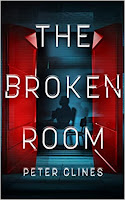
(The Broken Room, available this spring at your favorite local bookstore, chain bookstore, or monolithic online retailer)

And if you've made it this far, a couple changes in the weeks ahead. I'm probably going to be posting a bit more... well, erratically. Still at least once a week, but it won't always be on Thursday. That was just kind of an arbitrary day and more than a few times I've felt kind of stuck and that a few things stumbled because of it. So watch for posts, y'know, whenever. Still probably a lot on Thursday, but other days, too.

Also... I may finally be migrating the ranty blog over to my own webpage-- PeterClines.Com . It's just kind of been sitting there for years and I want to get better about keeping it updated and making it somewhere for people to actually visit, y'know. Plus, that way the ranty blog's a little more under my own control and not subject to the whim of some corporation. I'll make sure you all know if it happens.

And I think that's everything. Any questions? Comments? Requests?

Next time I'm probably going to talk about the people driving this thing.

Until then... go write.

Thursday, August 19, 2021

Non-Standard Cake

At this point I’ve blabbed on about my weekend movie/Twitter habits more than a few times. I won’t bore you with them again. Just wanted to say that’s what inspired this week’s blathering.

I’ve mentioned once or twice before that there are some very standard shots in filmmaking. Decades—almost a century, really—of natural selection in the editing bay has established these as the solid basics. The foundation of a visual storytelling language we've all picked up on. Once you know these shots, you’ll spot them again and again and again in every show or movie you watch.

Of course, they’re not the only shots used in filmmaking. Some clever filmmakers figure out how to combine these basics with a push in or some other camera move, making what would be a static shot a little more dynamic at a key moment. Others may skip over one type of shot in a certain scene to heighten tension, or maybe to decrease it. And some figure out how to toss all of those shots and create something new that does the job they need done better than anything else could.

Which brings us, naturally, to cake.

I’ve mentioned growing up poor here once or thrice before. One aspect of this is we didn’t have treats in the house that much when I was a kid (or, y’know, food in general sometimes). So my mom was always looking for ways to save money and cut corners—a lot of stuff we’d call lifehacks today. One she stumbled across one time was a magazine article suggesting (you may have heard this one) mayonnaise in cake recipes instead of eggs and cooking oil. I mean, that’s what mayo is, right? Eggs and oil. My brother and I were highly skeptical and voiced our well-thought-out concerns (“Eeewwwwwwwww!”), but my mom tried it anyway.

Much to everyone’s surprise, it worked fine. The cake looked and tasted like... well, cake. We couldn’t even tell the difference. Granted, my palate was a little less refined back then, but to a generally picky kid who wanted chocolate cake... it was chocolate cake.

Here’s another fun cake story. I’m a big fan of German oatmeal cake. When I (finally) grew out of little kid basic-chocolate love, German oatmeal became my new favorite. And still is. My partner’s made it several times for my birthday, even when we were dirt poor and the whole thing was 99¢ Store mix and frosting. Since then she’s made it from scratch a few times, too.

But... it was never quite right. It wasn’t bad, by any means (and I always ate way more than I should’ve) but something about it didn’t quite line up with how I remembered it as a kid. And then this year she stumbled across a version of the recipe saying to broil the cake for a few minutes once it had been frosted, which would let the frosting melt, sink in, and even caramelize a tiny bit. And it was fantastic. It wasn’t bad before, but this alteration to the recipe made it so much better.

Of course, we all understand that these aren’t random choices. There’s a reason that mayo substitution trick works, but we couldn’t do the same thing with any condiment and expect the same results. Horseradish mustard in cake mix? I feel safe saying it’s not going to be all that tasty. Likewise, there’s a big difference between tweaking the recipe to broil the cake as opposed to, say, grilling it over an open flame. We definitely won’t get the same results.

And just because these results worked in cake doesn’t mean they’ll work anywhere else. This mayonnaise-for-eggs trick isn’t going to work if I’m trying to make an omelet. Definitely won’t work for steak tartar. Heck, I might not even be able to make it work in pancakes and they’re pretty close to being... well, cake.

Also worth noting.. the mayo cake wasn’t really any better. It wasn’t suddenly the best cake I’d ever had. As I mentioned, one of my few solid memories of this is all of us talking about how you couldn’t notice the difference at all. It just tasted like... cake. So –barring some weird dietary restrictions—it’s not really worth a new recipe. It’s just a good trick to remember if I happen to run out of eggs.

I’ve used cooking a few times before as a metaphor for writing, so hopefully at this point you’ve got a vague sense where I’m going with this.

There’s nothing wrong with trying new and different things. Really, it’s what we’re all trying to do, right? To find a new way of telling an old story, or a completely unexpected way to tell a new story. To solve those storytelling problems in a way nobody’s ever solved them before.

But the key point here is I want my new and different solutions to be better than the standard way of solving these problems. If I figure out a way to do something in my story—a trick with the structure, maybe a clever way of phrasing things, perhaps a very cool way to have a big reveal—and it works so much better than the standard way of doing it... I mean, that’s fantastic. I’ve improved on the original recipe, so to speak, and my end result is even better because of it

If I decide to do things in a new way and it works just the same as the old way, no better no worse, well... personally, I’m a little torn. I mean, it’s not like my new idea’s failing in any way, as far as the story itself is concerned. But I think—and this might just be me—that it’s distracting. Now I’m doing something different and there’s no real point to it except... to be different. I’m doing it just to do it, not to actually make the story better. And that seems—to me, anyway—like I’m trying to draw attention to myself (the author) rather than to my story.

And if my new way of doing things works worse than the old way... well, why would I do that? Why would I want a structure that makes the story much harder to follow? Why would I use phrases or formats that knock my readers out of the story? I mean, it’s (sort of) understandable I might be tempted to try chocolate-and-horseradish mustard cake, but hopefully I can be honest with myself about what came out of that oven and just, y’know, destroy it, rather than forcing the members of the culinary school admissions board to each try a slice.

Y’see, Timmy, people talk about how change is good, but there are times this phrase gets used as more of a defense than a reassurance. Yeah, it’s absolutely okay to try to change things and I shouldn’t worry about trying. But something isn’t automatically good just because it’s a change. Sometimes I’m changing things just to change them, and the only thing different about the final work is me yelling “I changed things!” And other times... well, it’s just bad. I’ve done something that didn’t work and didn’t get the response I wanted. I’ve pushed my reader away rather than drawn them in.

And that’s not going to get me any cake.

Next time... I don’t know. If nobody’s got any questions, maybe I’ll talk about spoilers or something.

Until then, go write. 

Thursday, June 3, 2021

Thank Your Rich Uncle...

Happy Birthday to me. Well, belated birthday. Monday was a day of action figures and LEGO sets and many games and drinks with my fully vaxxed friends. It was a wonderful way to turn <<--DC REBOOT-->> years old.

Anyway... now that I am somewhat old and wise, I wanted to take a moment to blather on about something that’s been itching at my brain for a while. And I know it's going to be a touchy subject for some people, so I'll try to tread lightly.

MFA programs. Why do these things even exist?

See! I told you it'd be touchy! Just to be clear right up front, this is absolutely not a swing at anyone who made it through an MFA program and got a degree. I know MFA writers are popular punching bags for some people, and this is not one of those posts. I’m a huge believer that pretty much all education ends up being useful (even if not always in the way it was intended) and I’ve got massive respect for anyone who actually did it. I enjoyed my four years at UMass, but I also know I wouldn’t’ve had the stamina (or the resources) to make a graduate degree happen. So this is, again, not coming down on anyone who scraped and clawed their way up through a higher level of higher education and came out on top.

You absolutely rock. Seriously. Never doubt it.

The people who gave you that MFA though...

Probably a good point to mention before I get going is none of this has been triple-checked or peer reviewed or anything like that. But within my own experience--including a degree of research specifically about this--I haven't found anything to contradict any of it. Like, a disturbing number of things line up with this half-assed theory I’m about to present to you.

So... one of the main reasons writers and other artists tend to get the liberal/ fruity/ beatnik type labels is because, traditionally, if I wanted to learn one of these fields I just did it. People didn’t go to school to learn how to write, they just wrote. They dropped out of “productive society” and wrote a lot. For the vast majority of folks this meant finding a dirt-cheap apartment in a city close to publishers (to save postage costs), drinking cheap booze, having cheap affairs, and skipping two meals a day to pay for supplies. Eventually (hopefully) I learned from experience, got better, and then people started to pay me. That’s where the stereotype of the starving artist comes from—most of these folks went hungry while they learned their art. I talked about this at length a few birthdays back...

Yeah, if I was really lucky I might find some kind of mentor to show me how to hold a brush, where to hit the marble with the chisel, or to read the first half page of my story and offer a dozen notes right there. But these were kinda few and far-between. I mean, think about it. In terms of any general population (pick your favorite city or state or country) there are only going to be so many successful artists. So out of that limited number, I need to actually find one of them, and it needs to be someone in the field I want to study, and they need to be willing to offer some sort of mentorship, AND they need to have space/ time for me, personally. I mean, there’s probably hundreds of other people looking for mentors too, right? It absolutely happened, no question... but it probably didn’t happen a lot, just applying a little common sense.

Now the reason people had to learn this way is universities and colleges didn’t teach the arts. No painting or dance or acting or writing. Really. They were professional institutions. People went there to learn engineering, medicine, chemistry, law. You know... real jobs.

Worth noting there were a very small number of these schools with writing classes. But even in those cases this wasn't something you got a degree in. It was just a side thing—some exercises to maybe help you write a better closing speech for the jury.

And yes, I know—there were a few specialist art school out there. Very few, comparatively speaking. The odd music academy or dance conservatory. But this wasn’t considered higher education. It was—at best—more like we’d consider a vocational school. And if you think about it, that kind of makes sense. Sure I can teach you how to write notation for sheet music and how to blow on a flute. But I can’t teach you how to compose the song in your head. And as we’ve talked about here many, many times, somebody can’t teach you the “correct” way for you to write. We all need to figure that out for ourselves.

So what changed? How did writing (and the other arts) suddenly become a “teachable” thing? Well, two things happened. Actually, one thing happened, but a second thing had a very powerful impact on that first one.

In reverse order, the second one was Nazis. Hate those guys, right? In case you missed that week of  grade school history, in the mid-late 1930s a right-wing fascist group gained a ton of power in Germany and made life miserable for pretty much everyone in Europe. And a lot of people in Africa. And Asia. Eventually the US joined in the fight (to quote Eddie Izzard, “after a couple of years, we won’t stand for that anymore!”) and sent sixteen million people off to fight.

After WWII, a lot of folks—like with WWI before it—were just left wrecked by the scale of it all. The things they’d done. The things they’d seen. I mean, by the numbers, the odds were you saw someone die every single day. For maybe four years. So when the war ended, most US servicemen got a slow boat home. A deliberately slow boat. So these soldiers had time to breathe, to look at the waves, and to talk. Most importantly, to do it with a bunch of people who’d just gone through the same things they did.

And when they got home, that first thing I mentioned was waiting for them.

Y’see, the US Government had come up with something called the GI Bill. WWI (and its aftermath) was still fresh in a lot of folks’ minds and everybody wanted to make sure this new wave of veterans were taken care of when they came home. So the government said “When you finish your tour, go to college on us! We'll cover it.” Because it was a win-win for the United States. We’re taking care of veterans and we’re making more doctors, engineers, and scientists. Wooo! Yay us! We rock!

So these guys got home, Big Government pulled out the big checkbook and said “Congrats on surviving--what college do you want to go to? What do you want to study? Law? Medicine? Rocket science? We’re going to need some more rocket scientists pretty soon.”

But a bunch of these guys said “Y'know... I think I might just take a year or three off and process all this some more. Work through it. Maybe write a book or some poetry, put some of this stuff in my head down on the page while I try to figure out what I'm doing next.”

Now this wasn’t the first time Uncle Sam had heard something like this (again, WWI just thirty years earlier). So he shoved the checkbook back in his pocket, put a firm hand on these guys’ collective shoulders and said “Good on you, man. You go do what you need to do to get right.”

And that would’ve been it. Except... suddenly the collective colleges and universities of America said “Whoa, whoa, WHOA! You promised us all this GI Bill money! You said hundreds of thousands of soldiers were going to be signing up for college!”

”Yeah,” said Big Government, “but they don't want to be doctors or lawyers now. They just want to write a book about their experiences.”

”Well, let's not be hasty,” said the CEO of All Colleges. “I mean we... we've got writing... programs.”

"You do?”

“Oh, yeah. Yeah. A whole department. Several departments. They could absolutely get a degree in... in the arts. In fine arts, even! You just write those checks, Big Uncle Sammy, we'll have everything ready by September.”

Worth noting my friend M.L. Brennan (college professor and vampire author) heard this line of thought from me a while back and pointed out all of this continued (arguably got a lot worse) in the ‘90s when college loans became a serious for-profit business. Higher education became less about, well, education and more about making money. So it’s not surprising MFA programs multiplied like bunnies shortly after that. You want to go to college for what? Yeah, sure, we’ve got a program for that. Just sign your loan papers...

And that’s how writing became something that's taught. Colleges and universities just wanted the money. Which also meant now they needed to make up rules and guidelines and formulas to try to teach all these things. Because if there weren't any rules, they wouldn’t be able to issue grades and some students couldn’t do better than others. Which would mean this “degree” I got is... well, kinda pointless. Maybe even worthless.

Which brings us to the last thing I'm going to say about MFA programs—their abysmal success rate. Seriously. For most college degrees (of any level), we say “making a living at it” is more or less the end goal of getting the degree. If I go to school to be, say, a high school teacher, and 83% of us in that program become high school teachers, that’s a pretty successful program, right?

With that in mind, as another friend, Kristi Charish, has pointed out... what would you think of a school where less than 5% of education graduates end up making a living as teachers? What could we say about an engineering program where only one or two students out of the entire graduating class actually become engineers?

I mean... seriously, does that sound like a successful program? A terribly useful degree? Especially if there are dozens of other people becoming successful teachers or engineers without that degree? I mean, Kristi told me at her school the science department had produced more successful novelists than the MFA program.

And again, I want to stress, this isn’t about the people who got those degrees. As I said at the start of this, I’m impressed by anyone who makes it through a graduate program. And I absolutely think some useful learning can come out of it.

But if someone’s about to make that choice, I’ve got to be honest... I’d tell them it’s probably not worth it. They might get something out of it, yeah, but odds are they could get that thing somewhere else. Probably a lot easier and definitely a lot cheaper.

Also again... none of this has been rigorously reviewed. There could very well be a dozen facts I missed just sitting out there, ready to tear this whole chain of thought apart brick by brick. And if so, please give me those facts. I’m always glad to know more.

Next time... I want to talk about the story that happens five years later. Or really, the opening that happened five years ago. 

Until then, go write.
Friday, May 28, 2021

The World's Changing...

I touched on something a few weeks back that I thought was worth revisiting.

It’s not unusual for us to set stories in fantastic worlds that are close to our own, or maybe not close at all. Maybe it’s our world but with magic. Maybe it’s a futuristic sci-fi utopia or a historical zombie apocalypse. I’ve talked here once or thrice about the Marvel Universe, and how living there would require an entirely different worldview.

There’s a certain kind of worldbuilding we could probably call  “everything you know is wrong” or maybe “revealing the world behind the world.” It’s one of those stories that starts off as the real world, or maybe a real world, except then our heroes come to learn that there’s a lot more to their world than they believed. We establish that we’re here on Earth, in the real world, and then BAM! Aliens are real, and they live among us! Reality is actually a complex computer simulation.  Secret vampire cabals rule the world.

We’ve all seen some version of this, yes? This moment usually comes right before we start our second act. Now that my characters know what the world really is, they can learn what challenges they’re really up against.

That’s what I mentioned before, but wanted to focus on a bit today. The idea that worldbuilding has to happen in the start of my story. I can fill in details later, but the broad strokes stuff needs to happen early on. Definitely in the first half, I’m tempted to say preferably in the first act.  

The reason it needs to happen this early is context. I’ve talked about this a bit before, too. In this case, it’s how we know what’s possible—or what my character thinks is possible—within the world of the story. If we don’t know what’s normal in a story, how do I know what’s supposed to surprise us? I mean, what would be unbelievable in this world? How do I know if my characters are reacting appropriately? If I’m going to keep altering the rules of the world as the story goes on and on, it makes it harder and harder to get invested in the world and the characters.

So if I’m doing some major worldbuilding in act three... it probably means I’m cheating a bit. I’m rewriting the rules in a big way at the last minute. Suddenly, with less than a hundred pages to go, there’s time travel or ghosts or aliens or teleportation or something that puts a whole new spin on everything! And odds are I’m doing it to create some suspense or a new challenge or to get my characters out of a challenge.

And, well... that’s cheating.

Actually, think of it like playing a game. We should have a general sense of all the rules before we really get going. Even if we just handwave over things for now and say “Fighting the basilisk, ehhhh, we’ll get to that one if it ever comes up,” this still tells us there’s the chance of running into a basilisk and there might be special rules for fighting it. So it won’t be a surprise when these rules show up and get explained later. None of us want to play with that person who at the last minute says “Oh, I forgot to mention... I get 100 extra points just for being the blue dwarf.”

But wait, WAIT, says internet guy #23. Hang on! There are LOTS of stories that don’t tell you things up front. That change the rules at the last minute. He was dead all along! They were on Earth the whole time! She’s actually the Viscountess Isabella!

And this is true. Sort of. Third act twists are very common—and freakin’ amazing when they’re done well, BUT...

One of the basic rules of a twist is that it doesn’t violate anything we’ve seen before—it just makes us look at it in a new light. Most of the example twists I just (vaguely) gave don’t change the core premise of their established worlds at all. For example...

SPOILERS!! BIG SPOILERS FOR THE SIXTH SENSE (AMONG OTHERS)!!

When we find out Dr, Malcolm has been dead the whole time, this isn’t new worldbuilding. I mean, we’ve known ghosts are real for most of the movie. We know little Cole can see them. He even flat out told us “some of them don’t even know they’re dead.” The big twist here doesn’t change any rules or limits of the world as they've been explained to us, it just changes how we look at Malcolm and his interactions with it.

Want to use the old classic Planet of the Apes. Or any number of Twilight Zone episodes)? In all of these a key thing is establishing interstellar travel one way or another, so it’s not breaking any rules to say we might be on another planet, or these aliens are from another planet. All of these stories involve the inherent assumption of what planet we’re on. So again, the story isn’t cheating—it’s just playing us because it knows what we’re going to assume about the world we’re being shown.

End Spoilers!!

But if, in his final showdown with Harry, we found out Voldemort was a cyborg alien from the future, that’s breaking the world we’ve established for the past six books. Likewise, if the next season of Picard has him bringing Data back to life using ancient Vulcan sorcery... that just sounds like nonsense on a bunch of levels, doesn’t it?

Go build incredible worlds. Have fun with them. Just don’t cheat.

Anyway, that’s all I’ve got for you.

Next time... well, this Monday’s my birthday. So next time we see each other I’ll be older and wiser. That being the case, I’ll probably have share some of that newly found wisdom with you.

Until then, go write. 

Thursday, February 25, 2021

The Six-Mile Drop

I follow a lot of writers over on Twitter (and I’m friends with two or three of them), and it’s not unusual for a lot of them (and me, too) to occasionally toss out storytelling advice of one kind or another. As best you can in 280 characters, anyway. Or a longish-thread. Sometimes it’s random encouragements or self-care reminders. A fair amount of time it’s basic guidelines or rules. It all depends on what sparked this particular bit of Twitter-musing.

When we’re talking about guidelines that talk usually revolves around publishing--the business side of things—and how it may affect our writing. Manuscript length. Genre definitions. The preferences of a certain agent or editor.

If someone’s talking about rules, it’s usually stuff every writer eventually has to learn. I need to know what words mean and how to spell them. I’ve got to have a solid understanding of structure. A firm grasp of grammar. My characters will need to measure up in certain ways. The stuff that we see come up again and again, oddly enough, when we talk about good writing.

And the sad truth is, learning the rules generally means study and practice and failure. Followed by more study and more practice and more failure. And eventually some success.

Now, as you’ve probably guessed, anytime someone offers advice like this... there’s pretty much always someone who argues against it. They’ll mention an article they read about someone who did it differently or another tweet they saw about an editor who bought something that didn’t follow the guidelines. In short, they’re pointing to an exception to the rule in an attempt to disprove the rule.

A lot of the time, oddly enough, these folks are doing this to justify their own opinions and preferences.  I don’t like statement X, or what it implies, so I’ll find an example where X isn’t true and use it as proof that X is never true. Therefore, my opinions and preferences aren’t wrong.

Now, let’s be clear on one thing—there are always exceptions to the rule. Always.  Anyone who tells you that something is never-question-it, 100% always this way can be ignored. Especially if they shriek “no exceptions!!” I don’t care who they are or how many million copies they’ve sold (or not sold, as is more often the case)

BUT...

Exceptions to the rule are very, very rare. You could say exceptionally rare. That’s why they’re the exception and not the rule.

I mean, sure, there’s a double handful of authors who sold awful manuscripts filled with horrible spelling, bad grammar, and not the slightest clue about formatting. But the vast majority of those manuscripts never made it past the first reader for an agent or editor. We can point at a dozen or so people who sold their first book because they knew/ were related to/ were sleeping with the right people. But there are tens of thousands of writers (probably hundreds of thousands over the years)who broke in by taking their time and writing really good books. And, yeah, maybe I can point to a few people who sold the first draft of the very first novel they wrote. But I can also point to the tens of millions of people—actual, literal millions—whose first draft submissions were rejected.

Now of course, the downside of this is... well, it means most of us aren’t the exception. We’re all in the majority. And nobody wants that. Nobody likes the thought of eventually breaking in, we want all the success and recognition now! We want to be the exception!

And maaaaaybe we are. Maybe what we've done is good enough that it doesn't matter I broke a ton of rules and guidelines. But we definitely shouldn’t assume we’re the exception. Because that’s where things get dangerous. Just ask Vesna Vulovic.

(yes, I’m going to tell this story again)

For those of you who never heard me explain this at the Writers Coffeehouse (either at Dark Delicacies or Mysterious Galaxy), Ms. Vulovic was a flight attendant back in the early ‘70s. And in 1972, the airliner she was working on was bombed in mid-flight. She was trapped inside the plane’s hull as it plunged over six miles to the ground. 

BUT...

Vesna didn’t die.  She fell 33,000 feet to the ground and survived. In fact, she was only in the hospital for a couple of months before being discharged. She recovered for a bit longer, but ultimately she was... fine. She ended up with a limp. That’s it. Seriously. She just died a couple of years ago, in her mid-sixties.

So... anyone here want to assume they’re that exception to the rule? Feel like taking that chance? Sure, the vast majority of people would die horribly after a six mile fall—I mean, assuming our hearts didn’t explode during the fall—but Vesna did it so I guess it probably applies to everyone, right?

What? No takers?

As I was saying, it can be dangerous to start with the assumption that I’m the exception.  That the rules or requirements don’t apply to me.  I’m always going to be bound by the same rules as pretty much every other writer, and I’m going to be expected to follow them.  Until I show that I know how to break them.  If I don’t know what I’m doing or why, I’m just a monkey pounding on a typewriter, unable to explain how or why I did something and also probably unable to do it again.

Now, again, I’m not saying exceptions don’t exist. That’d be silly—they clearly do.  But it’s important to understand they are the exception. They’re the unusual rarity, not the common thing.  That’s why we’ve heard of them—because it’s such an oddball thing to happen. Like, y'know, surviving a six-mile drop.

But exceptions can’t be my excuse not to learn those rules and guidelines. All these rules have developed over the decades for a reason, and they apply to all of us. 

Well... the vast, overall majority of us.

Next time... I’m kinda drawing a blank to be honest. I’m about to dive into something new and that’s occupying a lot of my headspace is right now. Feel free to toss suggestions or requests down below, and if I don’t get any, I guess I’ll come up with something.

Until then... go write.

Wednesday, January 6, 2021

To Start With...

Well, here we are in 2021. A serious sci-fi year. 2021! It feels like it should be in a cool chrome font, doesn’t it? We should all be heading to work in flying cars, jetpacks, or giant robots. And instead we’re dealing with a pandemic. Oh, and an attempt to overthrow the government of the US by a bunch of domestic terrorists inspired by an unstable President.

But other than that... Happy 2021!

Anyway... hey there! I was thinking about my usual start-of-the-year post and trying to think of something new I could bring to it. I’ve talked in years past about how I started doing this and what I’m trying to do here. I thought maybe this year I’d talk about you and what you might get out of this. And what you won’t get.

This collection of scribbled essays is probably 83% writing advice. Straight writing and storytelling. Not publishing, marketing, networking, or any of that. Those are all other things, and being clear about that—really understanding it—is a big step in becoming a better writer. I do talk about them here sometimes (thus, the above links) but they’re the minority topic by far. Maybe 15-16% If that’s the kind of thing you’re really interested in, there are a lot of better places to get it, and more regularly than I’ll talk about it.

That last one or two percent? Cartoons. A tiny bit of politics. Maybe con schedules, back in the clean days when we all went to cons.

But let’s talk about that writing advice. I think there’s a bunch of conditionals that should get applied to any advice someone gives. Or gets. Seriously.

That’s pretty much conditional number one. If you’ve been following me for a while, that’s my Golden Rule here—what works for me probably won’t work for you, and it definitely won’t work for him. I’m not saying my advice—or anyone else’s—is necessarily bad. But the simple truth is we’re all different writers with different projects at different points in our career, and trying to make advice a one-size-fits-all thing just isn’t going to work.

I’ve mentioned before that a big part of maturing and growing as a writer is figuring out what works for you. Because that’s all that matters. What makes it easier for you to write, and what helps you write better. I don’t care if the advice is from Stephen King, N. K. Jemisin,  Cormac McCarthy, Margaret Atwood, Ta-Nehisi Coates, or whatever author you consider your writing idol. It doesn't matter that it works for them—if the advice doesn’t work for you, you shouldn’t be following it.

Which brings me to conditional number two. There’s a difference between advice and rules, and—much as some folks hate to hear it—there are rules to writing. Yes, there are. Spelling is a real thing. So’s grammar. And structure. These are real, quantifiable things I can get wrong.

However... this is art. You’re an artist (don’t say wordsmith don’t say wordsmith don’t say wordsmith). And that means we get to bend and break rules when we need to. Again—key thing—when we need to. Not on a whim. Not because we don’t know the rules to start with. Not to show those gatekeepers they’re not the boss of me! There’s got to be a reason for rule-breaking, and there still need to be enough rules in play that other people can understand me.

And this brings me to my third and probably final conditional for advice. Unless I think of a fourth one while I’m writing this out. Third is that I need to be aware most advice is intended for people at different points in their writing development. If I get asked the same question by a pro, by someone just breaking in, and by somebody just starting out, there’s a chance I’m going to give a notably different answer to each of them. And it could be really harmful if someone’s following the wrong advice.

Okay, that feels a bit clumsy so let me try it this way.

I’ve talked about cooking as an analogy for writing a couple times, and I’ve compared the ranty blog to a sort of cooking school. But it struck me a while back that even that’s a little off, because I can take a beginner cooking class at my local community college or I can take a course at Le Cordon Bleu in Paris. But I think we can all agree those are two very different things.

Y’see, Timmy, there’s absolutely nothing wrong with what they teach at Le Cordon Bleu. It’s one of the world’s greatest culinary institutes and the instructors have a lot to teach. That said, a huge amount of what they teach is assuming I know a lot of basics, and probably a few advanced techniques as well. Again, world famous institute.

If I can’t tell the difference between sifted flour and corn starch, I can waste a lot of time and money at Le Cordon Bleu. Good chance I’d develop a bunch of bad habits, too, as I try to absorb and implement lessons I don’t have the foundation to fully understand. Heck, I could even come out of there a worse cook than I went in, trying to spatchcock a lobster thermidor or something like that.

This collection of rants is kind of a cooking school, but it’s maybe a second or third level community college class. I’m expecting everyone can tell salt and sugar apart, that you know how to softboil an egg, and you understand the difference between baking and broiling. And, maybe most importantly, that you actually want to learn more. I mean, that’s the whole point of taking a higher-level class, right? You don’t take it to argue with the instructor or tell all the other students how you don’t need to be there.

Well, okay, there’s probably some people who take classes for those reasons...

But you get my point. The advice I’m offering is for people who’ve written a few short stories, maybe a few chapters, maybe even a first novel. You’re already a few rungs up the ladder and I’d like to help you go a few more. But if you’ve had a book or two published, maybe a good string of short stories... you’re already near the top of that ladder. There’s not much I can do for you that you probably couldn’t do quicker and easier on your own.

So that’s what I’m serving here. Advice and tips and maybe pointing out a few rules. If any of that sounds good to you... stick around. And if there’s something in particular you want to hear me blather on about, just let me know down at the bottom. I feel all warm and special when people leave comments.

Next time, to start us off, I’d like to talk about success.

Until then, go write.

Thursday, October 8, 2020

Nothing Left to Learn

I was thinking of new topics a week or so back, and about the fact there’s not much I haven’t covered here. I mean, it’s been well over thirteen years now. There’s only so many times I can say “Try to make your characters relatable somehow.”

And that train of thought led me to, well... why are you still here? Why are you still reading this? Not just this post but I mean... the whole blog?

Yeah, over the past year or so, I’ve tried to be better about doing stuff here. Writing advice is still the majority of it, but lately I’m also trying to put up some related thoughts on publishing, marketing, movies, and well... the state of the hellworld we’ve all found ourselves living in.

But, yeah, in all fairness, a lot of the writing advice is stuff I’ve gone over once or thrice before. Which makes me ask, again... Why are you still reading this?

I mean, I love that you’re here. Seriously. It’s truly appreciated. But I’m asking about you in the larger, general sense. What are you still hoping to find here?

For a lot of our time as writers, professional or not, there’ll be people taking that journey with us. They can be teachers in school or professors at university. Maybe they’re other writers we know. Some might be at the same stage of their writing career as us. Others may be a bit behind. A bunch of them may be way ahead of us. Or they could’ve written a bunch of books (or blog posts) about writing and storytelling you really enjoyed.

And these folks have given you tips and suggestions. Maybe some rules to follow. A few guidelines. Maybe a bunch of examples. They’ve pointed out paths to follow and given you a gentle (or not so gentle) nudge in what they think might be the right direction for you.

Eventually, though—like with any active effort to learn—there’s going to come a point when the time and money I’m investing in all that reading and listening and learning is going to outweigh what I’m actually getting out of them. We call it diminishing returns. It’s the point when I’ve gotten ahead of the learning curve. When I’m getting less and less out of each book or class or blog post because, well... I already know I should try to make my characters relatable.

And this is when I need to move out of that safe, comfortable learning bubble and start doing real work. 

This is a big, scary step, because it’s essentially taking away my safety net of excuses. A lot of them anyway. Why didn’t I write today? Well, I’m not quite there yet. I signed up for a class. I’m waiting for feedback from my writer’s group.  I was reading a new book about how to structure novels. And there’s this other book coming out in a few weeks, and I don’t want to get started and then go back and redo things. Plus, let’s be honest... writing’s just the first step toward getting rejected, right?

If you’ve followed this blog for any amount of time, you know the advice and tips here are mostly aimed at people who’ve got a solid grip on the bare basics and are ready to start taking a few more steps forward. But right there, that’s telling you this shouldn’t be your go-to place for years and years. If you’re doing things right, there’s going to be a point where the returns have diminished and these posts just aren’t worth your time.

And I’m cool with that. It happens. It should happen. Your writing should hit a point where you don’t need to be paying for classes or buying books or searching the web for the best way to include subtext. You should progress, improve, and just not need these things anymore. Over the years I’ve belonged to a ton of writing groups.  I took several classes in college. I’ve attended a few writing conferences. And I have bought soooooooooo many books on writing. I don’t regret doing these things, but it’s also been a while since I’ve done any of them.

(True fact—the last writing book I bought was Damn Fine Story by Chuck Wendig when we were both attending Phoenix Comics Fest. He laughed at the idea I was buying a copy, and he signed it “You don’t need this book, so I hope you enjoy it”)

(it is, for the record, a really fantastic book on storytelling, and even though it turned out I did know a lot of what he was saying, I really did enjoy how he said it and the examples he gave)

Look, I’m not saying any of us are ever going to be the end-all be-all authority on writing. Personally, I’d tell you to steer clear of anyone who claims to be. But that’s just because with any art—with anything at all—there’s always going to be more to learn. So if I’m waiting until I know it all before I start... it means I’m never going to start.

So stop worrying that you don’t know enough yet. Recognize that maybe it’s time to stop putting effort into learning how to write and shifting some of that effort into... y’know, writing. Give yourself permission to learn on the fly, to figure things out as you go, and to not look up every possible way to do something before you do it.

Next time—if you’re still here—I think it’s time we talked about the cheating problem.

Until then, go write.

No, seriously. Go write. What have I been talking about for the past ten minutes?

Thursday, January 2, 2020

Behold—THE FUTURE

Welcome, travelers, to the far distant future of 2020. After orientation, each of you will be assigned a robot butler, a flying car, and a seasonal moon-bus pass.

I like to start the year with kind of  a quick reminder for all of us. How the ranty blog started, what it is, why I’m still doing it.

Easiest first. I more or less started this back in (gasp!) 2007. I was writing for a screenwriting magazine, and by nature of it I’d see tons of articles and websites about “helpful” tricks for networking, getting stuff in front of agents, producers, editors—all the sort of stuff you worry about after writing.  I’d guess at least two-thirds of the “writing” articles, even in our own magazine, fell into this category.

So I went to my editor with a few spec columns about... writing. Dialogue, character, just some thoughts based on my own years of many failures and a few successes (or, as some folks call it, experience). And they were rejected.  A few months later I went to another editor, he passed my would-be columns up the chain... and they were rejected again.

Eventually, I tossed them up here just so it felt like I’d done something with them. I thought they were fairly well-written and I didn’t want them to languish on my computer.  As I moved further into the full-time writer life, I was exposed to more and more people’s work. I read scripts for a couple different contests, which got me 400+ pages a day of exposure to it. And it struck me that I kept seeing the same basic mistakes being made again and again. So posting here became a regular thing.

It didn’t take long to realize a lot of aspiring writers fall into one of two groups. The first group thinks writing and storytelling are mechanical, quantifiable processes that can be broken down into definitive rules and formulas.  They quote pieces from Writers Digest and the MLA Handbook to show why their novel deserves to be published, or point to screenwriting books as proof their script is perfect.

The other group thinks spelling, formatting, and structure just hamper the creative process. People always ignore those things once they see the inherent beauty in the prose, right?  Nothing matters past the art flowing out of the writer’s fingertips, and anyone who says otherwise is a sellout who doesn’t understand what writing’s supposed to be about.  Don’t know how to spell that word?  Don’t know what the word means? Not in the mood to write? Someone said bad things about their writing? Absolutely none of it matters except being happy about their art.

Both of these groups are wrong, for the record. A lot of folks think writing’s all-or-nothing. The truth is, though, writing’s much more of a middle ground.

Y'see, Timmy, there are correct and incorrect things in writing. I have to know how to spell (me—not my spellchecker).  I have to understand grammar.  I need to have a sense of pacing and structure and format. As a writer, I can’t ignore any of these requirements, because these are things I can get wrong and I’ll be judged on them. By editors. By agents. By readers. 

On the other hand, there’s no “right” way to develop a character or outline or start my writing day. There’s only the way that’s right for me and my story.  Or you and your story. Or her and her story. This is the Golden Rule I’ve mentioned here once or thrice. If we ask twenty different writers about “how to write,” we’re going to get twenty different answers.  And all of these answers are valid, because all of these methods work for that writer. 

Again, that still doesn’t mean I can ignore every convention or rule I don’t like. I need to understand the rules if I want to break them successfully. Yeah, maybe there are ten or twenty people I can point at who broke the rules and succeeded.  But I need to remember there are thousands, probably millions, of people who broke the rules and failed miserably.

And that’s kinda what the ranty blog is about. I talk about writing.  Not the after-the-fact-stuff, just...writing. I talk about the rules we all need to learn and follow (until we’ve got the experience to bend or break them). I offer various tips and suggestions I’ve heard over the years that may (or may not) help out when it comes to crafting a story or shaping a character or sharpening some dialogue. If there’s something you’ve been beating your head against that you’d like me to blab about, let me know down in the comments. I’ve been doing this for a long time now—there aren’t many topics I haven’t had a painful learning experience with, and I’m always willing to share.

Which I guess leaves “why.” And that’s pretty simple. Like I said, I’ve made lots and lots of mistakes on my path to “published, semi-successful, quasi-known author.” If I can help some of you get past them—or maybe just not spend so much time splashing around in them—I’d like to do it. I mean, people helped me, I should pass it on. And it’s not like writing is a zero-sum game. Helping you improve your chances doesn’t lessen anybody else’s chances. Really. I can show you the math if you like.

Simply put, I want you to succeed. And I’ll do what I can to help make it happen.

And that's why I'm posting writing advice here every Thursday, and a bunch of stuff on Tuesdays too.

On a semi related note, I’d also like to recommend the Writers Coffeehouse to you.  It’s a monthly meeting of writers of all types and levels to talk about... well, writing.  All aspects from first ideas and editing to pitching and marketing.  It’s completely free—no obligations or requirements of any kind—it’s kinda fun, and it’s open to everyone. If you’re in the LA area, I host it on the second Sunday of every month (which would be ten days from now) at the wonderful Dark Delicacies bookstore in Burbank.  If you’re closer to San Diego, Jonathan Maberry (the guy behind V-Wars and the Joe Ledger books) hosts one on the first Sunday of every month (for example this Sunday) at the Mysterious Galaxy bookstore. And I think at this point there are a dozen others scattered across the country. Boston, San Francisco, Durham NC, Sacramento... I should really dig up the full list. Please check one of them out if you’re in the area.

Next time, I’d like to talk about the process of writing. Your process, actually.

Until then... go write.

Tuesday, November 20, 2018

Top Ten Rules for Writers

            Two posts a week is becoming a  kinda regular thing here, isn’t it...?
            So, hey, you may have seen that a certain set of writing “rules” was passed around Twitter recently.  Not so much rules, in this case, as a collection of trolling and rejected fortune cookie messages.  People made fun of it.  I was one of them.
            But a few people also put up serious, much more useful lists.  Things to help with being a writer and with the writing itself.  And I thought, hey, I’m not going to be posting on Thursday because of Thanksgiving (I've got a turkey to cook and classic movies to watch)... maybe I could do a top ten list, too!
            Because I always make sure to jump on every trend a good week after it’s dead.
            I did a whole post about it over on my MySpace page.
            Anyway, for your enjoyment and possible education—and with the Golden Rule firmly in mind—are my top ten rules for writers.

1 – Write Every Day
            Yeah, this is one that gets batted around a lot, pros and cons, all that.  I’ve talked about it at length before.  Here’s why it’s the first rule I’m going to toss out...
            If I want to do this for a living, I have to think of writing as a job.  That’s an ugly truth.  This is my job.  I do it full time.  Probably more than full time.  I’d guess at least once or twice a month I’ll have a week where I work hours close to my film crew years.
            Yeah, you may not be there yet.  I get that.  But the whole reason I got here is because I started treating my writing like something that had to happen every week.  It wasn’t a hobby, it was something that needed to get done.  Because if it didn’t need to get done... well, it usually didn’t.

2 – Read
            As I write this, I’ve just finished reading my 46th book of the year.  That’s not counting a ton of comics, research material, a bunch of gaming rule/ sourcebooks, and probably three or four Washington Post articles every day.  Like anything, writing is input-output.  I can’t get the engine to run of it doesn’t have fuel.
            No, alcohol isn’t fuel.  It’s just lubricant.  And too much lubricant eventually just makes you spin and place without accomplishing anything.

3 – Learn to Spell
            I’ve talked about this many, many, many times.  Learn words. Learn how to spell them.  Learn what they mean.  Words are the building blocks of writing.  The bare-bones foundation.  Wanting to be a writer when I can’t spell is like wanting to be a chef when I don’t know the difference between salt and sugar.
            Don’t be scared to grab a dictionary or type something into Google.  Nobody will judge you for it.  I do it all the time, even just to confirm I’m right about exactly what a word means.  Hell, I did it twice late last night as I was finishing up copyedits on a book.

4 – Exercise your mind
            I just talked about this a while ago, too.  I’m a big believer that the mind is like any other muscle group.  You can’t just do one thing with it.  Don’t be scared to experiment with other creative things.  Build a bookshelf.  Play with LEGO bricks.  Cook a meal.  Sketch something.  Paint something.  Sing something.  Hell, balance your checkbook.  Do your taxes.  Let your brain flex in different ways.

5 – Exercise your body
            Another sad truth about writing.  It generally involves sitting on your butt and well, not doing much.  From a physical point of view.
            Cool science fact.  The brain needs oxygen to work.  Oxygen comes from blood.  Blood flow increases with exercise and decreases when we... well, sit on out butts.  So exercise actually makes it easier to write.
            And I don’t mean go buy a punching bag or get a gym membership.  If you can do these things, great, but just stand up from your desk or kitchen table and move around a bit.  Go for a walk.  Play with your dogs.  Just get that blood flowing.  Khorne cares not from where the blood flows, as long as it flows!  Skulls for the skull throne!
            Wait, sorry, ignore those last bits...

6 – Learn the Rules
            I know nobody likes to hear this part but... there are rules to writing.  Like spelling (see # 3 up above). They aren’t ironclad things, but they do exist and they exist for a reason.  Rules are the common ground we interact on as authors and readers.  You know why I can’t read Chinese?  Because I don’t know the basic language rules of Chinese.  Those writers are communicating in a way I can’t understand.  And the same holds for writing in English if I don’t know the basic rules of English.
            Likewise, there are rules to storytelling.  Again, not unbreakable ones, but they’re real and. on one level or another, we’re all aware of them.  Certain universal expectations, and also some that are more tailored for different genres or styles.  I need to have a good sense of how these rules work if I want to tweak or openly subvert them.

7 – Have Fun
            I know, I know... After some of the other things I’ve said, this sounds impossible, right?
            Whatever reason I have for writing, I should be having fun with it.  Don’t listen to those weirdoes who talk about starving artists or suffering for their art or any of that nonsense.  All that approach does is make you... well, not like writing.  Why would I want to spend all my time doing something I inherently don’t like?  Believe it or not, you can be a real writer without ever once feel tortured, anguished, or misunderstood.  Like so many things in life, if writing makes me feel miserable and frustrated... maybe I’m doing it wrong.
            Again, be really cautions about listening to those “artistic” folks who insist writing has to be  a traumatic experience.  Write about stuff you love, about ideas you’re enthusiastic about.  Let writing be the high point of your day, and let that joy carry through onto the page.
           
8 – Write
            Yeah, again.  It’s important.
            At the end of the day, the only real yardstick we have for progress is making words appear on the screen (or in the legal pad or on that parchment you make yourself at that secluded cabin out in the hills).  I can attend all the conferences and seminars I want, read every instructional book or blog post with a list of rules, but if I’m not actually writing... it doesn’t really matter. 
            I was that guy for a while.  I could tell you a lot about writing, what it meant to be a writer, what I planned to write... but I never wrote anything.  I never made any headway.  And if I don’t write—if I never produce a finished manuscript—it means I can never write a second manuscript.  I can never have a better draft. 
            The only way to move forward is... writing.
           
9 – Don’t be Scared to Break the Rules
            So there are rules.  No question, no discussion.  Rules exist.
            But I don’t need to be trapped by them.  I shouldn’t feel like rules are the end-all, be-all of writing.  Just because someone can quote a rule that my story breaks doesn’t necessarily mean I’m doing anything wrong.  It doesn’t mean I’m doing anything right, either, but it doesn’t mean automatic failure.
            This is why I always get a bit leery about gurus and books that say things like “by page twenty-three, you should have...” or “heroic quests follow this pattern...”  A side-effect of saying “do this” is people get the idea things always need to be done that way.  If the worksheet’s telling me I must know the answer to these seventeen questions about my character, the implication is that if I only know twelve I must be a bad writer who made a bad character.  Even if I know the answer to seventeen different questions, or twenty-nine other questions, the book said those were the important ones.
            Yeah, screw all that.  Ignore it. 
            I read these books sometimes, but I don’t worry about ignoring half of what they say and just pulling out what works for me and the story I’m telling.  Or using none of it and just tossing the whole thing.  Writing is an art.  Even if I’m writing for commercial purposes, it’s still an art.  And art is unique to every artist.  I can use creative misspellings and odd story structures and characters who don’t fit perfectly in that heroic mold.  Or the heroic tights.  Or the heroic top... which seems to have shrunk a little in the mid-section since I became a full-time writer.
            For example, if everybody’s doing lists of ten, you could just stop at nine.  That’s okay.  It doesn’t mean your list is wrong

            And that’s that.
            I’ll see you all at the end of the week for the usual Black Friday talk, and next Thursday we’ll talk about, well... next time.
            Until then, go write.
            Once you nap off all that turkey.