Showing posts with label empathy. Show all posts

Thursday, March 10, 2022

I've Been Framed!

This week’s random topic is something that’s been gnawing at me for a while. I’ve been batting it around, trying to come up with a good way to explain it, and I think the catch is there really isn’t a good way to do it. This is one of those slightly-more-advanced writing things I either understand or I don’t. If I do... I probably already know to avoid it.

Anyway let’s see if I can stumble through some analogies and examples and hopefully make this a little clearer.

You’ve probably heard the term framing once or twice. It has to do with how I choose to present things in a story. If my character is talking about something, how they’re saying it is part of the framing. So is how people react to it—in both out loud and unspoken ways. How I choose to describe it in the text says a lot about it, too. Framing can involve a lot of subtext, and a lot of not-so-sub text.

(also, just to be clear, we're not taking about frame stories which are something else altogether that I've meant to ramble on about for a while now)

So let’s jump storytelling forms for a moment and I’ll give our first example.

In moviemaking (and photography) people talk about framing a shot. This is a very similar idea. If I’ve got Phoebe on camera, it’s how I’m choosing to set up this shot. How are going to set the edges of the shot? What’s in the background or foreground? How close are we to her? What angle are we seeing her from? Is the camera static or moving? And if it’s moving, how is it moving?

How I frame the shot affects how we, the audience, perceive this shot. It’s an added layer of meaning. A sort of visual subtext, if you will.

Here’s an example I’ve given you a few times before. Let’s say our scene is the young lovers dashing up to the bedroom. One pushes the other down on the bed and then does a sexy, laughing striptease for them. Easy to picture, yes?
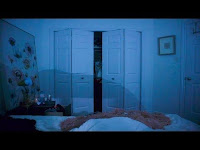
However... we’re going to frame this with a handheld camera, looking though the crack between the closet doors. As the shirt gets tossed and those pants are wiggled out of, the camera can tilt one way or another, so the audience can see as much as possible. Where things land, what state of undress people are in. But, y’know... all through that narrow crack.

And this has suddenly become different scene, hasn’t it? Not so fun and sexy anymore. Now we’re just waiting to see who—or what—comes bursting out of that closet. because there’s definitely something in that closet, right? They wouldn’t be framing the shot this way if there wasn’t somebody in there watching all this happen.

That’s kind of the key point I’m awkwardly getting at here. Things can get weird in movies when there’s a big disconnect between what’s going on in the scene and what the subtext tells us is going on in the scene. One of them will usually override the other, and since movies are a visual format, the camerawork—the framing—can override any spoken text pretty easily.

Now, a lot of time this is deliberate. That scene I just described above (and a few hundred just like it) is a pretty standard horror movie shot, especially for slasher movies. The unknown killer watches from the closet. Or maybe just that pervy voyeur they’ll yell at when he stumbles out of the closet (and then they’ll throw him out of the room and he’ll be the one who gets killed). Point is, the storytellers (in this case, the filmmakers) are deliberately subverting what should be a sexy scene by framing it in a way that make it very creepy.

Thing is... it isn’t always that way. If you’ve ever followed along with Saturday geekery on Twitter, you know one of my common complaints is when inexperienced filmmakers try to copy a shot from another movie without really understanding why it worked in that movie. I’ve seen folks do the “peeking out of the closet” shot or the “looking through the window from outside” shot and they did it because, well, that’s how you film sexy scenes in horror movies, right? Wasn’t it super hot when she was swaying at the end of the bed and pulling open her...wait, what? You thought it was ominous? Why? Now suddenly the film is stumbling because the sexy scene is creepy as hell but it was supposed to just be... well, sexy.

And the audience will sense this screw-up. Even if we don’t always know the syntax or conjugation, so to speak, we know enough filmic language to realize something wasn’t landing right there. We’ll figure out eventually from context (y’know, when something doesn’t come out of the closet), but that stumble is going to break the flow and throw us out of the movie as we try to figure out what’s actually going on. Was this a creepy scene or a sexy scene or what? How were we supposed to feel about it?
And we can frame things in our writing, too. We can layer in that subtext through our characters and their reactions, our story structure, even just with with our vocabulary choices. We can make insults sound like compliments, word something innocent so it could be flirty, make it really clear how weak that guy making the loud, angry speech is.

But...
If we’re not careful when we do this, we can end up with that same stumble I was just talking about inexperienced filmmakers causing. If Yakko just insulted Phoebe but my word choice makes it sounds a little too much like a compliment, even though we know Yakko wouldn’t compliment her... well, wait, what’s going on? Or if everything structure-wise says this is when I learn if Phoebe is the super-werewolf or not and instead it’s revealed that we first went to the Moon in 1969... I mean, that’s not remotely the answer we were looking for. It’s not even really an answer. It’s just a random fact. Is it even relevant to this story? And why is it in italics? Why are we emphasizing it? Did somebody think the Moon landing was in some other year?

I know this is one of those things that sounds kind of silly and self-apparent, but I’m surprised now often I’ll come across it. A writer pretty clearly trying to do X, but they’ve set everything up as Y. Unusual framing. Odd vocabulary. Weird emphasis. Things that feel like they’re meant for a different version of this scene. And like with the films, I think these writers are trying to copy something they saw work, but haven't quite worked out why it worked.

And that’s why this is a tough thing to explain. It’s hard for me to say “make sure you’re using the right subtext for your scene” when I don’t know the scene or the subtext you’re currently using or the effect you’re trying to create with it. It’s going to be different for every writer, every project, every scene.

Okay, I know this hasn’t been super-helpful, so let me toss out a few last suggestions that should make it easier to avoid this issue.

1) Know what words mean—This should be a serious basic for any writer. A bad habit most of us start with is running across words we don’t know and kinda getting their meaning from context, and then using them as we kinda think they’re intended. Which, no surprise, can cause real confusion for people who actually know what the word means. And that’s not even taking into account that I might spell it wrong and spellcheck swaps in some other word altogether. Which I also don’t know.

2) Know how this is supposed to make my readers feel-- is this a sexy page or a scary page? Funny or creepy? Should my readers be tense or fascinated? If I don’t know how this bit’s supposed to make them feel, how can I get any sort of emotion across on the page? Bonus—knowing this should also help me figure out if any moments are particularly jarring. Not in the way I might want.

3) Work on my Empathy-- I’ve said it before and it’s still true. I need to understand how other people are going to react to things. If I don’t have a good, honest sense of how this character’s going to be received, how that line of dialogue’s going to go over, how my readers will react to this beat or that reveal... well, it’s going to be tough to tell a story. I need to be able to put myself in other people’s shoes so I can take a look at my work and say “Wow... if I do it like this, the readers are totally going to think someone’s in the closet watching Chris and Pat.”

Anyway... this was a little rambly, but hopefully you got something out of it.
Next time... look, I’ll be honest. I’m not sure there’s going to be a post next week because I’ve got a four or five hour drive on Friday and then a talk about worldbuilding. Plus—if you hadn’t heard-- I had a new book come out last week and I’ve been a bit overwhelmed. Which means now I’m playing a bit of catch-up. But I’ll try to get something out, if time allows.

Until then... go write.

Thursday, October 21, 2021

Scary But Funny

I wanted to talk a little bit about horror today, as I tend to do around this time of year. More I thought about it, though, I was having trouble thinking of an aspect or angle of horror I haven’t done before. Sometimes more than once. I’ve talked about sub-genres of horror. Talked about monsters. Talked about the victims.

So then I thought I’d talk about the mechanics of horror. But even that’s tough because of the wide and varied sub-genres. I’ve mentioned this before. The horror of Frankenstein is not the horror of, say. Experimental Film by Gemma Files which is not the same as Bradbury’s Something Wicked This Way Comes and none of those are The Devil's Rejects. Depending on what kind of horror I’m aiming for, I could be trying to do some very different things. Which means different rules and guidelines and expectations.

And this made me think, of course, about comedy.

Structure-wise, comedy’s a lot like horror. It’s got many levels and subgenres. It can be subtle and nuanced or in-your-face blatant and over the top. It’s really common for people to like one form of it but not another. I  also think they’re both something that’s kind of ever-present in our lives, on some level or another. There’s a lurking dread or a potential for laughs in almost any situation.

I made what I thought was a semi-clever observation about comedy a while back, and I think the same parallel holds for horror as well—scary is to horror the same way notes are to music. One is made up of the other, but just having a bunch of those components doesn’t automatically make the bigger thing. Just taking a big pile of “scary things” and dumping them on the page doesn’t mean I wrote a horror story, in the same way that, well, having a big pile of meat and bones doesn’t automatically give me a person.

See? That was kind of creepy, right? So is this post a horror story now? No, of course not. No, not even if I add a jump scare. Or is it? Maybe as we keep going you’ll realize how I’ve lulled you into this false sense of security and then maybe you realize... you’ve been in this horror story all along.

Also, it kind of matters what’s in that pile. I can’t just have a big pile of bones, especially the same kind of bones. A big pile of skulls definitely isn’t the same thing as a person. I also can’t mix in random horse bones or gorilla muscles or insect DNA. I can’t just shove anything in there and expect to end up with a working person (or horse, or insect). And even when I get all those components right, they can only go together a certain way. These bones go here, those muscles connect there, that part... okay, look, that’s kind of optional. You can put it in or leave it out at your discretion, just remember what you did with it.

This might seem kind of boring, just putting together a person. Makes it sound like every person we make is going to be like every other person. And on some level... yeah, they are. There are a lot of basic similarities between people, but there are a lot of differences, too. Yeah, even on this basic constructional level. And even more so once we get to know them.

Also, quick pause before we move on. Please don’t get confused by my use of a body as a metaphor for a story. If I’m writing horror, yeah, obviously mixing horse parts with human parts can be an element in a great story. Mixing in some insect DNA has been the basis of several great horror stories. But that’s talking about things in the story, not the structure of the story itself. To fall back on said metaphor, that’s me focusing on an individual bone and saying there’s absolutely nothing wrong with it while ignoring the fact said bone is in a pile of meat that used to be a person.

Or that I’m trying to tell you is still a person...

So, anyway, how do I do this? How do I figure out which parts I’m going to sew together into this new person a.k.a. story? Which ones do I want in there, which ones need to be in there, and which ones... okay, look, the antlers are cool, yes, but people don’t have antlers. No antlers!

Okay. maybe very small antlers.

A lot of this is going to depend on two things. Knowing what I want to end up with and general empathy. The first one’s easy. Once I know what kind of horror story I want to tell, it’s easier to choose the parts I need to tell that story. Yeah, there’s some general stuff I’ll need, but after I’ve got the rough framework there I can start fleshing in (so to speak) all the little details and elements that are going to make this story unique. And this can be a multi-step process. I don’t need to get it all right on the first try, I can go back through and shape the story to better be what I want it to be.

The second part, general empathy, is a little tougher. As I’ve said here once or thrice, I can’t tell you how to have empathy. But it’s sooooo important in horror, because I need to know what my audience is expecting and I need to understand how they’re going to receive these elements in my story. Is that person being sprayed with blood and gore and slime supposed to be horrific? Awful-but-funny? Mildly erotic? Am I sure my readers are going to take it the way I intended it? Because having a beat land wrong can really kill the flow of my story.

And that would be... well, horrible.

So there’s some quick thoughts on horror. Should be easy for you to swallow, now that they’ve been deboned and cut into little bite sized chunks. Yeah, some of them are still moving, don’t worry about that...

Narrator: And as they choked down the morsels, they realized... it had been a horror story all along.

Next time, we could probably talk real quick about NaNoWriMo.

Until then... I’m not letting you out of the room until you swallow every last piece of this.

I mean, hahahahaaa, go write. That was it. Go write.

Tuesday, October 12, 2021

Behind the Mask!

Oddly enough, not a Halloween-themed post. Although... maybe it is. It’s all perspective, I guess.

Since I first started taking this whole writing thing seriously, there’s been a general mindset I’ve seen bubble to the surface once a year or so. Maybe more in some places. It’s the idea that I can’t write about X if I haven’t personally experienced X. Can’t write it well, that’s for sure. If X hasn’t been an integral part of my life at some point or another, I’m just wasting everyone’s time by trying to write about it. Definitely by putting that writing out there. It’s a version of the old “write what you know” superball that gets bounced around. If you’ve never known X, you certainly can’t write about X.

Starting out in the horror community, I’d see this again and again. The folks who’d insist it just wasn’t possible to write horror without a horrific, awful background. You want to write horror? Real horror, not this weak “vampires and demons and zombies” crap? Well you better have fought in a war and had several people killed in front of you. Or had a horribly abusive family. All your pets better be dead, and most of your friends too, and if you’re not dealing with it through life-crippling addiction to something, you’re just a goddamn tourist who has no business in this genre.

Because of this, I’d see some folks get scared off from their chosen genre. Have I experienced real, soul-wrenching love? I mean, really experienced it? Maybe I shouldn’t be writing romance. My parents loved me a lot, I get along well with my brother, and I’ve got a bunch of really cool friends. Maybe I don’t have any business writing horror. And, heck, I’ve never even killed a human being before. I guess murder mysteries really aren’t for me.

At least, that’s what notorious serial killer Sue Grafton always said.

And a friend of mine recently pointed out this is such a pervasive idea that even some readers believe it. There’s no way I could write about a character that awful unless I myself am truly that awful, right? I mean, somebody couldn’t just make that stuff up, right? If one of my characters has sex more than twice, I’m clearly a sex addict (and let’s not even talk about what their chosen sex position says about me). Heck, I think I’ve talked before the weirdness that can happen when you name a character after a family member or friend without thinking about it.

Now, before I go any further... as I mentioned above, this has all been proven wrong again and again. Seriously. Yeah, there’s definitely some horror writers out there who’ve seen some awful stuff and I’ve known one or two folks over the years who’ve written intense erotica as an outlet when, y'know, no other outlet was available. There are some action writers out there who have very intense backgrounds in the military or private security, and a few sci-fi writers with pretty solid scientific credentials.

But I also know a ton of horror writers who had really nice childhoods and now live very happy lives, without a single dismemberment or traumatic beating or other ghastly event in their past or present. I know action writers who haven’t been in a single barfight or high speed chase or gun battle. I know people with no military experience  who write very successful military books. There are more than a few sci-fi writers who haven’t traveled in time or even left earth orbit once. And I know people who write sex scenes in their books who have, if I may be so bold, fairly vanilla sex lives. At least, going off all the pictures one of them showed me. Like, insisted on showing me.

That was a really weird brunch.

Anyway...

I think all of this ties back to a few things I’ve talked about here a few times. So I thought  maybe it’d be worth mentioning a few totally valid ways we can write about things we haven’t actually experienced. For example...

Voice—A big step for all of us is the day we realize midwestern grocery store clerks don’t talk the same way as third-generation bio-apocalypse survivors. Dwarven warrior queens have a different vocabulary than techbro CEOs. And fresh-out-of-grad-school schoolteachers don’t sound the same as battle-hardened Army sergeants. And getting that voice right, knowing how she’d say this vs. how he’d say it vs. how I'd say it is a big step in our growth as writers.

Research—seriously, we live in a freakin’ golden age of resources for writers. I’ve been doing this just long enough that I remember ads in the back of magazines for small press books about what it’s really like to be a doctor or a homicide detective . Or I’d spend hours in the library trying to find pictures of Paris that didn’t involve the Eiffel Tower or a museum. These days, if I need to know something I have access to so many sources. I can find research papers or anecdotal accounts or heck, even actual people who will answer my questions or help me find the answers, and usually tell me some other useful things if I’m paying attention.

Extrapolation-- I’ve never been shot in the knee, but I’ve had the meniscus behind my kneecap rupture (and collapse again and again and again). I’ve never done super heavy drugs but I’ve been very drunk a few times. I’ve never been able to fly, but when I was a kid there was a bridge in my hometown we all used to jump off into the river. Yeah, these experiences aren’t the same, but I can use them as building points. If this registers as a six, what would a nine be like? If it felt like this for ten seconds, what would it feel like after twenty? Or thirty? I stayed conscious here but would that much short out my brain for a few seconds (from pain or pleasure or excessive introduced chemicals)? It’s a basic creativity exercise. 

Empathy—I’ve talked about empathy here a few times, and I have to say once again it’s the most important trait a writer can have. Seriously. It’s what everything here really boils down to. Being able to put myself in someone else’s shoes. I’ve never had a parent die, but I’ve had friends who did. I’ve never served in the military, but I have family who did. I’ve never been married or had kids or burned dinner when someone’s coming over I really want to impress. But I look at my friends and family, I listen to them, I take note of what they’re saying and what they’re not saying, and I try to relate it to things I’ve gone through. I try to imagine how I’d feel in a similar situation, based off my own experiences. And I use some of that in stories.

In fact, let’s take this one step further and address one of the points that started this off. If I’m going to tell someone they can’t write great horror unless they’ve been through awful stuff (like I have)... well, isn’t that kind of implying I don’t have great empathy? I mean, think about it. I’m saying I can only write this because I experienced it, and I’m also admitting I can’t imagine being a person who can write it without experiencing it.

Maybe it’s just me, but I don’t think that’s something I should be bragging about.

Y’see, Timmy, much like “write what you know,” this mindset assumes people can’t learn or grow or imagine anything. And if I want to be a good writer, I have to be able to do that. I can’t tell myself not to write about bank robbery until I’ve actually tried to rob a bank. Hell, where does that people who write murder mysteries? Or giant robot sci-fi? Or dark period fantasy. I mean, if you haven’t had sex with at least three people from the twelfth century, how do you expect to write medieval romance? I need to understand most writers research things, extrapolate feelings and reactions, get inside their character’s heads, and just try to have an honest sense of what someone else would feel in this situation.

Look, the truth is, if I’m doing my job right, you should feel like all my characters are real people in real situations. The janitor. The nymphomaniac barista. The half-human, reluctant cultist. The little kid with PTSD. The burned-out secret agent trying to forget most of his life. The world-ending cosmic event that they’re all tied up together in. And when we read a description of a real person, when we hear about the believable, relatable aspects of their life, it’s natural for us to assume they’re... well, real.

And the obvious real person is me, the author, telling you this story. So it’s not surprising some people think I must’ve experienced these things firsthand.

But I shouldn’t need to.

Anyway...

Next time, I want to throw a bunch of characters at the wall and see which ones stick.

Until then, go write.

Monday, March 15, 2021

One Last Look Back

Just a bit of random musing, not quite so writing related. Or maybe it is.

Did my taxes last weekend. Well, I did the part of my taxes where I sort through a box of receipts and notes and paperwork and try to organize them by deductible categories so I can hand them off to someone more knowledgeable than me. It’s a pain, but I admit I also kind of like doing it. No really. Yeah, even though half of it’s just meaningless numbers, things I saved for this line or that expense.

It’s the other half that makes it enjoyable. That’s the part that becomes a little time-capsule look at the past year. Meals out with friends. Date nights with my partner. Hey, look, there’s me buying myself the LEGO Bookstore set to celebrate the release of Terminus. Here’s the assorted gas/comics/food receipts from my monthly road trip up to LA for the Writers Coffeehouse and the Last Bookstore dystopian book club.

Which is what got me thinking, because last night was said dystopian book club. It was also the one year anniversary of the last time we all met in person (and where my number of receipts dropped drastically). We’ve been meeting on Zoom since then. Last March most smart people were already seeing the signs and realizing how bad this could be. And even though *cough* certain people kept going on TV and saying “it’s not a big deal, it’ll be gone in a few weeks, don’t worry about it,” the rest of us were thinking maaaaaaybe we should just shop really late at night when nobody’s around. Or how much does getting groceries delivered really cost?

I’m guessing most of you are in the same boat. We’re all hitting our personal Covid-versaries about now. It’s been a brutal year, and I think, alas, we’re probably still in for some brutality to come. The fight’s almost over, but there’s still time for a cracked rib or a black eye. In fact, I’m tempted to say there’s definitely a few body blows in our near future, collectively or individually.

It’s also been a rough twelve months creatively. I mean, at this point a year ago I was about halfway through the first draft of a project. And a few months later I was... still about halfway through the first draft. It took a while to get the mental gears meshing again, and that’s considering I’m in the very fortunate, privileged position where lockdown didn’t change my life that much. My partner and I both work from home, and we didn’t have to stress about losing work. We don’t have kids. We’re used to just spending time with each other and not going out much.

What I’m getting at is if this year messed up my ability to write, I’m impressed as hell by all of you in not-as-favorable who’ve gotten writing done. If you worked up the energy and drive to get some pages done, that’s seriously great. If you managed to get some things edited, that’s just fantastic. If you managed to do a whole draft? Holy crap, that’s plain amazing. You got a whole draft done during this past year? That’s phenomenal! Talk about focus—you’re a friggin’ machine!

Did you get more than that done? Shut up. Nobody wants to hear you gloat about it.

No, it’s okay. You can gloat a little. Seriously, it’s unbelievable that you managed to stay the course during all this.

Again, if you got something done—anything—during this hellish plague year, you should be proud of yourself. Writing’s tough when things are great. If you can keep doing it during a year like 2020, well...

Think what you’ll be able to do once this is over.

Monday, October 26, 2020

Another Update for the Year of Plagues

Wow. It just fully hit me that NaNoWriMo starts on Sunday. And I’d hoped to partake this year as well.

I have to admit, my brain is kind of fried. Wouldn’t be surprised if yours is too. But this is the job. Time to buckle down and...

Okay, look. This is actually, legally, my career. I’ve hit that fortunate point where I don’t have to do anything else except write (and maybe watch the occasional B-movie now and then while I build toy soldiers). I mean, at this point my accountant and the IRS both consider me a full-time writer.

And maybe some of you are there too. Or maybe you’re aspiring to be there. And because you are, and because you take this seriously, you’re trying your god-damndest to treat this like a real job. You understand writing is work, and it needs to happen if you want to advance.

So one important thing to remember.

You get days off from work.

Sometimes, I think we get so caught up in that idea of writing as a career and having to write every day that we forget we can just... take a sick day. Hell, take a personal day. Use up all that vacation time you’ve been saving up. And holy crap could we all use a mental health day right now. 

And that’s okay. It’s completely fine. Yeah, even if you take this really seriously.

Look, we’re heading into our seventh or eighth month of pandemic lockdown (depending on when you started), during a third surge which most likely is just the ongoing continuation of the first surge. We’re in the middle of a US election that’s probably going to drag on for at least a month after it technically ends, and depending on how it ends things could be very not-good in the world for a while. And this weekend a perfectly good once-in-a-blue-moon (literally) Saturday Halloween is probably going to go to waste.

It’s completely understandable that you might not feel like typing out three or four hundred words right now. I know it’s been brutal on me, and I know I’ve been very lucky during all this. I’m self-employed and I spend 90-95% of my time at home when the world isn’t on fire. So this hasn’t been that disruptive for me and I’m still friggin’ stressed out worrying about my family and friends. Because there’s one or two good reasons to worry about... well, anybody. Everybody! I can barely imagine what it’s been like for those of you who are dealing with homeschooling kids or sick family members or who are at the end of your financial thread.

Well, I know exactly what that last one’s like, and I wouldn’t wish it on anyone.

My point is, any decent boss would give you some time off if you were going through all this. Again, sick day. Personal day. Mental health day. They might even send you a card. 

Y’see Timmy, if the goal is to eventually be our own boss, then shouldn’t we all want to be a good boss? The kind we always wanted? The ones who actually made us like our jobs? Yeah, we need to keep on track, hit goals, try to get in a few hours a week... but we also want our employees (also us) to stay healthy. Physically and mentally.

So don’t beat yourself up if you need to take some time or maybe move a little slower right now. You’re not alone. In that, and in a lot of other things.

Thursday, the usual Halloween post. And then some more NaNoWriMo encouragements.

Until then, if you’ve up for it, go write.

But don’t worry if you’re not up for it.

Friday, July 24, 2020

B-Movie Mistakes

If you’ve been following me for any amount of time, you’ve probably caught on to my questionable Saturday viewing habits. Questionable in the sense of “why would someone keep doing this to themselves? And to their liver?”

I’ll sit down with some little toy soldiers to build, put on a movie with aliens or giant monsters or werewolves, and tweet out the occasional observation, critique, or scream of pain. It’s kinda fun, in a masochistic sort of way, and I’m a big believer that you can learn a lot from figuring out where bad things went wrong and how they could be fixed. And I’ve seen a lot of screenplays go wrong over the years. Some I worked on. Some I read for contests. And... some I watched while building little toy soldiers.

Over all this time, I’ve seen definite patterns emerge. The same mistakes happening again and again and again. It was part of what made me start this whole ranty blog way back when in the distant before-time.

And screenwriting is a form of storytelling, which means some of these mistakes—maybe even all of them—are universal. I might not have any interest in writing movie scripts, sure. Not everyone does. But these issues can show up in books, short stories, comics... all sorts of storytelling formats.

So maybe they’re worth checking out.

Anyway, here are my top ten B-movie mistakes, updated a bit since the last time I write them out. Some of it may seem generally familiar. Some of it... well, I’ve found new ways to look at some problems over the past three years.

10) Bad directing
Let’s just get this one out of the way, because it’s the easiest one. It’s also the most universal one. This’ll be a horrible blow to anyone who likes auteur theory, but while there are some phenomenal directors out there, the simple truth is there’s also a lot who have absolutely no clue what they’re doing. None. Yeah, even some directors you’ve heard of.  They have no concept of narrative, continuity, pacing... anything.

This is a killer because ultimately, the director’s the one interpreting the story on the page into a visual story on the screen. Even if they didn’t write the script, the best story can be ruined by a bad storyteller.  How often have we seen a book or movie that had a really cool idea or an interesting character and it was just... wasted?

Because of this—random true fact—whenever you see a horrible story on screen, it’s always the fault of the director and producers. Never the screenwriter. The only reason scripts get shot is because the director and producers insist on shooting them. If it was a great script and they butchered it—that’s their fault. If it was a bad script and they decided to shoot it anyway—that’s also their fault.

9) Showing the wrong thing
This kinda falls under bad directing, but I’ve seen it enough times that it really deserves it own number. Sometimes a story keeps pushing X in our face when we really want to see Y. Or Z. Sometimes the story calls for Y to be the center of focus, but we still keep putting X on camera. And sometimes there’s no need to see X at all—we understand it through dialogue and acting and other bits of context—but we show X anyway.

A lot of this is a general failure of empathy—the filmmakers aren’t thinking about how the movie’s going to be seen. I’ve also talked a couple times about subtlety, using the scalpel vs. the sledgehammer, and that’s a big part of this, too. Sometimes there’s a reason we’re seeing a lot of nudity or a swirling vortex of gore, but all too often... it’s just because the storyteller doesn’t know what else to show us.

8) Bad action
Pretty sure we can all think of an example of this. The almost slow-motion fight scenes that feel like they filmed the rehearsal. The medium-speed chase that drags on waaaaaay too long. The pointless shoot-out that clearly wasn’t thought through since everyone’s standing out in the open.

Action gets seen as filler a lot of the time, and it doesn’t help that a lot of gurus teach it that way. “Hit page 23—you need an action beat! Hit page 42—another action beat!” There’s absolutely nothing wrong with action, but bad action is particularly bad in the visual storytelling format of movies. Unnecessary action isn’t much better.

Think of scale, too. It’s always better to have a small, well-done action scene than a sprawling, poorly-executed one. We can relate to two people fighting so much better that two gangs of sixty people each slamming together. Especially when it’s supposed to be two gangs of sixty members each but there are maybe eight people on screen. Moving in slow motion.

7) Too Much Stuff
Remember when we were young and there was that one kid (we all knew this kid) who got so excited to be Dungeon Master? And he made that awesome dungeon with five liches and a dozen displacer beasts and twenty gold dragons and thirty platinum dragons and fifty minotaurs all wearing +3 plate armor and using +5 flaming axes and a hundred zombies and Demogorgon and half the Egyptian gods and...

I think we’ve all played that game, right? Let’s be honest... maybe some of us were that kid?

Some B-movies get like that.  The filmmakers have too many ideas—way more than their budget or schedule allows—and they try to stick everything into the story.  Every cool idea from every other cool story, sure to be just as cool here, right? Truth is, they almost never are.  All these extra ideas just end up being under-developed distractions at best. 

6) Killing the wrong people
There’s always going to be collateral damage in certain types of stories. Thing is, by nature of being collateral damage, the story doesn’t focus on these people and their deaths don’t really register.  And they shouldn’t. That’s what collateral means after all—they’re secondary. Not as important. But in the tight, compressed nature of a movie, we need these deaths to be important. They need to serve a purpose in the story, hopefully on more than one level.

I’ve talked about the awful habit of introducing characters for no purpose except to kill them.  We meet Phoebe, get three or four minutes of backstory and bam she’s dead without moving the plot forward an inch. Because Phoebe wasn’t really part of the plot, she was just there to wear a bikini top and let the FX crew show off their new blood fountain.

The only thing worse than this is when it’s time for the ultimate sacrifice... and my hero doesn’t make it. A minor character steps forward to throw the final switch or recite the last words. And the “hero” sits back and watches as someone else saves the day.

5) Wasting Time
This one’s the flipside of point #7. I just mentioned that in the limited space of a movie script, everything needs to serve a purpose. If that touching backstory linking two characters doesn’t affect the plot or story somehow, it’s just five minutes of filler I could’ve spent on something else... like the plot or the story. If these shouted arguments don’t somehow reveal something key to the progress of the movie... they may just be a lot of wasted time.

One of the most common time-wasters in B-movies is the unconnected opening. It’s when the first five or ten minutes focus on a group of characters we’ll never see again, usually never even reference again, and who have no effect on the rest of the plot. Honestly, I don’t think I’ve ever seen one of these openings that couldn’t be cut, and I’d guess 83% of the time the whole movie would be stronger—on many levels—without it.

4) Not knowing what genre my story is
I’ve mentioned a few times that I worked on a B-level sex-revenge-thriller-sequel where the director thought he was making a noir mystery. I’ve seen horror films done as sci-fi and fantasy movies that were done as horror films, and vice versa.  Heck, I’ve written stories where I’d planned it as one thing, and realized halfway through it was something very different.

I've talked about genre a lot over the past few weeks, so I won’t go into it much more here. To sum up quick if you don’t want to hit the link, all genres have certain expectations when it comes to tone, pacing, and even structure.  If I’ve got a story in one genre that I’m telling with the expectations of another, there’s going to be a clash. And that clash probably won’t help my storytelling.

3) Plot Zombies
All credit to A. Lee Martinez, creator of this wonderful term. Sometimes, characters do things that are unnatural for them just to further the plot. The brave person becomes cowardly. The timid person does something wild and unpredictable. People argue and storm off for no reason. Well, so one of them can get murdered by the monster after going for a calming nighttime swim in the lake, but past that... no reason.

Plot zombies just stumble around a movie, doing whatever the story calls for. They don’t have any personality or agency, and really, one plot zombie’s pretty much the same as any other plot zombie. If I have an inspiring speech or an act of wild abandon or a last minute moment of brilliance, and there’s no reason I can’t swap all the characters around in it... it means I’ve got plot zombies.

2) Horrible dialogue
Bad dialogue always makes for bad characters.  If we can’t believe in the characters, we can’t believe in the story.  If I can’t believe in the story... well, that’s kind of it, isn’t it?

So many movies have painfully bad dialogue. Pointless arguments. Annoying characters. Awful technobabble.  And sometimes—too much of the time—it’s just bad.  It’s lines that sound like they went back and forth through Google translate and then the actor’s seeing them for the first time on a teleprompter while they’re filming.

Personally, bad dialogue drives me nuts, because it means the storytellers have no idea what human beings sound like. It’s a massive failure of empathy, and that empathy almost always shows up elsewhere. I’ve never, ever seen a story with bad dialogue that excelled everywhere else. It just doesn’t happen.

1) Who am I rooting for?
This is still the number one killer in America. This is what brings so many B-movies—so many STORIES—to a gear-grinding halt. 

So many movies have absolutely no likable characters. Everyone’s self-centered, obnoxious, stupid, or arrogant... or a combination of these traits. They’re all awful, sometimes disgusting people. All of them. The bad guys and the good guys.  People start dying and I’m always glad, no matter who they are.

If I’m expected to sit here and watch this for ninety minute, I need a reason to follow someone besides “they’re the main character.”  I need to like watching their story play out. I need to be able to identify with some aspect of their personality. The movie needs to have someone I actually care about. ‘Cause if it doesn’t. I won’t care if they win or lose. And if I don’t care about that... well... I’m not going  to be sitting here for ninety minutes

And that’s my personal, current top ten B-movie mistakes.

Hey, speaking of movies... this Saturday I’m doing my usual Saturday geekery, but for SDCC @ Home I’m doing it as a watch-along party. Come hang out on Twitter starting at noon (PST) with Krull, followed by the Keanu Reeves Constantine at 2:30, and finishing up the day with Resident Evil at 5:00. It’s going to be fun and maybe a little informative. Plus there’ll be a couple other folks chiming in with the #KrullKon2020 hashtag, and even a few giveaways.

And next time here, I thought I’d talk a bit about editing this new book.

Until then... go write.

And maybe enjoy a movie or three.

Thursday, May 14, 2020

My Chronicle of the Plague Months

I finished up the A2Q last week, and for a brief moment I had no idea what I would blather on about this time. Seriously, a complete blank. There’s just so much crap going on in the world right now (as I talked about a few weeks ago) and I was stressing a bit over my own manuscript that I’m working on right now (the non-werewolf one).

So I thought I might talk a little bit about that. The stress and the non-werewolf manuscript. Because maybe you’re stressing about the same thing. Or something closely related. Probably not the fact that your work in progress doesn't have any werewolves. That's a much bigger problem you'll have to deal with on your own.

My new book opens in a bar. The first three chapters are set there (granted, I write kinda short chapters compared to most people). And as I’m heading toward the end of this draft and getting ready to loop around for another look, I’m kinda dreading those chapters.

I mean... is a bar even normal anymore? It was when I started this, but now it feels a little weird. What’s going to be “normal” when my agent and editor see this in a month or two? Do these dozen or so bar patrons—does the whole vibe of the bar—come across differently now? Should they be wearing masks? Should the bartender have gloves? And what does it mean if I write them not wearing masks of gloves. How will people see the book? Hell, how will people see me? I mean, for some idiot reason wearing/not wearing a mask during a pandemic has become a political statement.

How much of the real world should I be incorporating into my writing? I mean, a lot of really smart people are saying things can’t go back to the way they were. Do readers and editors want to see the world that is? The world that was? Should I be incorporating masks and social distancing and hell is the romance angle in this totally stupid now? Can two people have a casual meet-cute in a world where most people don’t go anywhere casually? Are people still hooking up in the plague years, or is this scene going to come across as less sexy and more incredibly risky?

If you’re having these kinda thoughts well... join the club. It makes sense, after all. It shows you have a good level of empathy, that you’re thinking about these things and how they’ll be seen by other people.

But thinking about them doesn’t answer the big question. What should we do? How should we—or should we—be altering things in our work to match the world better?

I think what we’re all experiencing right now is a kind of common problem, it’s just rare for all of us to be going through it at the same time, and on this scale. We’re trying to write for the future. We’re trying to guess what readers and agents and editors are going to want to see in nine or ten months.

To some extent, this is always an issue. There are people who find themselves writing political thrillers during major elections. Folks have written books about cutting-edge technology that’s obsolete by the time anyone gets to read it. If you’re a Lee Child fan, you may have heard the story of how a change in the way currency was designed and printed made the entire twist of his first Jack Reacher novel, The Killing Floor, completely impossible. I wrote a book about the American Dream in late 2015/early 2016, and by the time it came out parts of it looked almost foolishly optimistic. These things happen. The world keeps progressing.

Hell, even more hardcore genre books can have this problem. How many sci-fi books and movies are set in a future that we’ve already reached and passed? 2001: A Space Odyssey and its sequel 2010? Back to the Future? Thundarr the Barbarian? A ton of Star Trek? All of these stories involved “future” events and well... we know those futures didn’t happen.

Y’see Timmy, we can’t predict the future. Even the relatively near future. And our readers and editors know this. Things will always happen that might make some part of my book obsolete or impossible. If it doesn’t happen in the process of writing it, it’ll definitely happen at some point. It's inevitable.

My point is... don’t worry about it right now. Take a breath. The world’s in a very weird place and nobody has any idea what it’s going to be like a year from now. Absolutely no one. So for this book, just do what feels right. And a year from now we can all worry about what things are like a year from now.

I will toss out two small addendums to this.

First, the easy one. If this really gnaws at you, maybe you could incorporate some “current” elements at a lesser level. I mean, here in southern California (probably in most cities) it wasn’t exactly rare to see people wearing masks, especially during flu season or some outbreak. Heck, if you’ve been at an airport any time in the past few years, I’m sure you’ve seen people wearing them there. So it’s not like it would be unnatural to mention masks on a few people, or someone keeping that one alligator-length away from other folks.

Addendum the second. I’ve mentioned once or thrice there are some writers who seriously excel at pumping out really fast, very topical books. It’s a really specific type of market and you need to be a very specific type of writer to do well in it.

I bring it up because I guarantee you these folks have already written the lockdown murder mystery novel, the “have to venture out during quarantine” novel, the “falling in love over Zoom” novel, the “lost soul finds new purpose handmaking masks” novel, the “unfeeling businessman learns the real meaning of life after a beloved person dies of covid-19” novel, and probably far to many “brave reporter uncovers the real conspiracy behind the lockdowns” novels. Wow, that was a hell of a run on sentence. If Ray Porter narrated my blog, he would smack me upside the head for that one.

My point is, unless I’ve already finished it, I should probably hold off on something that ties directly to current events. There’s a really good chance a lot of writers already beat me to it (in the sense that their novel’s already done). Which means there’s a really good chance agents and editors are already swamped with these brilliant, high-concept ideas that I just thought up off the top of my head and all of you could immediately picture. Even if I go the self pub-route, odds are these other writers have already sewn up that market. Or bled it dry. Maybe both. Whichever of those works best for you.

But my big point still stands. For now, try not to worry too much about this. Make sure your book works overall, that all the big beats work before fretting over small details. Even if some aspect of the world means my book is now 100% impossible, it can still be looked at as a story of the world that was, and it’ll still need to be the best book I can make it.

Anyway... that’s my semi-inspirational, reassuring ramble for this week. Hopefully it helped a few of you. It actually calmed be a bit just writing it out.

Next time... I don’t know. After three months working on the A2Q, I feel a little lost. Is there a particular topic anyone would like me to address and blather on about? Something from the A2Q I could clarify? Just a random question that’s been bugging you? Let me know down below.

And if nobody has anything... well, I’m sure I’ll come up with something exciting.

Until then, go write.

Thursday, November 21, 2019

Do You Think I’m An Idiot?

No, no... don’t rush to answer that. I’m pretty sure I can guess how most of the comments section would go.

However...it is an important question, whether I’m writing books or screenplays. The folks who just bought my new Lovecraftian techno-thriller aren’t expecting a long lesson about how memes work. If I’m billing myself as the next Dan Brown, the clue “man’s best friend” better not leave half a dozen codebreakers baffled as to what the three letter password is for the doomsday device. Heck, even if I’m hired to pen the next Pokemon movie, I probably shouldn’t spend a lot of screen time explaining all the medical reasons why little kids shouldn’t drink paint.

Cause let’s face it—nobody likes to be called stupid.  Not even kids.  Heck, especially not stupid people.  We all hate being condescended to and having things spoon-fed to us at a crawl. We get angry about it. At best we get frustrated with the person throttling the speed we can absorb things at.

So, having established that nobody likes being considered an idiot, it stands to reason most people like to feel smart, right? And that includes my readers. I want them to like my stories, not feel angry or frustrated because of them.

But a lot of stories assume readers are stupid. They spell everything out in painful detail. They drag things out. They repeat things again and again and again. These authors think their readers won’t know or understand or remember anything, and they write their stories accordingly.

So here’s a few easy things I try to do so my readers feel smart and they’ll love my stories...

I know what my audience knows
I’ve talked a couple times here about empathy and common knowledge. It’s stuff I can feel safe assuming everyone knows. Grass needs water and sunlight to grow. Captain America is a superhero. Nazis are still the bad guys. Maybe you noticed that a few paragraphs back I rattled off Lovecraftian, Dan Brown, and Pokemon without bothering to explain any of them. I know the folks reading this would have—at the very least—an awareness of these words and names. Knowing what my specific audience knows is an important part of making them feel smart, because this is what lets me judge what they’ll be able to figure out on their own.

This goes for things within my story, too. Yeah, odds are nobody’s ever heard the term Caretaker used precisely the way I use it in Dead Moon, but I don’t have to keep explaining it. I can make a couple references at the start and then just trust that my readers will remember things as the story goes on. It’s a completely made up word, but I bet most of you know what a Horcurx is. Or a TARDIS. Or a Mandalorian. They don’t need to be explained to you again and again.

I try to be smarter than my audience
There’s an agent I’ve referenced here, once or thrice, Esmund Harmsworth. I got to hear him speak at a writing conference years ago and he pointed out most editors will toss a mystery manuscript if they can figure out who the murderer is before the hero does.

Really, though, this is how it works for any sort of puzzle or intellectual challenge in a piece of writing. If I’ve dumbed things down to the point of simplicity—or further—who’d have the patience to read it? It’ll grate on their nerves, and it makes us impatient when we have to wait for characters to figure out what we knew twenty minutes ago.

I don’t state the obvious
Michael Crichton got a very early piece of writing advice that he shared in one of his books. “Be very careful using the word obvious. If something really is obvious, you don’t need to use it.  If it isn’t obvious, than you’re being condescending to the reader by using it.”

Of course, this goes beyond just the word obvious. Revisiting that first tip up above, should I be wasting half a page telling my readers Nazis were bad? When Yakko staggers into a room with three knives in his back just before collapsing into a puddle of his own blood, do I need to tell anyone that’s he’s seriously hurt? I mean, you all got that, right?

I take a step back 
When something does need to be described or explained, I think our first instinct is to scribble out all of it. We want to show that we thought this out all the way.  So we put down every fact and detail and nuance.

I usually don’t have to, though. I tend to look at most of those explanatory scenes and cut it back 15 or 20%. I know if I take my audience most of the way there, they’ll probably be able to go the rest of the way on their own. People tend to fill in a lot of blanks and create their own images anyway, so getting excessive with this sort of thing rarely helps.

I give them the benefit of the doubt
This is the above tip, but the gap’s just a little bigger. Three-time Academy-Award-winning screenwriter Billy Wilder said if you let the audience add 2+2 for themselves now and then, they’ll love you forever. That’s true for writers of all forms. Every now and then, just trust they’ll get it. Not all the time, but every now and then I just make a leap of faith my audience can make a connection with almost no help whatsoever from me. Odds are that leap isn’t as big as you think it is. 

Y’see, Timmy, when I spell out everything for my audience, what I’m really telling them is “I know you won’t be able to figure this out on your own.”  My characters might not be saying it out loud, but the message is there.  You’re too stupid for this—let me explain.

And that’s not going to win me a lot of return readers.

Hey, next week is Thanksgiving here in the U.S. and my parents are coming  to visit for the holidays and hahhaaaha I’m not stressing about it YOU’RE STRESSING HOW IS IT THE END OF NOVEMBER ALREADY OH CRAP

...sorry, that was a typo. What I meant to say was it’s Thanksgiving so I’ll probably just do something quick on Tuesday or Wednesday. And after that... well, if you’ve been following the ranty blog for any amount of time you know what I’ll be talking about on the day after Thanksgiving.

Until then, go write.

Thursday, September 19, 2019

Revenge! For Wanda!!

Finally! At long last the day has come! Don’t act so surprised—you know what you did and you've known it would...

...you don’t? Oh. Well, this makes things a little awkward, doesn’t it?

Look, we’ve all been waiting for this for a while. Revenge. The moment Yakko finally gets his comeuppance for what he did to me and my friends. Today’s the day he learns just how big a mistake that was. He crossed the wrong guy that day.

Plus, let’s be honest. Revenge stories can be loads of fun. John Wick. Arya Stark. The Wraith. Okay, probably not the Wraith, for a couple of the reasons I'm going to be talking about here. Thing is, a well done tale of revenge can check off a ton of storytelling boxes and almost everyone is up for it. Seriously. There’s something just so wonderfully cathartic about them.

But... by the same token, a good revenge story is kind of a balancing act. Not too much of that, just enough of those, and that base has to be juuussssst perfect if it’s going to support this whole thing. If one of these things is off, my whole story can stumble pretty easily. More than one and... well, I’m probably going to faceplant. Hard.

It struck me that I’ve seen a lot of stories make that faceplant. Sometimes in books, sometimes on screen. Sometimes, while poking around looking for Saturday geekery movies, I come across some things where it’s clear just from the description that they’ve hit the ground hard. So I figured it might be worth going over a few of those key elements to keep in mind. Y’know, before we go out to seek revenge on those who wronged us...

And, as always, this is just me babbling on. There has been no exhaustive study of the canon and there are always going to be exceptions. But I’ve been mulling on this for a while and I feel like it’s a pretty solid checklist.

First off, right at the start, is this something that actually needs revenging? Yeah, we all understand why John Wick goes after the guys who killed his dog. But what if they’d called his dog ugly or stupid? There’s the bully who puts cigarettes out on Wakko’s arms, but also the one who shoots poorly-aimed spitballs in class. Someone can blow up my car, or they can blow up my car with my partner and cats trapped in it. Some of these acts deserve wild, hard-bitten revenge and others...

Well, I mean they’re still bad, but are they really revenge-worthy? Should I really dedicate my life to balancing the scales just because somebody torched my Yaris? Or stole my lunch from the break room fridge? That would seem a little extreme, yes?

In this sense, a revenge story’s a lot like a redemption arc. I need my reader-empathy set to high so I  have an honest sense of how this first, inciting act (ooooh, inciting act--doesn’t that sound all professional)  is going to be viewed by my readers. Will they agree it’s something that requires vengeance?

Second thing is whether or not my character is the person who should be getting revenge. To use an earlier example, if someone kills John Wick’s dog, we completely understand why he goes on his revenge spree. It’s an intensely personal loss for him... but it isn’t for the nice old woman he runs into on the beach sometimes who liked to pet the dog. She might be upset, even angry to hear the news, but it doesn’t make a lot of sense for her to go get revenge, does it?

Revenge is a very personal thing. So the more removed and unconnected my protagonist gets from that actual act, the less it feels like revenge and the more it feels... well, it could be a bunch of things as we get farther away. Maybe Dot hired a hitman to get revenge, so he might be administering the beatdown or pulling the trigger, but for him it’s really just a job. And that police detective obsessed with the case? Well, for her it’s more about justice than vengeance. So revenge tends to stay tight and intimate. Personally, I think it needs to be a family thing, even if you want to take the broader sense of family (in that I can consider my best friends or my teammates “family”).

My third point is very much my own, but it’s also probably the one I feel strongest about here. I think it’s a key part of a revenge story. The person or persons my protagonist is getting revenge against must know why this is happening. Yeah it’s really cool that my heroine’s picking off the folks who killed her family one by one with a sniper rifle. But if they don’t know why it’s happening, who this ruthless killer is... then isn’t this just a random killing spree?

I feel that a big part of a revenge story is that it’s kind of symbiotic, from a storytelling point of view. It’s a relationship between the revenger and the revengee, so to speak, and one sided relationships are always just... well, weird. They need to go both ways. Yes, we want Phoebe to get her revenge, but we also want Yakko to know why she’s doing this. Why is she coming after him? Why is she doing these things? He needs to acknowledge this, one way or another—even if he just dismisses it (“...but I’d do it all again, lady, whoever you are!”).

And the reason for this is that we understand, on some level, that if Yakko doesn’t know why this is happening, then he’s just a victim. Not an innocent victim, no, but still just a victim. It’s the difference between my character seeing their empire torn apart and them knowing why it’s being torn apart.

Which leads me very nicely to my fourth and final point. Revenge can be a messy business. Very messy. Blood is often spilled, property is usually destroyed. And we’re all cool with that. We like seeing people getting what’s coming to them. Maybe even with a little interest.

That’s where it gets tricky. It’s really easy in a revenge story to go too far with the blood spilling and the property damage. And when I do, that’s when my protagonist stops being the hero and becomes a monster in their own right. Yes, we understand why John Wick wants revenge for his dog being killed. But if his response was to go visit the families of everyone involved and kill their dogs right in front of their kids...? Well, I don’t think most of us would be rooting for him quite as much. Likewise, if Phoebe gets revenge on the guy who killed her husband by... oh sweet jeebus she dissolved him alive in a lye pit? Seriously? And the crane just lowered him a couple inches a day? It took eight and a half days for him to die? I mean, at this point it’s essentially a torture porn story where we’re being asked to root for the killer.

In a lot of ways, revenge is like something I’ve talked about before—the bully balance. Once those scales tip, our mood is going to shift, too. We stop feeling good about the revenge and we start feeling sympathy for the people they’re exacting revenge on. Again, they become the victim and my protagonist becomes the aggressor. Which alters... everything. The whole tone of my story will change, and a lot of things will be questioned. Not in a good way.

Y’see Timmy, in the end a revenge story is all about the characters. Why are they doing this? How are they doing it? Are they managing to walk that tightrope between being a hero and being a monster?  Or have they fallen off it...?

Next time... I think I want to talk about something we usually don’t talk about.

Until then... go write.