Showing posts with label Star Trek. Show all posts

Thursday, March 3, 2022

Those Are All Made-Up Words!

I wanted to jump back to something I mentioned a few weeks ago. Creating my own words for stories. Yes, all words are made-up-- don’t be the clopos in the room, okay? I recently got a new laptop and as I was bringing everything over I stumbled across a very old blog post about using made-up words. It had a few nice rules of thumb for separating good uses from bad uses, and I thought it might be worth revisiting them.

So let’s dive right in.

First off, let’s talk about names. Proper names for people, places or things. This may sound kind of simple, but I’ve seen it go wrong enough that I think it’s a good place to start off.
When we’re worldbuilding an alien or fantasy world, or sometimes one in the distant past or future, there’s an urge to hand out a lot of different names. For characters, towns, deities, what have you. On the surface, there’s nothing really wrong with this, but I should think a bit about how I’m going to introduce these names. Especially if I’m going to do it in dialogue or a first person POV.

Let me give you a few quick, example sentences.

    “Tim, it’s good to see you.”
    “We’re going to try for another child, if Phoebe’s willing.”
    “Sarah, what are you doing here?”

Pretty straight-forward, yes? No confusion about what any of these sentences mean. Heck, the second one even slips in some personal information about the speaker. But watch what happens when I switch the names like this?

    “Jesus, it's good to see you”
    “We’re going to try for another child, if God’s willing.”
    “Christ, what are you doing here?”

See? Now these these sentences are conveying different information. They’ve shifted to expletives and figures of speech. But we only know that because we recognize this second set of names. Because watch what happens when we don’t have reference for any of these names...

    “Tokar, what are you doing here?”
    “We’re going to try for another child, if Ostriax is willing.”
    “Grothnixian, it’s good to see you.”
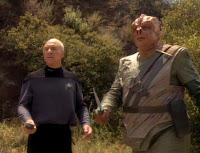
Soooooo.... now what are these sentences saying? We can’t really parse them without a frame of reference for those names. Is Ostariax the speaker’s wife, husband, or chosen deity? Heck, Tokar and Grothnixian might not even be names at all. Maybe they’re swears I made up and they’re just capitalized because they start the sentence. I mean, it’s clear to me, the writer, so I guess if you don’t understand it in context the problem’s just you...

The problem here is that when a reader stumbles across this, their brain’s going to make a decision and stick with it. It’s going to say Grothnaxian is a proper name, Ostariax is a god, and Tokar is one of those words you might use with your close friends, but not in polite company. You definitely wouldn’t use it on the internet where it might come back to haunt you years from now.

And when, fifteen or twenty pages later, my reader realizes Ostariax is actually someone’s sister... It’s going to break the flow. Like, shatter it. My reader’s going to stop and re-read those last ten pages to see how many things they misunderstood, or if some things make more sense now. And they’re going to double check Tokar to make sure they aren’t misunderstanding that name, too. Heck, odds are pretty good they’re going to be cautious moving forward, because I’ve shown I can’t really be trusted to be clear about this. All the names are suspect now.

As I said above, I need to be very careful about how I first introduce these.
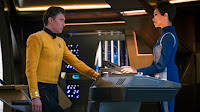
Also, as a quick aside, something to consider for distant past/future names. Truth is, they’re probably not going to be that different. I mean, how many Biblical names are still in common use today? Matthew, John, Mary, Joseph, Luke, Thomas (and let's not forget Peter). Odds are you even run into some of the Old Testament ones on a regular basis—David, Abigail, Joshua, Leah-- heck, Adam and Eve. Regardless of your religious beliefs, it’s clear these names have been around historically for thousands of years. It’s not hard to believe a lot of our present names will go that far into the future. I mean, does anyone even think twice about it when names from today show up in the hundreds-of-years-from-now world of Star Trek? Christopher, Michael, James, Will, Beverly, Ben, Miles, Katherine, Tom, Harry...

You get my point. Do I really need to create “ancient” or “futuristic” names? Probably not.

As for making up words for regular things—calling eyeglasses optykwear or motorcycles bipulsors or a breastplate torsarmor—maybe I should stop for a moment and consider why I’m renaming them. Am I doing it because it actually matters to the story or plot somehow? Or is this a cheap, quick attempt at worldbuilding? Just hitting something with a coat of literary paint to try to make it look shiny and new?

Here’s one of those easy rules-of-thumb I mentioned up top. Try to sum up your whole story in about two pages. You don’t actually need to write it all out, but try to at least have the whole thing organized in your head so you could jot it down or explain all of it to me in under five minutes. This is the long-ish elevator pitch.

Got it?

Okay, if at any point find myself simplifying some of my terms for this summary—just talking about my character’s glasses or her motorcycle or the breastplate that saves her life—then this is the term I should probably be using in my story. Why force the reader to remember an awkward name for something common? Let’s just call a sword a sword and be done with it. We’ve got better things for our readers to spend their time on, right?

Y’see, Timmy, I don’t want to overcomplicate my story with details that are just going to slow it down and drive readers away. If I don’t need to make up a name or a term... then why would I? It’s better just to keep it simple and let them enjoy the read without me getting in the way.
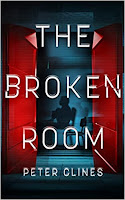
Speaking of getting in the way, this is the point where I awkwardly insert a reminder that my latest book just came out this week. The Broken Room is an action/thriller/sci-fi/horror story with a lot of heart. No, really. One blurb called it “a cosmic horror John Wick” which I was kind of fond of. You can pick it up at your friendly local bookstore, and probably in any format you could want. Fair warning—it does sound like there may have been some supply chain issues this week, so try to be patient with folk if they can’t put something in your hands right this second.

On which note, I did a signing with Mysterious Galaxy last night and scribbled in their extra copies. You could give them a call and they could ship you one. And this Saturday, for you LA-area folks, I’m going to be at Dark Delicacies in Burbank, scribbling in even more books. If you’d like one personalized, please swing by. Or give them a call ahead of time.

And speaking of time... next time, I’d like to talk about framing things.

Until then, go write.

Thursday, July 15, 2021

Don’t Say It

So, there’s something I was hoping we could avoid talking about this week...

Subtext is one of those things that gets mentioned a lot. In fact, I’d hazard a guess it gets mentioned more than it gets defined, and it probably get defined more than people actually give examples of how to do it. Which is weird because it is so important to good writing. It shows up in prose, it should be all through dialogue, it’s just... it’s everywhere

I think we all get a little nervous around subtext because when it’s done well it’s soooo friggin’ good it becomes intimidating. How many college professors went on and on about it? It’s also one of those things where if I dig deep enough, I can find almost any meaning to anything I want. Which then—through the power of the internet—makes it look the author crafted these twelve layers of intricate meaning when they wrote this chapter and holy crap I don’t know about you but I’m intimidated again.

So what is subtext? It’s the conversation beneath the one my characters are having out loud. Or maybe it’s beneath the conversation I’m having with the reader—that I’m telling you this but we both know we’re talking about this. And sometimes it can be that simple. Subtext doesn’t always have to be rich and elaborate and layered with exquisite meaning. There don’t need to be twelve layers. Or even six.

But good dialogue almost always has some kind of subtext, because that’s how people work. We talk around things more than we say them directly. We have in-jokes and shared experiences and understood context and all these things that let us say exactly what we mean without saying... well, what we mean. Without subtext, it’s really tough to do comedy. It’s almost impossible to flirt.

Here’s a few common examples of subtext you’ve probably seen before. Maybe even used before. They’re really simple and even just using these can bump my dialogue up a notch or two. Also, these are just my own names for all of these. I’m sure there’s some literary or psychological theory that gives them a much more accurate name. But I think you’ll know what I’m talking about, and that’s what matters.

The Friend— Let’s start with the most familiar one. So familiar it’s pretty much become a comedy gag. How many times have you read a story or seen a show where someone goes to the pharmacist to pick up their “friend’s” ointment for... their rash.  Or maybe I know this, uhhhh, person from my book club who got really confused by this one Doom level, and was wondering if you could explain how to beat it in simple terms. For him. And the obvious subtext here is that there is no friend, it’s just the character trying to put some distance between them and the embarrassment of needing that ointment. This is an easy form of subtext, because I’m still saying everything, I’m just pushing all the emotions and thoughts onto a different character—even if it’s a nonexistent character.

A close relative of the Friend is the Hypothetical. That's when we're talking about the accursed book of damned souls and I ask you, "well, just for argument's sake, what if I had read a page of the book out loud? What would happen? Not that I did it, I just want to be sure we all understand the stakes here..."

The Metaphor—This is basic subtext 101. It’s the one I mentioned above, when we’re  talking about X but everyone knows we’re really talking about Y. It’s like talking about my friend, but we’re broadening our palette a bit. I’m talking about cleaning out the garage, but it’s really about letting go of the past. Perhaps my co-worker and I are talking about how much we enjoyed doing this project together when it’s clear we’ve fallen in love. Or maybe the boss is telling his new employee about how much he loves the Klingons in Star Trek, and how in their society you advance by taking out the people above you. Ha ha ha, anyway, welcome to the company. Good luck!

Sometimes an example of this sort of subtext gets repeatedly used so much the metaphor becomes a euphemism—it’s so broadly understood, the subtext has essentially become the text. If my partner calls me up at ten at night and asks if I’m up for some Netflix and chill, we all understand she’s not hoping I’ll sit through the first three episodes of Sweet Tooth (although we may have it on in the background).

The Reverse—Another simple way to use subtext is for my character to just declare the exact opposite of what they really mean. At one point or another, we’ve all probably heard something along the lines of “It’s okay, I really didn’t want the promotion. It would’ve been too much work, anyway.” And we all knew Wakko was lying, but we just nodded and politely agreed with him. Or think of Michelle in Spider-Man: Homecoming, who’s not obsessed with Peter Parker or anything, she’s just knows his class schedule because she’s very observant. That’s all.

Worth noting--a lot of times the reverse can be sarcasm, because sarcasm is all about the subtext. Odds are all of us have made a suggestion where one of our friends has rolled their eyes and said “Oh, yeah, I’d love to do that.”

The Next Step—If you’ve ever read about someone ordering a double at the bar before they break some bad news to their tense friend, you know this method. Or maybe when I know the in-laws are coming for dinner, and I take three or four pictures down from the wall and put up other ones. It’s when a character shows they’re one or two steps ahead. She’s not thinking about now, she’s thinking about fifteen minutes or an hour from now, and planning accordingly. Through their words or actions, my character’s saying “I know where this is going and I know how it’s going to end.”

The Blank—This one’s a slightly trickier way of doing subtext. It’s when my character demonstrates their opinion on something by offering no opinion. Sometimes they do it by ignoring the topic, like when Wakko asks his brother’s opinion on Phoebe and his brother instead pointedly wonders aloud how much the DJ gets paid at this club. Other times he might just dance around it, saying he doesn’t know Phoebe that well or giving a very vague non-answer (“Look, how well can you really know anyone, right?”)


And there’s five easy ways I can put a little subtext into my writing. You’ve probably seen a lot of them already. You may already be doing it—good on you.

It’s worth mentioning that all of these methods need a bit of skill and practice, because sometimes people are just really observant. Every now and then we really do just want to relax and watch something on Netflix. And maybe the boss just really likes Star Trek and I wasn’t supposed to shove Dot down that elevator shaft

Y’see, Timmy, the trick with subtext is making sure it’s clear what I really mean. I can’t be so blunt that my characters aren’t really hiding anything, but I also can’t be so subtle that people think my characters... aren’t really hiding anything. It’s a fine balancing act, and it’ll take a few tries to get it right. Nothing to be ashamed of. I have this one friend and none of his early writing had any subtext in it at all.

Next time...

Okay, so, next week, in a world where everyone had masked up last year and gotten vaxxed as fast as they could this year—in that world, next week is SDCC. Alas, we don’t live in that world, so next week is another virtual con with lots of Zoom panels. Which are fantastic, don’t get me wrong, but I’m not doing any of them. In fact, at best, I may do a more public Saturday geekery and watch a couple fun B-movies. Like maybe the MCU Incredible Hulk and Resident Evil: Apocalypse.

I was also thinking about the blog post for that week. Normally I’d just update my “Top Ten B-Movie Mistakes” list (found footage was finally going to get a slot). But that just feels kind of needlessly negative, especially after the past year, and I want this place to be more constructive.

So here’s what I’m thinking about doing...

Next week I’m going to do two posts (Tuesday and Thursday) about how to make a better B-movie. Tuesday’s going to about writing it (based on my experience as a writer, screenwriter, and entertainment journalist) and Thursday’s going to be about filming it (based on my experience working on a few dozen B-movies and TV shows, some of which you’ve actually heard of). It’ll probably just be a “top seven tips” sort of thing, and I doubt anyone from the Asylum will ever see it, but I’ll feel better putting something more positive out into the world. And maybe it’ll help somebody.

Sound like fun? 

Cool.

Until then, go write.

And get your shots!

Thursday, March 21, 2019

Not Just Heroic...

Trying something a little new with the formatting here.  Please make your comments/thanks/complaints in the space down below.

Anyway, looking at the calendar, it’s getting to that season where I blather on about superheroes again.

Or maybe superpowers.

Or both.  They’re kinda related after all.

As some of the book covers displayed on this page suggest, superheroes are kinda my jam.  Have been for years and years now. I wouldn’t claim to be an expert on the subject, but I feel safe saying my knowledge level is in the higher percentiles.  I thought about these stories a lot as a kid growing up and, in a way, even more since I’ve moved into this odd career of “professional storyteller.”  It’s a topic I can blather on about a lot.

As I’m about to demonstrate...

One thing I’ve noticed in some corners is a bad habit people have of labeling a lot of things “superhero” stories, because that title carries a lot of weight.  About twenty billion dollars worth, if we go off the Marvel Cinematic Universe.  Not exactly a bad weight to have hanging on your shoulders.

But...

I think it’s worth noting that there are a lot of differences between a superhero story and a story about people with superpowers.  They are not the same thing.  Not remotely.  And if I try to do one while using the devices and tropes of another... well, I’m going to mess with people’s expectations.  Which usually leads to a disappointed audience.

Now, granted, none of what I’m spouting here is formal rules set down by tenured professors or doctoral candidates.  If we just look at a lot of fiction, though, we’ll see that this idea’s been around for ages.  Superhero stories and superpowers stories have always been two very different animals.

So, what are some of those differences?

Let’s break ‘em down...

First off, superpowers do not automatically equal superheroes.  We can all agree on that, right?  CarrieBlackbirdsLimitlessGirl Like A BombGlass. Stranger Things. All of these stories feature people with superhuman abilities. 

But are any of these superhero stories?  Not really.  Just having some sort of superpower doesn’t automatically make someone heroic.  Heck, in a couple of those stories the person with the powers is arguably the villain

And that brings me to my second point (one of the big ones).  Heroics depend very much on motivation.  The same action can be heroic in one situation, almost cowardly or bully-ish in another.  Or maybe it’s just an action.  We all do things on a daily basis that are personally motivated, and maybe even a bit challenging, but it doesn’t make them heroic, right?  A superhero story's almost always defined by a character who makes a conscious decision to use their powers for a wider goal that may not benefit them (and often doesn’t).  Obvious as it may sound... superheroes act heroically.

And just to be clear, when I’m speaking about heroic actions...  Don’t confuse heroic actions (i.e. actions that are brave and selfless and pure of heart) with the actions of our hero (i.e. actions taken by the protagonist).  Just because he or she’s the hero of the story doesn’t mean all their actions are automatically heroic.  Make sense?

Good.

When we read stories about super-powered folks, though, they’re almost always more personal and intimate.  Dare I say... a little selfish.  In these stories, people are doing things much more for themselves than for any sort of greater good.  It’s not that they’re evil, it’s just that the plot concerns them first and maybe the world second or third.  If at all.

Another common point of confusion here is doing the right thing for the wrong reason.  Is Yakko taking down the bad guy because it’s the right thing to do... or just to get revenge?  Is Dot stopping the bomb to save thousands of innocents... or just to save her friends who are handcuffed to it?  Is Wakko fighting the Automata Society to end their reign of terror... or just so they’ll stop coming after him?

A third point (strongly related to the last one) is that superhero stories tend to be about public use of powers and abilities.  They’re about people who’ve decided to use their abilities to help others, and they get seen doing it.  This public nature also means they deal with public reactions of one kind or another.  Sometimes they’re loved, sometimes they’re feared and hated.

I’ll note a lot of stories that are just about folks with superpowers tend to involve hiding abilities.  Keeping things secret from the world at large.  In the same way their motives are personal, their actions tend to be a lot more low-key and behind the scenes.  In fact, when abilities get revealed in a superpowers story, it’s almost always a cause for panic.

That flows nicely into point number four.  The abilities in superhero stories tend to be much more extreme.  Phoebe’s not just strong, she’s throwing-cars-down-the-street strong.  Wakko doesn’t just move things with his mind, he can throw cars down the street with his mind. Dot doesn’t just start fires, she can throw fireballs that blast cars down the street.

You get the point.  Superhero stories involve throwing a lot of cars around.

But when a story’s just about someone with superpowers, we tend to see a lot more limits on those abilities.  Not always (Dark City and The Lathe of Heaven come to mind), but most of the time they seem to be much more grounded in reality.  A little easier to rationalize, at least.  Side effects and odd handicaps are much more common.

And for our fifth and final point, let’s talk about the elephant in the superhero room.  The costume.  The outfit that hides our hero’s secret identity from the world.

I wouldn’t say a costume/secret identity is absolutely necessary, but I do think it creates a lot of odd situations in my story if there isn’t one.  If everyone knows who Yakko is, then they know who Yakko’s friends and family are.  They can find out where he lives and shops and eats.  If he’s not using a secret identity, he’s either aiming for a very solitary life or he’s painting a lot of targets on people and places.

One other aspect of this a friend of mine once brought up (he’s one of the writers on the new Pet Semetary movie (shameless plug)) is that a superhero often becomes an identity unto themselves.  They’re iconic symbols, and not necessarily tied to the people who first created them.  Spider-Man, Batman, Ms. Marvel, Superman, Captain America, the Flash... all of these superhero identites have had multiple people behind them.

Compare all of that to a story about superpowers, where secret identities almost never come up because... well, like I mentioned in point three, nobody knows about them.  I don’t have to hide my identity when I teleport because I do everything I can to make sure nobody finds out I can teleport.  So the people in these stories tend to wear... well, street clothes.  They never duck into a phone booth to change before using their powers in public because—again—they almost never use their powers in public.

Okay, for our sixth and final-for-reals-now point, let me add this.  The setting matters a lot in these stories, too.  If I’m just telling a story about superpowers, they’re almost always set in the real world.  Or, at least, a world indistinguishable from the real world to the casual viewer.  Because if they weren’t, it’d imply having superpowers wasn’t that impressive.    Being telepathic in the sci-fi world of the Federation—a coalition of hundreds of alien races with unique abilities-- is checking a box on a recruitment form.  Being telepathic in a documentary about 1940’s Paris, though... that’s freakin’ amazing.

Superhero stories, though, tend to take place in worlds that are already fantastic.  They’re already pre-loaded with amazing things.  Consider the Marvel Cinematic Universe.  Aliens are real and publicly known.  Magic is real and publicly known.  Cyborgs.  Androids.  Inhumans.  Demons.  People fly!  Lots of people!  This is not the world outside anyone’s window.

Now, again, this is not a set of iron-clad guidelines.  I have not defended my thesis or gone through rigorous peer review.  This is just forty-odd years of observation paired with forty-odd years of thinking about how stories are told.  And, as I often say, there's always going to be exceptions.  So if I’ve got a superhero who doesn’t wear a costume or a super-powered person who’s acting very heroically, it doesn’t mean my whole story’s about to collapse.

But maybe I should run my story of super-powered beings through this list and just see what side of things they fall on.  Does most of it line up with the kind of story I want to tell?  Is the label I’m putting on it—and the expectations that label will bring—going to match up with what my story delivers?

Because if it doesn’t... maybe I’m writing the wrong thing.

Next time, I’d like to quickly revisit an old favorite before heading off to Wondercon for the weekend.

Until then... go write!

Wednesday, March 13, 2019

This Little Piggy Went to Market

            A couple folks have asked me questions related to marketing over the past few weeks, so I thought it’d be worth going over a couple things about this.
            There’s a wonderful Richard Matheson quote that Jonathan Maberry related to me a few years back.  If you’ve gone to either of the SoCal Writers Coffeehouses and listened to us speak (well, Jonathan speaks, I kinda babble on a lot until I run out of breath), you’ve probably heard it three or four times.  Writing is art, publishing is the business of selling as many copies of that art as possible.
            Marketing, big surprise, is part of publishing.  It’s a very necessary part of publishing, whether I’m doing it myself, with a small press, or I’m the favorite author at a Big Five imprint.  It’s how people discover I’ve got something to sell.
            Marketing can take a lot of forms.  It’s everything from me posting the new cover on Twitter to your book being plastered on the side of a bus.  It’s the copy on the back of the book and me summing it up in two lines for you at a convention.
            But the sole point of it, in all these examples, is to sell books.
            And sometimes... this can create some conflicts with the art side.
            As we move forward here, I’m sure some folks may try to read into this.  It isn’t a subtweet or an angry rant.  I’m not calling anyone out or absolving anyone of blame or any of that.  I’m just tossing out some facts.  Publishing is a business, and if I want to be successful in that business (and avoid a ton of stress), it helps to understand how it works.
            Also, I know there’s a fine line between marketing and publicity and I always mess it up, so please forgive me if I weave back and forth across that line once or thrice here.  I don’t think I’m ever going to end up in the other lane, but we may hear those bumpy lane divider once or thrice.
            Okay, so, if marketing is getting people to buy my book, how do I do that?  I can tell them the genre and see if it’s something they like.  Maybe the type of characters I use.  I can point out other books like it, or other storylines it may tie into.  I can even offer little summaries or excerpts to tease potential readers with.  Doesn’t this sound like a creepy/sexy/amazing/funny story?  You saw the dragon, right?  You know you like dragons.  And this one’s got a lightsaber.  Trust me, The Jedi of Krynn is the book you've been waiting your whole life for.
            But seriously...
            One of the big challenges here—the conflict between art and business—is how much do we tell?  How do we find that fine line between getting the sale and keeping the book enjoyable?  Tell too much and now all the book’s punch is already out there.  Don’t tell enough and... well, maybe nobody reads it at all.
            Do I mention every character in the book, even if some are supposed to be surprises?  Should I mention the big twist?  Should I hint at it?  Heck, sometimes even just naming the genre can be a bit of a spoiler.  And every spoiler saps a little bit of the story’s power... which lessens the chances for word-of-mouth sales.  Now my cool novel is just kind of a bland book with no real surprises in it.
            Sometimes what seem like simples questions can cause marketing headaches.  For example...
            (Some minor MCU spoilers coming at you)
            Does Ant Man & The Wasp tie into Avengers: Infinity War
            Simple question, right?  But how do you answer it?  If I say no, there's a bunch of people who might skip it. Plus, I’m lying, which people will then call me out for and complain about.  If I say yes, people complain because... well, 99.5% of the film doesn’t tie in at all.  And that last half a percent... well, if I’m saying yes, I’m kinda spoiling that super-powerful reveal, aren’t I?  There really isn’t a good way to answer it.
            Of course, even not answering it at all can cause problems, because then people will speculate around that sort of “negative space” left by the non-answer.  They’ll read into things, make assumptions, and develop expectations.  And these expectations will either be correct, in which case...  well, they’re acting like spoilers again.  Or they’re incorrect, and now people are upset because the expectations they went in with aren't being met, no matter what the actual story is (or how good it is).
            There’s another angle here, too.  One you’ve probably heard before.  People like series.  They like them a lot, if you look at sales records. To be honest, publishers like them, too.  Editors love to see a new book with series potential.  And spin off potential.  And tie-in potential.
            But here’s another catch.  People want to know how all this stuff fits together.  They want to know if something is canon or set on Earth-23 or Earth 15 but still canon or does this involve Wakko before or after his cybernetic upgrades?  Because let’s face it—there’s no point reading any of the stories before he became bionic, right?  Why even bother?
            So when things don’t fall into a neat A-B-C, 1-2-3 pattern, it’s not unusual for marketing to just... well, kind of wing it.  Like, okay, how would you number the Star Wars films (or all the novelizations and spin off books)?  By the order they came out?  That won’t make much sense.  By the order they fit in the story?  That means A New Hope: Episode IV is actually movie six.   And how does that work if they do a new prequel story?  Do we re-number everything?  Do we just number some things but not others?  I saw the novelization of Rogue One listed once as Star Wars: Book 18, and I have no clue what that’s supposed to mean.
            Sure, we could leave them unnumbered but... well, that could cost sales, too.  Some folks don’t like reading a series until it’s done, and if I don’t say it’s a trilogy or whatever, well... maybe they’ll never pick it up at all.  So I probably need some kind of designation if I want these to sell, right?
            Or do I?
            Plus... sometimes explaining where things fit in can be a spoiler.  We thought this story was in the future, but it’s actually in the past.  We thought it was here on Earth but it’s actually on the mirror-universe world of Urth.  And that puts us back at... well, what do we tell?  How do we keep the book enjoyable while also getting people to buy it?
            It’s a mess.  Seriously.  And everyone’s clawing their way through trying to find a balance that preserves the art but still serves the business.  Everyone knows you can’t pick one over the other, but every single book (or movie or television show) becomes a new attempt at finding that balance point.  The guidelines we use for my book won’t work for yours. 
            And it doesn’t help when some folks, deliberately or not, muddle things even more.  We’ll play up the mention of that character or the appearance of that plot thread. I’ve seen things described as romances because of one thin subplot, or spiritual because someone prays at some point (I won’t tell you what they were praying for...)  I’ve mentioned before how for a while any book or movie with a somehow-superhuman character was billed as a superhero story.  These are the things that make people grumble about marketing, and make marketing folks grumble about people who just follow buzzwords.
            Anyway...
            I just thought it was worth tossing this out.  Mostly because a few folks have complained long and hard about the marketing for Dead Moon.  I’ve tried to address some of these things for, oh, eight or nine months now but... well, as I’ve been saying, some complaints are inevitable, no matter what. 
            But also partly because, like I said in the beginning, this is stuff worth knowing and thinking about.
            And I’m sure there will be some more thoughts down in the comments.
            Next time—like, tomorrow—some thoughts on dialogue.
            Until then, go write.

Thursday, March 1, 2018

It’s All Uphill From Here

            No, the title’s relevant. Really.  Just wait.
            Okay, so... we started with linear structure, and last week I went on for a bit about narrative structure.  This week I want to close up my extended TED talk by discussing dramatic structure.  It’s the way I weave the previous two forms together to form a killer story.
            Fair warning up front—this one’s going to be the longest, so if the others strained your patience or ate into your lunch break... hey, I told you.  Go hit the restroom, grab a snack, and pour yourself a drink. 
            What, now you’re drinking at work? Seriously? You might need to talk to someone.
            You might recall I said that linear structure is how characters experience the story and narrative structure is how the author chooses to tell the story. In that vein, dramatic structure is how my audience receives the story.  As the name implies, dramatic structure involves drama.  Not in the “how shall I make Phoebe love me” sense, but in the sense that the tension and interactions in my story should almost always be building.  Any story worth telling (well, the vast, overwhelming majority of them) are going to involve a series of challenges and an escalation of tension.  Stakes will be raised, then raised again.  More on this in a bit.  
            I hate getting really clinical with this stuff because... well, we’re talking about art. Not in that “ARRRRRTTTTT!!!” sense, but in that golden rule, we’ve-all-got-our-own-methods-of-doing-things way.  The art part of this is personal and we should all be cautious when someone starts slapping down graphs and charts of how “good” stories go together.
            But... I also think most of us here have been doing this writing thing long enough to understand that sometimes there are rules. There may be a few exceptions here and there, but that doesn’t change the fact that there are some very solid guidelines that cut across the vast majority of stories. Especially the vast majority of popular, successful stories.
            That being said...
            Let me show you some graphs and charts of how good stories go together.
            No, don’t freak out.  They’re really simple, and this is the easiest way to demonstrate the points I’m trying to make.  Hell, if you’ve been following the ranty blog for any time now (or gone back and read a lot of it) you’ve probably seen them before.
            On all these graphs, X is the progression or the story from beginning to end, Y is dramatic tension, high to low.  This first graph shows nothing happening.  Absolutely nothing.  This is me getting a good night’s sleep.  From my point of view.  I didn’t even have any interesting dreams.  No highs, no lows, no moments that stand out.  It’s flat and monotone.
            Boring as hell.
            As my story progresses, I want the tension to rise.  Things need to happen.  Challenges need to appear and be confronted by my protagonists.  By halfway through, the different elements of the story should’ve made things much more difficult for my heroes.  As I close in on the end, these difficulties and stakes should be peaking.
            Check this out. Here’s a bare-bones dramatic structure.  We start small, and tension increases as time goes by.  Low at the start, high at the end.
            Mind you, these don’t need to be world-threatening challenges or huge action set pieces.   If the whole goal of my story is for Phoebe to ask Yakko to the Sadie Hawkins dance without looking like an idiot, a challenge could just be finding the right clothes or picking the right moment in the day.  But there needs to be something for my character to do to get that line higher and higher.  There’s a movie out right now called Please Stand By where the main character’s goal is traveling to Los Angeles so she can submit her amateur Star Trek script to a screenplay contest.  The challenge is that she’s kind of high on the autism spectrum, so doing something this far out of her routine is a huge deal for her.
            Make sense so far?
            Okay, now here are a few things we need to keep in mind. 
            And there are visual aids, too
            First, you may have heard that “starting with action” thing that so many gurus preach.  A lot of folks start with that line up around eight... and then they increasing tension.  This doesn’t leave a lot of room for things to develop, but we’re hitting the ground running and going until we drop.
            Thing is...when we plot this out, the line looks a lot like the one on that first graph up above.  It’s pretty much just a straight line because there isn’t anywhere for things to go.  And, as we established earlier, straight lines are pretty boring whether they’re set at one-point-five or at eleven.  They’re monotone, and monotone is dull.
            This brings me to my second point. Dramatic structure can’t be a nice, even rise like the second graph.  That’s another straight line, and straight lines are... well, you get it by this point. 
            Think back to high school physics for a minute.  We don’t feel a constant velocity.  If I’m driving a car at a nice, even speed, I can reach out and play with the radio. I can have a drink of water or soda or coffee.  I can wiggle around and take off my jacket or get my wallet out or whatever.  And it doesn’t really matter if I’m moving at 40 or 60 or even a hundred miles per hour.
            Y’see, Timmy, we don’t notice the constant, we notice the change.  That’s what grabs our attention.  When I have to hit the gas or slam on the brakes or turn fast—these are the moments that grab me. These points stand out above the constant ones.
            In a good story, there’s going to be multiple challenges and my hero isn’t always going to succeed.  No, really.  He or she will win in the end, sure, but it’s not going to be easy getting there.  There’s going to be failures, mistakes, and unexpected results.  Ups and downs.  Because that’s normal. We don’t want a character who’s good at everything and never has a problem.  So that line is going to be a series of peaks and drops.  For every success, every time we get a little higher, there’s going to be some setbacks. A new, bigger challenge that appears.
            Still making sense?
            Good.
            So, with that in mind, here’s my big graph.


             This is everything I’ve been talking about these past few weeks.  Just like above, X is narrative structure.  It’s the story progressing from page one until the end of the story.  Y is dramatic structure. We can see the plot rising and falling as the characters have successes and failures which still continue to build.  And the letters on the graph are the linear structure—we all know what order the alphabet goes in.  We’re beginning at C, but there’s also a flashback much later on that go back to A, and we understand that occurred before C even though we don’t see it until this later point..
            Pretty much every story should look like this graph if I map it out.  Not exactly peak for peak, no, but they should all be pretty close to this pattern.  They’re all going to start small and grow.  We’ll see tension rising and falling as challenges appear, advances are made, and setbacks occur.  Small at the start, increase with peaks and dips, finish big.
            That’s it.  This is the big, easy trick to dramatic structure.  No matter what my narrative is doing, it has to keep increasing the tension.
            Simple, yes?
            Keep in mind, this isn’t an automatic thing.  This is something I, as the writer, need to be aware of while I craft my story.  If I have a chapter that’s incredibly slow, it shouldn’t be near the end of my book.  If a scene has no dramatic tension in it at all, it shouldn’t be in the final pages of my screenplay.  And if it is, it means I’m doing something wrong. 
            Not to hammer the point, but this is what I’ve talked about a few times now.  There needs to be a reason for this shift to happen at this point—a reason that continues to feed the dramatic structure.  If my dramatic tension is at seven and I go into a flashback, that flashback better take it up to seven-point-five or eight.  And if it doesn’t, I shouldn’t be having a flashback right now.  Not that one, anyway.
            See, let’s take another look at that A-B flashback up above.  Even though it’s near the end of my story, it’s still pushing the story higher than everything that came before it. I’m choosing to put this information in this place in order to create a specific dramatic effect.
            Think about a lot of your favorite stories.  When the readers learn things affect the kind of stories they are. And that change affects the dramatic structure.  Because dramatic structure tells us that things in the beginning are small, things at the end are big.  Something I know at the start is automatically a minor point, but it could be a major one if it’s revealed closer to the end.
            Got all this so far?
            Don’t worry, we’re almost done.
            There’s one last cool thing I can do with dramatic structure.  It makes it easy to spot if a story is worth telling.  I don’t mean that in some snarky way.  The truth is, there are a lot of stories out there that just aren’t that interesting. We all know this. Since we know a good story should follow that ascending pattern of challenges and setbacks, it’s pretty easy for me to look at even the bare bones of a narrative and figure out if it fits the pattern.
            For example...
            I’ve read a lot of zombie books (not surprising) and seen a lot of movies.  I’ve read and watched stories set in different climates, different countries, and with different reasons behind the end of the world.  I’ve also seen many different types of survivors.    One that crops up too often is the protagonist who decides on page seven to turn their house into a survival bunker for the thinnest of reasons. They stockpile food, weapons, ammunition, and other supplies.  But twenty pages later, when the zombies finally appear out of nowhere...  damn, are they ready.  Utterly, completely ready.  There’s no mistakes, no problems, no setbacks, because they have prepared for everything.
            In other words... there’s no change.  No challenge.  The plot just drifts along from one incident straight to another, and the fully prepped, fully trained, and fully loaded hero is able to deal with each one with minimal effort.  That’s not a story worth telling, because that story is a line. 
            And I’m sure you still remember my thoughts on lines...
            On the flipside, some of the best zombie stories have people caught unawares, or finding their plans collapsing around them.  The Undead Situation has a young protagonist who suspects the end’s coming and stocks his home... with candy and pet treats.  In Fiend we find out that meth addiction makes you immune to the zombie plague... but being on meth makes it challenging to survive the zombie apocalypse.  Roads Less Traveled has the protagonist work out a meticulous zombie-survival plan with her friends... which slowly unravels as people don’t follow the rules, come up short on their requirements, and generally act like, well, people.
            Again—dramatic structure isn’t an automatic thing.  Just because I reveal something later on doesn’t guarantee it’ll be more dramatic.  But if I map out my story like this, even in my head (and be honest with myself about it), I can get a better sense of how well my story’s structured.
            And honestly... I think with that I’ve thrown enough at you.  I wish I could offer you more.  But a lot of this is going to depend on you.  While the other two forms of structure are very logical and quantifiable, dramatic structure relies more on gut feelings and empathy with my reader.  I have to understand how information’s going to be received and interpreted if I’m going to release that information in a way that builds tension.  And that’s a lot harder to teach or explain.  The best I can do is point someone in the right direction, then hope they gain some experience and figure it out for themselves.
            On which note... next time I’d like to talk about getting started.
            Until then... go write.

Thursday, October 19, 2017

Center of Attention

            This week I wanted to blather for a minute about an unusual character/structure issue that I see come up now and then.  It’s one of those kinda basic ideas that can actually be difficult to spot.  Or explain.  And, to be honest, it’s something I’m dealing with a bit in my current book.
            I’ve talked before about protagonists.  How my main character should be the main focus of the story, the ones we’re spending the most time with.  Secondary characters should be secondary.  Background characters should kinda blur into the background. This all sounds straightforward, right?  I think we all understand this.
            However...
            A mistake I sometimes see is when every other character in the story immediately recognizes this character as the protagonist.  They all stop doing their own, natural thing and start treating the main character as... well, the center of things.  The character stops moving through the plot, and instead the plot begins to revolve around them.
            Let me give you an example...
            A few weekends back, one of my random movies was about a guy (we’ll call him Yakko) who wanted to propose to his girlfriend.  Had the ring and everything.  Thing was, said girlfriend got roped into being in charge of some office team-building thing up in the mountains. She had to cancel their plans for the weekend, unless...  He was an experienced camper/hiker and he had a big SUV—if he wanted to drive they could still kinda spend the weekend together.  Yakko thinks about it, decides sure, he can propose up by the lake, and agrees to help out.
            Thing was... as soon as their group got together and started driving up into the mountains, everyone started to defer to Yakko.  All the office folk who’d never met him before.  That jerk Evan from accounting.  Even his girlfriend, the one who was supposed to be in charge.  Suddenly the protagonist was the boss and nobody questioned it... or even mentioned it.
            This isn’t really surprising, on one level, that writers end up doing this.  If I want my character to be active and do things, they need to be in a position to do things, right?  Their decisions need to count and have an effect on the plot.  There’s a reason most of the Star Trek shows are about command officers and not the enlisted crew.  It’s tough to be active when everything about my position requires me to defer to someone else.
            Of course, the answer to this isn’t for me to have the unconnected boyfriend suddenly become the key figure on the teambuilding trip.  Or for the junior crewman to take command of Deep Space Nine.  Just because someone’s the center of attention in my story doesn’t make them the center of attention in their story.  There’s other stuff going on in the world and structures in place.  The wheels are in motion, as some folks like to say.  I may focus my story on an Army private, but that doesn’t mean suddenly everyone in the military should defer to that private just because she’s the protagonist.  The Army has a whole chain of command that would... well, kinda stop that from happening.
            How often in your own life have you had something to do, something important to say, and people just brushed you off or ignored you or talked over you?  It’s happened to me countless times.  Hell, it just happened yesterday on the phone with the bank.  It’s my life, but for some reason everyone else refuses to treat me as the most important person in it.
            Now, I can already hear people typing frantically in the comments, ready to explain three or seven ways that everyone in the US Armed Forces could end up deferring to a private.  And sure, it could happen.  Anything could happen. That’s the joy of fiction.
            But...
            Y’see, Timmy, if I’m going to do it, that explanation has to be part of my story.  It can’t be something that just happens, that I gloss over.  That’s lazy writing. That’s me writing myself into a corner and then smashing a hole in the wall rather than figuring a way out.
            I’ve talked about a similar idea before—the idea that I’m telling the right story.  It’s a weird idea, I know, but if I’ve set up a situation that requires a lot of stretching of conventional norms... well, I have to explain that stretching.  Why are we all deferring to the boss’s boyfriend?  Who put that crewman in charge of the Defiant?  Why is the general insisting everyone follow the private’s orders?
             Is my main character someone who’s going to be able to navigate my plot?  Is their social status, financial status, employment, or health going to be an unbelievable (or maybe flat up impossible) hindrance to the story I’m trying to tell?  If they aren’t, I’m probably going to need to explain or justify a lot of things.
            Or maybe I’m just focusing on the wrong person.
            In my current project, the main character is the fish out of water.  My ignorant stranger.  She’s the new kid on the job, and this means she’s pretty far down the totem pole.  So... why does she end up in the important meetings once the crisis occurs?  How is she an active person, making decisions that affect the story when there are so many people above her making their own decisions?
            It’s taking a bit of work.  But I’m making it happen.  Hopefully in a believable way.
            Next time, I wanted to talk about the creepiest thing I’ve ever seen.
            Until then... go write.

Thursday, June 16, 2016

Single Purpose Ideas

            Whoa!  Two weeks in a row.  Haven’t managed that in a while...
            One of my favorite television shows is winding up, and while I absolutely love it overall, I’ve been looking back on it with a bit more of a critical eye.  Specifically one season where it felt like the show went off the rails.
            No, it’s not important which show.
            The thing is, it struck me that at one point the basic idea of the show changed, but the show itself didn’t.  It kept telling the same kind of stories—stories that didn’t fit this new idea.  And that’s where it fumbled.  A similar show I was watching had the same problem—its stories didn’t fit its basic premise.
            This isn’t an uncommon problem.  I’ve seen it in books, too.  Heck, as my editor just pointed out, I got my feet a bit wet in it with one of my recent drafts (which kind of sparked this).
            So, let’s talk about ideas.
            I’ve talked in the past about limited and unlimited concepts. I think about 99.99% of all stories fall into one of these categories.  Which one I’m using should have an effect on how I structure my story.
            A limited concept is one that comes with a clear, specific goal. Yakko wants to get home. Dot wants to get the girl.  Wakko wants to save the farm.  Phoebe wants to stop the bad guy.  My character has an objective, the story is about them achieving it.  A to B.
            At its heart, this is probably the simplest kind of story, and one of the most common.  A self-contained book is a limited concept.  So are most movies.  There may be more steps involved than just A to B, but really it boils down to discover goal, accomplish goal.
            The flipside of this is an unlimited concept. This is where my characters have less of a goal and more of a general mission, if that makes sense. Wakko is trying to raise his kids as a single dad in the big city.  Yakko solves complex medical cases.  Dot and her team of specialists protect the country—and sometimes the world—from supernatural and alien threats.
            An unlimited concept is a bit more complex because it’s a much broader idea.  Most ongoing television shows (the thought-out ones, anyway) are unlimited concepts.  So are most book series.  The reason for this is because an unlimited concept, by its nature, can go on and on for a long time without feeling stretched out.  They don’t have a clear end point.
            Now, we’ve all seen what happens when these things get swapped. A writer may have a very solid limited concept that they decide—or are told—to do as an unlimited one.  It doesn’t matter if you have a very solid three-season story about people trying to get off this weird island, the network says it needs to run for four seasons.  Sorry, we meant five.  Okay, make it six.
            This is when things start to fall apart.  The story starts to feel padded because we all recognize that it’s... well, padded.  Forward movement has stopped, because forward movement would mean hitting the end of the story.
            Everybody loves to talk about prequels, but every prequel inherently has to be a limited concept.  A is where we begin, B is the story we already know. There’s only so much that happens between them.  Every prequel automatically starts with a limited amount of time to tell a story in.  As a writer, I can’t keep putting off B.  Eventually we have to get there, because if we don’t, it’s going to become clear I’m putting off B for no reason except to put off B.  This is a big problem a lot of prequels have.
            Let me give you an example.
            In case you forgot, Smallville was the story of high school student Clark Kent growing up in the titular town, developing the powers and learning the lessons that will eventually make him the greatest hero ever.  The producers joked early on that when Clark learned to fly, the series would be over. After all, at that point he’d be Superman.  We began with Clark already strong, fast, and invulnerable.  Heat vision and X-ray vision showed up before season two was halfway done, then super-hearing (all usually just in time to counter a specific problem).  And then...
            Well, Smallville did really well in the ratings.  So it kept getting renewed.  The network and the producers didn’t want the show to end, so they had to keep coming up with reasons for Clark to not become Superman.  Because Superman was point B.  Once we’re there, the show’s over.  So Clark developed every Kryptonian power there was and then spent eight more years not learning to fly and not being Superman.  Heck, the last four seasons pretty much took place entirely in Metropolis.  And while a good chunk of it was still interesting... a lot of it just felt like stretching things out.
            The other issue with a limited concept is when the characters just start to ignore their goal.  Like when the whole point of my story is to save the farm, but I’ve just spent six chapters on Wakko going to an art gallery opening and buying something by a hot new—wait a minute!  He’s trying to save the farm but he’s dropping money on outsider art?  What the hell?
            Once I’ve set a goal for my character—and it should be a big one—this needs to be their focus.  They can head in another direction for a little bit, but their attention really needs to stay on that end point of B.  Veering too far off course and getting distracted will just have my readers rolling their eyes.  I can’t say Dot only has until tomorrow to stop Armageddon and then have her take an afternoon at the spa and dinner out with the cute guy from marketing because, hey, life is short, right?
            That fantastic show I mentioned up top—the one that’s ending—it had this problem.  It started as an unlimited concept, a very procedural-type show.  But halfway through season three, the show shifted (very beautifully and organically) into a limited concept.  Thing is... it kept doing procedural, one off stories all through season four.  There’s a bomb ticking away somewhere, ready to take out half the city, but our heroes keep stopping in their search to hand out speeding tickets and chase down drug dealers.  It became teeth-grindingly frustrating as the protagonists continued to get bogged down in minor side stories while that huge B goal loomed over them.
            Another problem I see a lot with limited concept stories is when people try to go past B. Because in an A to B story... B is the end. We’re done.  Anything after this is just... well, excess.  Trying to force the story on past B to C just becomes awkward.  Once the crew of the Federation starship Voyager makes it home to the Alpha Quadrant, the show’s over.  Sure, we could’ve had another season of everyone being debriefed, getting accustomed to life back on Earth, maybe getting assigned to new ships or new missions... but that’s not what Voyager was about.
            A great example of this you may have heard of is the Moonlighting Curse, named after the old show with Bruce Willis and Cybil Shepherd.  The idea is, basically, once my two main characters sleep together, my show is doomed.  And I think there is some truth to this... in certain cases.
            Y’see, Timmy, a lot of television and book series will have a plot built around an unlimited concept (two zany, mismatched partners solve crimes).  The story, however, is a limited concept about these two characters—will they fall in love, or at least fall into bed?  And when that happens, when they’ve hit point B, their story is over.  It doesn’t matter if the plot is unlimited—there’s nowhere else for the characters to go except past B, and that’s fumbly, unexplored, and usually uninteresting territory (when compared to that original A to B).
          Whenever I get an idea, I try to take a good look at it.  Is it limited or unlimited?  What am I thinking of doing with it?  Does my idea match up with the story I’m hoping to tell?
            Because if it doesn’t... something’s going to need to change.
            Next time, I’d like to alter the mood a bit and talk about rejection.
            Until then... go write.