Showing posts with label names. Show all posts

Thursday, March 3, 2022

Those Are All Made-Up Words!

I wanted to jump back to something I mentioned a few weeks ago. Creating my own words for stories. Yes, all words are made-up-- don’t be the clopos in the room, okay? I recently got a new laptop and as I was bringing everything over I stumbled across a very old blog post about using made-up words. It had a few nice rules of thumb for separating good uses from bad uses, and I thought it might be worth revisiting them.

So let’s dive right in.

First off, let’s talk about names. Proper names for people, places or things. This may sound kind of simple, but I’ve seen it go wrong enough that I think it’s a good place to start off.
When we’re worldbuilding an alien or fantasy world, or sometimes one in the distant past or future, there’s an urge to hand out a lot of different names. For characters, towns, deities, what have you. On the surface, there’s nothing really wrong with this, but I should think a bit about how I’m going to introduce these names. Especially if I’m going to do it in dialogue or a first person POV.

Let me give you a few quick, example sentences.

    “Tim, it’s good to see you.”
    “We’re going to try for another child, if Phoebe’s willing.”
    “Sarah, what are you doing here?”

Pretty straight-forward, yes? No confusion about what any of these sentences mean. Heck, the second one even slips in some personal information about the speaker. But watch what happens when I switch the names like this?

    “Jesus, it's good to see you”
    “We’re going to try for another child, if God’s willing.”
    “Christ, what are you doing here?”

See? Now these these sentences are conveying different information. They’ve shifted to expletives and figures of speech. But we only know that because we recognize this second set of names. Because watch what happens when we don’t have reference for any of these names...

    “Tokar, what are you doing here?”
    “We’re going to try for another child, if Ostriax is willing.”
    “Grothnixian, it’s good to see you.”

Soooooo.... now what are these sentences saying? We can’t really parse them without a frame of reference for those names. Is Ostariax the speaker’s wife, husband, or chosen deity? Heck, Tokar and Grothnixian might not even be names at all. Maybe they’re swears I made up and they’re just capitalized because they start the sentence. I mean, it’s clear to me, the writer, so I guess if you don’t understand it in context the problem’s just you...

The problem here is that when a reader stumbles across this, their brain’s going to make a decision and stick with it. It’s going to say Grothnaxian is a proper name, Ostariax is a god, and Tokar is one of those words you might use with your close friends, but not in polite company. You definitely wouldn’t use it on the internet where it might come back to haunt you years from now.

And when, fifteen or twenty pages later, my reader realizes Ostariax is actually someone’s sister... It’s going to break the flow. Like, shatter it. My reader’s going to stop and re-read those last ten pages to see how many things they misunderstood, or if some things make more sense now. And they’re going to double check Tokar to make sure they aren’t misunderstanding that name, too. Heck, odds are pretty good they’re going to be cautious moving forward, because I’ve shown I can’t really be trusted to be clear about this. All the names are suspect now.

As I said above, I need to be very careful about how I first introduce these.

Also, as a quick aside, something to consider for distant past/future names. Truth is, they’re probably not going to be that different. I mean, how many Biblical names are still in common use today? Matthew, John, Mary, Joseph, Luke, Thomas (and let's not forget Peter). Odds are you even run into some of the Old Testament ones on a regular basis—David, Abigail, Joshua, Leah-- heck, Adam and Eve. Regardless of your religious beliefs, it’s clear these names have been around historically for thousands of years. It’s not hard to believe a lot of our present names will go that far into the future. I mean, does anyone even think twice about it when names from today show up in the hundreds-of-years-from-now world of Star Trek? Christopher, Michael, James, Will, Beverly, Ben, Miles, Katherine, Tom, Harry...

You get my point. Do I really need to create “ancient” or “futuristic” names? Probably not.

As for making up words for regular things—calling eyeglasses optykwear or motorcycles bipulsors or a breastplate torsarmor—maybe I should stop for a moment and consider why I’m renaming them. Am I doing it because it actually matters to the story or plot somehow? Or is this a cheap, quick attempt at worldbuilding? Just hitting something with a coat of literary paint to try to make it look shiny and new?

Here’s one of those easy rules-of-thumb I mentioned up top. Try to sum up your whole story in about two pages. You don’t actually need to write it all out, but try to at least have the whole thing organized in your head so you could jot it down or explain all of it to me in under five minutes. This is the long-ish elevator pitch.

Got it?

Okay, if at any point find myself simplifying some of my terms for this summary—just talking about my character’s glasses or her motorcycle or the breastplate that saves her life—then this is the term I should probably be using in my story. Why force the reader to remember an awkward name for something common? Let’s just call a sword a sword and be done with it. We’ve got better things for our readers to spend their time on, right?

Y’see, Timmy, I don’t want to overcomplicate my story with details that are just going to slow it down and drive readers away. If I don’t need to make up a name or a term... then why would I? It’s better just to keep it simple and let them enjoy the read without me getting in the way.

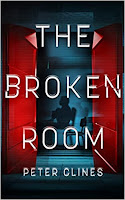
Speaking of getting in the way, this is the point where I awkwardly insert a reminder that my latest book just came out this week. The Broken Room is an action/thriller/sci-fi/horror story with a lot of heart. No, really. One blurb called it “a cosmic horror John Wick” which I was kind of fond of. You can pick it up at your friendly local bookstore, and probably in any format you could want. Fair warning—it does sound like there may have been some supply chain issues this week, so try to be patient with folk if they can’t put something in your hands right this second.

On which note, I did a signing with Mysterious Galaxy last night and scribbled in their extra copies. You could give them a call and they could ship you one. And this Saturday, for you LA-area folks, I’m going to be at Dark Delicacies in Burbank, scribbling in even more books. If you’d like one personalized, please swing by. Or give them a call ahead of time.

And speaking of time... next time, I’d like to talk about framing things.

Until then, go write.

Thursday, January 28, 2021

Keeping Our Heads Down

This is something I’ve talked about several times here on the ol’ ranty writing blog, but I realized I haven’t talked specifically about it in, well, many years. Too many years, really. Definitely not since I’ve tried to lean away from the more ranty, accusatory tone I tended to write in back at the start of this.

Look, reading all those movie scripts made me pull out a lot of hair.

I talked a month or so back about the idea of a contract between author and reader. There’s one other aspect to that contract, a sub clause, and I think it’s one of those “so obvious we don’t think about it” sort of things. To be blunt, nobody’s picking up one of my books to hear from me. Or to see me.

I mean, sure, they like a lot of the characters and worlds I’ve created. Some folks probably (hopefully!) like my style enough that they’re willing to try something new from me. But they still don’t want to see me. They want the story, and they definitely don’t want me getting between them and it.

Now, this doesn’t mean I’m going to follow you home from the bookstore and stick my hand between you and the page or sing nonsense in your ear. It’s just that nobody wants me distracting them from the fact they’re reading my story. They just want to sink into that world and get lost.

Yeah, of course, on one level you know I crafted each of those sentences and paragraphs, chose where all

the breaks

should go, but we have this quiet understanding that I won’t be leaning over your shoulder asking “Did you like that? Did you see what I did there? Wasn’t that clever?” You just want to immerse yourself and forget about the world for a little bit. Or at least get to look at it from a neater angle.

That was jarring, wasn’t it? That weird paragraph break? It was only two lines, but it broke the flow for a second, and you stopped hearing my voice and started hearing your own instead. Probably saying something like “was that a mistake? Is he doing beat poetry? Was he trying to do something funny there?”

And this is the worst thing that can happen to a writer. I don’t want you thinking about me. I want you to be thinking about Hector and Natalie and the people they’re running away from. If you’re noticing me, thinking about what I’m doing... it means I’ve done something wrong.

Think of it this way. It’s the difference between the tough guy in a story who commits unimaginable acts of excessive violence to look tough... and the tough guy who doesn’t need to commit those acts. The one we understand is more impressive without seeing a blatant demonstration. Being able to restrain myself is usually more impressive than how excessive I can be. Less of us is more of the story.

So here’s four easy ways I can keep my literary head down.

Vocabulary— When I started out, I know I desperately wanted to show I had a better vocabulary than the average person. Because that’s a hallmark of a good writer, yes? I didn’t want to use common, pedestrian words, the words just anyone would use. I was a skilled anecdotist, after all, not some mere amanuensis.

And let’s be honest—I wasn’t alone. This is a phase a lot of us go through as we’re starting out. We latch onto (or more often, look up) obscure and flowery words for our literary masterpiece, as if we’re going to get a quarter every time the reader has to look something up. And if the reader doesn’t enjoy going to the Miriam-Webster site every three paragraphs? Well that sounds like their problem, doesn’t it? Not my fault you’ve got such a limited vocabulary.

Truth is, any word I choose just to get attention—to prove I don’t need to use a common word—is the wrong word. Any word that makes my reader stop reading and start analyzing from context is the wrong word. I can try to justify my word choice any way I like, but nobody’s picking up my book hoping for a vocabulary lesson. When a reader can’t figure out what’s being said for the fourth or fifth time and just decides to toss my manuscript in the big pile on the left... there’s only one person to blame.

(It’s not them, in case you had any lingering thoughts on the matter)

Structure-- Just like obscure vocabulary, convoluted structure’s another common sign of writer ego. One of the most common forms of this is insisting on grammatical perfection. This usually mean a lot of rigid, formal text and very stiff dialogue. It’s when I get so insistent on proving I know the correct way to structure a sentence my words end up sounding forced and artificial. Also worth noting the flipside of this which is insisting I don’t need to follow any grammar or spelling conventions. Punctuation? Capitalization? Those are tired tropes for losers.

The second most common sign is needless complication. I can admit I used to write—or try to write—sprawling, impenetrable prose. Sentences that went on and on. Descriptions that never ended. It took someone two pages to step through a doorway because we had to know what kind of socks and underwear they were wearing and what flavor toothpaste they preferred. If they were mentioned in the text, I had to remind you of these facts and how they were posed at the exact moment they spoke. Believe me, if something could be explained or described in less than ten words, I’d find a way to do it in at least fifty.

And while I never got quite that bad, there are also some writers who choose arcane story structures or points of view or tenses. Just because they can. Things will go from non-linear first person musings to omniscient third person flashbacks to second person song lyrics and then to a telepathic gestalt mind that only speaks in one of those single, three page sentences I was just talking about. There’s nothing wrong with any of these things, in a general sense, but so often they’re not there to serve the story. It’s just an attempt to look cool and do cool things. If I want to do something like this, I should be able to explain why I’m doing it. And the explanation needs to better than “y’know... reasons,” or I’m just going to leave my readers confused and frustrated as they get knocked out of my story again and again.

Said—Sad admission, kind of going with the vocabulary point up above. For many, many years I didn’t use said. Said was, in my opinion, the lowest common denominator of dialogue descriptors. It’s the kind of word used by writers who weren’t going places, writers not destined for greatness, like I clearly was. Not only that, I’d try to never us the same descriptor on a page twice. So in my early work my characters would respond, retort, exclaim, demand, muse, mutter, sneer, snap, shout, snarl, grumble, growl, whimper, whisper, hiss, yelp, yell, exclaim, or ejaculate. 

Oh, grow up. It was a common dialogue descriptor for years. Really.

Of course, once I finally got to sit down and talk with a professional editor and show him a few pages, this was the very first thing he commented on. Truth is, nobody notices said on the page. It’s an invisible word. Yeah, of course there’s going to be times when my characters are hissing or shouting or gasping. But I should save those words for then so their impact hasn’t been used up and weakened. The vast majority of the  time... stick to said.

Names—If used in moderation, names are also invisible. If you think about it, they’re just a shorthand note for the mental image of my character or MacGuffin or whatever. And they help us keep things straight if I’ve got a bunch of people all talking together.

It’s worth mentioning many fledgling sci-fi or fantasy writers feel the need to rename a lot of things. Or everything. Characters have all-new, correct-for-this-world names and so do their pets. And their gods. And their elements. And their system of weights and measures, their money, their units of time...  It’s great worldbuilding, but I’d guess 83% of the time this is just wasted words.  My elaborate sci-fi empire won’t collapse if I call mind-to-mind communication telepathy, but it might if I keep calling it intralobeech, which, as we all know, is short for “intralobe speech.”

Which, as we all know, is telepathy.

Always remember that moderation is key. Even a simple name like Bob can stack up and get distracting really quick. Which is why the ancient ones created...

Pronouns--when those proper names start to stack up, we switch to pronouns.  Just like names are shorthand for story elements, pronouns are shorthand for those names. When nouns start to clutter up my writing, they’re there to leap in and shoulder the weight.  It’s how Hector becomes he, that mysterious island becomes there, and a Hudson Hornet becomes it.

The catch here is I need to make sure my pronouns are clear. No questions exceptionally clear, ‘cause the moment someone gets confused about which her I’m referring to, they’re going to stop reading my story and start studying the page. We’ve all had to do that, right? Feel our way though a paragraph so we’re clear who she is. Or work backwards through the dialogue, trying to figure out who’s speaking which lines. I’m always super-careful with pronouns, because I don’t want that happening to anyone in my books.

Again—pronouns good. Pronoun confusion—bad. And it’s a writing rule you can apply to real life.

So there they are.  Four simple ways to keep our collective heads down so readers don’t see us standing there. Staring at them. Waiting to be noticed.

Y’see, Timmy, every time I make my reader hesitate or pause just for a second, I’m breaking the flow of the story. I’m encouraging them to skim at best, put the book down at worst. My reader should forget they’re paging through the latest Peter Clines novel, hopefully forget they’re reading altogether. And the easiest way to make that happen is for them not to see the writing.

It’s tempting to wave our arms and shout and try to get the reader to admit they can see us, but all this does is ruin things for everyone. It’s like Sherlock Holmes showing how he came to his amazing deductions or a magician explaining their greatest illusion. That moment is when the whole thing falls apart.

As writers, we need to go unnoticed. We want our characters to be seen and our dialogue to be heard, yeah. We want our action and passion and suspense to leave people breathless, absolutely.

But we’re just distractions.

Next time... hmmmmm. Not sure. I’m open to requests or suggestions if anyone has any. If not, I might tell you about a conversation I recently had with someone about getting published.

Until then... don’t let me see you writing.

Monday, March 16, 2020

Again and Again and Again and Again and

So, hey... things are a little crazy and intense in this world of ours right now. Hopefully you’re somewhere safe and hunkering down a bit. Also hopefully you’re not someone going “Ha ha ha look at me” as you wander around potentially endangering other people.

Be a hero. Don’t willfully endanger anyone else right now. Okay?

Anyway... bonus post. Figured everybody could use a little extra stuff to read while they're stuck at home.

I'd like to share a random writing-type thought that’s bounced back and forth through my head a few times recently. I think it’s something a lot of you may automatically get, but this might help solidify it a bit in your own heads. And for some of you, this may be an all new concept.

I’ve mentioned the idea of repetition in writing here a few times, coming at it from a few different angles. It’s one of those elements that can be very powerful if used the right way... and completely brutal if I use it the wrong way. Or overuse it. It’s like one of those vitamins or minerals that we absolutely need to live, but just a little too much and now it’s a deadly poison.

Anyway, it recently struck me why repetition can turn on us like that and—oddly enough—it ties back to another idea I’ve mentioned here once or thrice. And that’s a concept Damon Knight talked about in one of his short story books. The idea of information vs. noise.

To sum up quickly, it goes like this. When we come across a fact we don’t know, it’s information. When we come across a fact we already know, it’s noise. We pay attention to information, but we tune out noise because... well, it’s noise. It’s just a distraction, keeping us away from the stuff we’re actually here for.

Now, Knight was talking about this mostly in the sense of exposition, and this makes perfect sense. We don’t want to read two pages about why Nazis were bad because, well, we all know that already (okay, most of us know that...). But we’re up for two pages about how true artificial intelligence came into existence, because this is something we don’t know and (hopefully) find interesting and relevant within the context of the story.

Getting hit with the same facts we already know is... well, boring. Sometimes flat-out aggravating. It feels like the author is padding and wasting time rather than giving us what we want.

But here’s the thing. This is true of pretty much all repetition. As I’m putting words down on the page, repeating anything the reader knows (or can figure out) is going to quickly become noise.

Think of names in dialogue. We roll our eyes when characters constantly use names while talking to each other. Or if the author constantly uses dialogue descriptors with names rather than pronouns (or just assuming we can follow who’s talking). After hearing Wakko said... a dozen times on one page, we start grinding our teeth. We can’t help it. It’s noise to our ears.

The same thing holds for descriptions. Yes, I know Phoebe is over six feet tall. You’ve mentioned it seven times in the past ten pages. Or that the blood is bright red. Or that Phoebe is six feet tall. Or that Yakko is a cyborg. Or that one of my over-six-foot characters is Phoebe. See what I mean? I’m clearly doing it as a humorous way to make a point, but it’s kinda getting on your nerves, isn’t it?

And I’ve talked before about doing this with reveals. The first time I reveal something to my readers is an amazing, jaw-dropping thing. Because it’s facts they don’t know. It’s information. But the second time I show it off it’s... well, it’s not as interesting. And the third time, if there’s no point to this, it’s kinda boring. By the fourth time okay seriously can we just get on with this? What? A fifth time? Seriously?

Repetition can turn anything I have to say into noise fast. So I want to be very careful if I’m going to repeat any information for a third or fourth time. And like I just joked, if I hit a fifth time...

Wow, I should probably rethink some things.

Next time we’re going to jump back to the A2Q and talk about theme. Yeah, I know. You just had this gut, high school reaction to that word. I’m going to try to help you get past that.

Until then, go write.

Thursday, September 12, 2019

Name Brand

Oh, hey, have I mentioned Dead Moon lately? It’s out. It’s available. You should check it out if you haven’t already. It’s got zombies on the Moon, and you know you like zombies on the Moon.

But moving on...

I wanted to blather on about names a bit, because I read something a few weeks back that kinda went overboard with them. It’s a recurring issue, I think. Pretty sure I’ve talked about this before.

There was a school of thought a while back that every character should have a name. Every single character in my manuscript needs a proper, given name. I read through and I know the given name of the cabbie, the intern, the homeless guy at the freeway exit, the woman  ahead of the main character in line at Starbucks, the barista at Starbucks.  It doesn’t matter how important—or unimportant—they are to the story  They get a name.

I don’t know if this was something somebody was “teaching” somewhere or if it was just telephone-game advice run amok and gaining life and sentience and trying to conquer the internet. I saw this “rule” show up often on general writing forums and a LOT on screenwriting boards. Essentially, it makes things more real. Gives every character a little more dimension and life.

Thing is... this isn’t a rule. It’s just awful advice. I should never do this. Seriously.

Names are a form of shorthand—in real life and in fiction. It’s a quick label we slap on that collection of motivations, dialogue quirks, and physical descriptions we call the social-web-intersections that are Wakko. But like any sort of shorthand or label, too many can get confusing. Two or three post-it notes around my computer can be helpful. Two or three hundred probably means I can’t see the screen and anything I need to remember is lost in the chaos.

That’s the other way names are shorthand. They let us know which characters are important. Yes, everyone’s important and special in real life, but within my story—within this fictional universe where I am a wise and powerful God who controls everything—are they really that important? Does some aspect of the story rely on my readers seeing them and noticing them and remembering them?

My personal rule is this--a character’s name in my manuscript should be what my main characters refer to them by.  If my main character doesn’t know their name, has no reason to, and never will... it’s a safe bet my readers don’t need to know it.  If they’re just “the cute barista” then odds are pretty good we, the readers, don’t need to keep all those quirks and descriptions in mind. We can devote that mental space to other things.

Lemme give you an example. A little indie arthouse film came out this summer called Avengers: Endgame. Not a lot of people saw it. On the off chance you were considering it sometime in the future, I’ll warn you that I’m going to drop a few spoilers in the next paragraph or three. Well, the same spoiler spread out across them. One point, discussed to some degree.

You may want to skip ahead, that’s what I’m getting at. Everyone else...

There are a lot of people in the final scenes of Endgame. Hundreds, maybe even thousands. That big battle? I mean, pretty much every superhero we’ve ever met. A bunch of sorcerers. Several tons of Asgardians (seriously, think of the bone density those people must have). And that’s just on our side. The big bad has two or three different alien armies, plus his little inner circle of specialists

So... what were their names?

I mean, sure there’s Cap and Tony, Thor and Hulk. Valkyrie, Captain Marvel, T’Challa, Shuri, Ant/Giant-Man, Wasp, Winter Soldier, and yeah, okay, there’s a bunch of them.  Plus all of Thanos’s people.  Proxima Midnight and Ebony Maw and....Urban Sprawl, I think, was the big guy? We never really got properly introduced to them, did we?

But what about everyone else? Can you name all the sorcerers who open portals? Any of the Asgardians who come through? That big space worm thing that Giant-Man slams into the ground? Surely they call it something, right?

Thing is, we don’t know. And we don’t need to know. Cap probably doesn’t know most of them past “more folks on our side” and "all of those things with Thanos."

Hell, can you imagine if every one of those characters got a close up and a quick chance to introduce themselves? Seriously, how long would that take? How many would we actually remember? It’d be like speed-dating, except you’d know from the start a lot of them were going to die. Okay, so it’s a lot like speed dating. You get the point.

How about a non-spoilery version. I’m betting most of us here have worked some kind of basic retail/food service job at some point in our lives. Something where we had to deal with customers. I did both.  That said, how many of those customers can we name? Or if somehow this doesn’t apply, we’ve all been to a store or restaurant. Probably in the past two weeks. How many of the clerks or cashiers can you name? How many of the other customers?

And the reason we can’t name any of these people (Asgardians to waitstaff) is because they weren’t important to our personal story.  They weren’t relevant to the main plot (which was our lives, naturally). In the end, if my main character doesn’t know who someone is, there’s nothing wrong with just calling them the second mechanic or the doctor in the lab coat or even just the cute barista.

This isn’t to say we (or our characters) will never, ever come across someone who stands out but ultimately has no real effect on our story. Someone with an interesting name or appearance that elevates them a bit above the crowd. But those folks are the few and far between. They’re the exception, not the rule.

Y’see, Timmy, giving every character a name may feel like it’s showing how well-thought-out my world is, but in the long run it just breaks up the flow of my story.  It’s making my readers juggle pages and pages of potential characters instead of letting them focus on the ones that are actually going to be important.

Next time... we’re all going to get our revenge. Finally. It’s going to be glorious!

Until then... go write.

Thursday, November 8, 2018

Mr. Nobody

            A while back I asked for topic suggestions and this got tossed out by someone (you know who you are).  I’ve been playing with it in my head for a few weeks because it’s one of those topics/questions that’s a little more complex than it seems on the surface.  But I think I’ve got a handle on it to where I could mutter on about it for a bit.
            Or maybe not.  Maybe I’m just suffering from leftover Halloween candy withdrawal.  I guess we’ll see.
            So, the question was, paraphrased, ‘Who deserves to be a character in my story?”  Not in the sense of “wow, this guy on Twitter thinks he should be in my next book”—the answer to that is pretty much always no.  No, we’re talking about where we draw those lines between main characters, supporting characters, and those folks in the background. 
            For example, in the book I’m working on right now, I just mentioned a Lyft driver.  How much detail and backstory do they deserve?  Should they have a gender?  A  hair color?  Maybe an elaborate backstory involving a wild one night stand, a million-dollar art heist, and a cursed music box?
            Should I maybe even give them... a name?
            Now, on a simple, first-draft level, the answer to all of this is yes.  Go for it.  I don’t know how many times I’ve said good characters are the most important part of any story.  So, logically, more good characters makes for an even better story, right? 
            And this is the whole point of a first draft.  Getting it all written down.  All of it.  Everything.  EVERYTHING!  Every crazy idea and phenomenal character concept and neat cameo I can come up.  So my Lyft driver is named Phoebe and that one night stand was actually a threesome and she was blackmailed into working the art heist because they knew about her skill with laser-based sensors but she didn’t know “they” were part of the Black Monks of Beleth, a monastery that deifies a fallen angel who’s now one of the nine kings of Hell and, damn, this stuff really writes itself, doesn’t it?
            However...
            Yeah, there’s a “however.” 
            You probably saw that coming...
            Like a lot of first draft elements, eventually I need to sit down and decide how many of them really contribute to my story versus distracting from it.  In this case, how many of these characters.  And that’s when the real decisions happen.
            For me, it always comes down to how much are they moving the plot or story forward.  Are they sharing important information my protagonist (and my audience) don’t know?  Are they setting something in motion?  Is it vitally important we remember this character fifty pages from now?
            And I should be clear what “moving the story forward” means.  If Yakko needs a ride so he doesn’t miss his meeting with Dot, that doesn’t mean Phoebe the Lyft driver is moving the story forward.  Being in the plot doesn’t inherently make a character essential to the plot.
            Easy way to check—does anything change if I cut out that whole car ride?  If I ended one chapter with Yakko calling a Lyft and started the next one with him running into the lobby of an office building... is anyone going to be really confused?  Will my book be lacking something (except maybe an extra 4000 words)...?
            I’ve mentioned the idea of who gets (or doesn’t get) a name before, and I think it’s a great guideline for this sort of thing.  I don’t want to confuse my readers by naming every single character.  If I’m going to bother to name a character, readers are going to assume I did it for a reason.  This person is going to matter somehow.
            And I think this holds for character traits overall.  If I’m going to spend three paragraphs describing her clothes, his drinking habits, their sexual experiences in college, how she turned down her birthright and he never worked for anything... well, my readers are going to assume this is important.  I wouldn’t just be writing all this out for no reason, would I?  I’m a professional, after all.  There’s a plan to all of this, and it’s a plan of my own careful devising.
            But...
            Yeah, there’s a “but,” too.
            But I need to be sure of that plan.  Sometimes things can seem to be important threads of the plan, but really they’re just bulk filler.  Once or twice I’ve mentioned the idea of “describe and die.”  It’s when the writer introduces characters, gives us tons of description and backstory, and then kills them.  It can seem like a good use of description... but it’s something that wears thin really fast. 
            Like... after one use.
            So imagine how frustrated my readers would get if I did “describe and... do nothing.”
            To be clear, I’m not saying to pare away every single character description that doesn’t advance the plot.  But I need to be careful how and where I’m using them..  There are lots and lots of reasons it might be worth bumping someone up to minor character-hood and giving them a little more.  I just need to be sure I’ve got a valid reason.
            For example...
           In the book I just turned in, there’s an evacuation scene, and I tossed out quick, one-line descriptions for three different characters as my protagonist deals with the crowd.  Two of them even had a very quick dialogue exchange with said protagonist before one of them is abruptly killed.
            Spoilers, but you’ll forget by February.
            Anyway, my editor suggested trimming that down, getting rid of the other exchanges and descriptions and just dealing with the imminent victim.  I explained why I’d rather not—one was that it pushed me into a very light “describe and die” situation. Two is that—after years of watching and working on television—it always feels a little odd and cheap to me when the only person the protagonist interacts with in a crowd is the person something happens to.  Y’know, like when the reporter talks to a random person in the audience about holding the concert despite the building needing repairs, and when that roof beam breaks and falls... well, you know who was under it, right?
            And my editor accepted that.
            Which is a great way to look at it.  Feel free to introduce minor characters.  Give them a line or three of description.  Maybe a paragraph or two of backstory.  But if someone asks why I’m focusing on this person for a few extra beats, can I give a better explanation than “it’s kinda cool,” or “it’s a very pretty description”...?
            Because if I can’t... maybe they don’t deserve to be a character.
            Next time, I’d like to talk about phone calls and rhythm and dialogue.
            Oh, and one other random segue...
            I’m hardly a prude, and I know there are lots of authors out there that have much earthier blogs than mine (some of which are really fantastic).  But I always kept it kinda clean here.  Mostly because this originally grew out of some professional articles I’d been pitching, and I tried to keep that general feel and tone, even though I’ve gotten a bit more loose and casual over the years.
            Anyway, I bring it up because a couple of you have posted some rather *coughs* emphatic responses to things lately.  And while I greatly appreciate the enthusiasm (and the comments), I prefer to keep things at a level that doesn’t get blocked by a lot of web filters.  Alas, the only real moderation tool I have here is a delete button, and I’ve had to resort to that.  Many apologies if your comments vanished in the (tiny) purge.  Again, they’re appreciated but...
            You all get the point.
            Next time, dialogue.
            For now, go write.

Thursday, May 24, 2018

Jammed

            First off, so very sorry post have been irregular here as of late. Believe I’ve mentioned I’m juggling a few things.  One of which is the con I’m at right now.
            But we’ll talk about that in a bit...
            This week I wanted to revisit an idea that I’ve brought up a couple of times over the past few months.  I’ve heard it called a few different things, but my preferred term has always been flow.  First heard it that way from a wonderful author and writing teacher named Drusilla Campbell, and it always stuck with me.
            The visual I’d like to put in your head for flow is traffic. Regular old automobile traffic.  I’m going to go out on a limb and guess most of you reading this can drive, and the few who don’t have still ridden in a car.  And hopefully most of you have been to a city, or at least on a highway of some kind.
            So... let’s talk about the flow of traffic.
            Living in Los Angeles (and before that San Diego, and before that the greater Boston area), I’m very used to highway traffic.  Sometimes, often late at night, the highway is clear and wide open.  There’s barely anyone on the road and you can pretty much fly.
            Of course, even if there aren’t many cars on the road, something big can still create a traffic jam.  Major construction or a big accident can condense things down to one lane, and suddenly that very open road is densely packed and moving at a crawl.
            During the day it can be even worse.  When there’s a million people on the road (no exaggeration here in LA) one small problem can slow everything down.  A large one can bring things to a crashing halt.  Hell, there’s a big hill on the 405 through the Sepulveda Pass and it always causes traffic slowdowns, both ways, up and down.  I’ve been in traffic jams so bad you could actually shut your car off, get out, and stretch your legs for a bit.
            There are places where the very structure and layout of the freeway just naturally causes traffic jams. There’s no way to avoid it the way things have been constructed.  I know a couple stretches where—for no reason—the road goes from six lanes to three.  And then back up to five.  That mile of three lanes... it’s almost always clogged.
            Traffic patterns can even get messed up when people just start looking at the wrong thing. We’ve all been in massive slowdowns that are simply caused by people staring at something on the side of the road. Or sometimes on the other side of the road.  A big accident in the northbound lane can make everybody in the southbound lane slow down to take a look.
            Sometimes it works great, though.  Those million people can be on the road and it’s fantastic.  Everything works.  I’ve had times when I’ve been looking at all the cars on the road, but then looked down to realize I’m almost doing sixty-five.  We’re all going at almost sixty-five, in perfect sync.  I was just caught up in everything and didn’t even realize what was actually going on.
            But that flow can get disrupted so easily.  Again, one car going really slow.  One closed lane.  One distraction over on the shoulder.
            What’s the point of this little visualization?
            Reading a story is a lot like traffic.  It has a flow.  When the flow’s great, we barely notice how fast things are going.  We just zoom along and suddenly realize we’ve read a hundred pages and it’s dark out and where the hell am I?  A book that you can’t put down has great flow.  A book that you should love but you just can’t get into... probably doesn’t.
            Here’s a few things that have the potential of causing a traffic jam in my story.

Switching Tenses/Formats/POVs
            A friend of mine has a book where the main character slips into sort of a fever dream.  She’s sick, she’s been medicated, and now she’s... a bit out of it.  And so the next two chapters of the book are in stage play format.  It becomes a bit more separated from reality for the reader and we understand it’s more surreal for the character as well.
            Compare this to another book I read recently when, for no reason, maybe 15-20% of a page would suddenly be in screenplay format.  Dialogue, prose, prose, slugline, dialogue, stage direction, prose, dialogue.  It jarred me out of an otherwise wonderful book every single time, and the author did it every four or five pages.  I looked for patterns and tried to figure out if there was a recurring motif, but couldn’t find anything.  I loved the story, but I kept getting knocked out if it.
            There’s nothing wrong with doing clever things.  It’s highly encouraged.  But I need to have a reason to do them, because my readers are going to assume there’s a reason I did it. That’s natural, isn’t it? I made the effort to put it in the book, so there must be a point to it.  Bruce Joel Rubin once mentioned that when we stop experiencing stories in our gut, we go into our head and start analyzing them.  That’s when the flow breaks.  When we stop reading and start drawing mental diagrams.

Names
            I was reading this big sprawling generational family saga recently.  Not normally my kind of thing, but I’ve been trying to expand my reading umbrella lately.  And I’m overall glad I read it.
            But...
            One issue it had was that, by nature of being multigenerational, there were lots of people who were called “Dad,” and quite a few who were “Mom.”  And they were all Dad and Mom.  No “Pops” or “Papa” or “Daddy Dearest.”  No “Mum” or “Ma” or “Mother.”  Which got confusing because the book also jumped POV and timeframes a lot.  We might be in Yakko’s head for a chapter, then hop over to his granddaughter’s.  Which meant “Dad and Mom” is now referring to different people.  Some of them even had the same name, so there was a Yakko Jr. and a Yakko the III (fortunately grandpa had died)
            Anyway, what it amounted to was me going back to analyze the book every ten or fifteen pages to make sure the person behind this POV was who I thought they were.
            This is closely related to something else I’ve mentioned before—when lots of people have very similar names, especially when they all begin with the same letter.  We naturally lock on to that first letter to help keep things straight in our heads. If my story has a large cast featuring John, Jerry, Jacob, Jared, Justin, Jean, Jon, Jeri, Juan, Jenn, and Jess, people are (again) going to spend just as much time going backward to figure out who’s who as they are going forward to, well... read my story.

Vocabulary
            We work with words.  That’s a simple fact of the job.  And nobody wants to use common words.  We want to work with amazing words.  Exciting, sexy, awe-inspiring words that people will remember years from now.  Decades from now, even.
            But here’s the thing to remember.  The words don’t really matter. The story matters. The characters matter.  The actual words are just a delivery device.  They’re how I’m telling you the story.  As a writer and a reader, I don’t want to be focused on the act of communication more than what’s being communicated.  The words should be almost invisible.
            And the truth is... the common words are going to be a lot less visible than the uncommon words. As readers—as people—we notice the uncommon. It stands out. And in many cases... it’s distracting. 
            This isn’t to say we can’t use uncommon or obscure words. There should be a reason for using them, though, and that reason shouldn’t just be me wanting to show off the obscure word I learned on Doctor Who a few months ago.  They shouldn’t be stumbling blocks for my reader.  Again, they should be adding to the story, not the delivery device.

            That’s just a few things.  I’ve mentioned some others before.  Flow is kind of tough to get too specific about because something that causes a small bump for me might be slamming you into a metaphorical wall.  Or vice versa.
            Y’see, Timmy, that’s the biggest lesson about flow.  It’s an empathy issue.  It’s about being able to put myself in someone else’s shoes—a lot of other people’s shoes—and make an honest assessment about things.  Will this reference trip people up?  Is this structure confusing?  Is it easy to keep all these characters straight?
            Because if I can’t be honest about my work, there’s a good chance I’m going to jam things up.
            And if that happens too often, to stick with our traffic metaphor... people will start looking for alternate routes.  
           Next time, I’d like to talk about that opening chapter.  You know what I mean.  The P word.  Although, fair warning, next time might not be for two weeks or so.
            Oh, and hey—I’m at Phoenix Comic Fest right now!  Are you reading this? You should come find me. I’m that guy typing on his phone. And also talking on panels and signing stuff and all that.  Come by and say hi.
            And then go write.

Saturday, May 14, 2016

How To Succeed In Hollywood...

            Sorry this is running a bit late.  Ending up lost in a great book earlier this week and put me behind on a lot of things.
            Okay, I’ve said a few times that I don’t want to use this blog to go over the basics.  If you’ve found your way here, I’d like to pretend that you’ve got a loose grasp of your chosen writing format.  But I’ve seen a few screenplays recently that... well, it’s apparent the basics of screenwriting aren’t as well-known or understood as they should be.
            Now, to be clear, I’m talking about if I want to do this professionally.  I want a studio to hire me and give me a pile of money so they can turn my script into... y’know, garbage. But, hey, they’re giving me a pile of money. 
            If I’m trying to do indie/YouTube things with my close circle of friends... format doesn’t really matter as much.  No one else out of that circle’s going to see it, right?  But if I’m thinking of Hollywood, of screenplay contests, of those big brass rings people have been thinking of for decades...
            Well, I need to have some idea how a screenplay works.
            So, here’s a  dozen basic rules I should have down before I show my screenplay to someone. 
            And especially before I submit it to someone.

            1) Basic Format—Scripts are always in single space Courier 12.  Always.  If you heard a story about a professional screenwriter who only works in Times Roman and turns in his or her work that way, I can tell you two things—that person’s already got the leeway you only get with a well-established career, and as soon as they handed the script in the whole thing was reformatted into Courier 12.  It’s the industry standard for a number of reasons, including timing and scheduling.  Every other department needs that script in Courier 12.
            Ahhh, says clever wanna-be #8... if they can convert it anyway, then what difference does it make if I want to write in Times or Arial or Wingdings? 
            It doesn’t make any difference how I write it.  But when I submit it to a contest, an agent, or a production company, it has to be in Courier 12.  Because scripts are always in Courier 12.  Always.  And I’m trying to convince people that I’m a professional. 
            One other thing—I don’t use scene numbers in a spec script.  That’s something that comes up much later during the actual pre-production for a film.  They’re a tool for the assistant directors and department heads, not the screenwriter.  Putting them in now will just get me tagged as an amateur.

            2) Basic Style—Always use third person, present tense.  Always.  The script is what’s happening on screen right now.  Characters can have dialogue where they talk about things in past tense, but all my action blocks and descriptions must be in third person, present tense.
            A screenplay that switches person or dips back and forth between past and present tense is always a good tip-off for readers that this is someone’s short story or novel they sloppily adapted into screenplay format.  There’s also usually a reason no one bought their short story or novel, and it’s related to the fact that they didn’t bother to learn how to format a screenplay...

            3) Capitals -- This isn’t that tough.  I use capitals the first time we see a character so the reader knows this is someone new.  I’ll go into this a bit more in a minute.
            I also use capitals for emphasis when something important happens.  When YAKKO IS SHOT or Dot’s exploring the graveyard and finds A SEVERED HAND ON THE GROUND.  Keep in mind, though, that in this sense capitals are just like exclamation points.  The more often I use them, the less power they have, and eventually they’ll tip the scale and just start frustrating or annoying the reader.
            Also, none of this applies to dialogue.  Again, for clarity, I should never apply the above rules to dialogue.  If dialogue is in capitals it means someone is shouting--nothing else.  To be clear, there is no other way to interpret capitals in dialogue.  Capitals in dialogue=shouting.  So even if my sister has never been mentioned in the script before, I don’t say “Have you met my sister CAROLYN?”  I also don’t say “Hey, over there on the ground, is that A SEVERED HAND!?!!?” 
            Okay, I might shout if I see a severed hand.  But am I supposed to shout?

            4) Names – As I mentioned above, whenever I introduce a character, I put them in all caps in the action blocks.  The very first time I see YAKKO WARNER I need to know he's someone new. After that he's just Yakko.  For example...

Another man cut from the 50’s action cloth, ZACK “ZAP” MARSHALL is standing by another panel, a few feet down the wall from Lance’s.   This one has three large buttons on it, marked “laser,” “missile,” and “x-ray”. Zap also wears a wide, high-tech belt buckle with a large button in the middle of it.

REX
Ready, Zap?

ZAP
Just give the command, Captain.  I’m ready to blow it out of space.

            Dialogue headers are always all caps, using the most common version of the character's name, and I never change dialogue headers for a character.  Wakko’s dialogue is always headed with  WAKKO, Dot’s is always headed with DOT.  The only time they would change is if the character has completely changed identities on screen.  For example, in Captain America: The Winter Soldier we find out the title assassin is actually Cap’s supposedly-dead friend Bucky.  He’s WINTER SOLDIER in headers until he’s revealed as BUCKY in either the action block (because you’re introducing a new character) or dialogue (where it still isn’t capitalized unless it’s shouted).  Then his next dialogue header should be WINTER/BUCKY.  Use that double-header once, and then he’s BUCKY from there on in.

            5) Don't Name every Character—In the abbreviated, concise format of a screenplay, names are an important tool.  They tell the reader that this character is someone we need to pay attention to.  They’re important enough to the story that they rate a name and not just a title like MAN #2 or WAITRESS or OFFICER.
            Alas, some idiot somewhere started pushing the idea of naming everyone in a screenplay.  The logic is that this gives more detail, nuance, or some such nonsense.  Do not do this.  If my screenplay is littered with extra names, the reader’s going to be tripping over themselves trying to keep all those names straight because the logical assumption is that they need to be kept straight.  I made the effort to name them, after all.  So rather than focusing on the story, the reader’s trying to figure out how the woman in the mall and the taxi driver figure into the story.  That’s breaking the flow and it’s going to piss them off when they realize they wasted time and effort juggling twenty-seven names for no reason.
            Never name someone just to give them a name.  No one—not even the actor—is going to be upset with just MAN #2.  A friend of mine has made a good career out of being MAN #2.  Trust me, MAN #2 is going to make a nice chunk of money, even for just one day on set.

            6) Actually Describe Things—A few years back I got to interview screenwriter-director David Goyer (The Dark Knight, Man of Steel, the Blade trilogy) and he told me a funny story about getting smacked down by Guillermo del Toro.  It seems Goyer had described a character in a script as “a living nightmare.”  del Toro looked at this and said “What does that even mean?  That is boolshit!”
            There is a time and a place for pretty, evocative imagery and language.  That time and place is not while writing a screenplay.  As I mentioned above, the script is about what’s on screen right now, which means it has to be something we can actually see.  A reader needs to be able to visualize what’s on the page, and it’s very important that multiple readers visualize the same thing.  I can tell you Jack is a dead ringer for my old work friend Scott, but that doesn’t mean a damned thing if you don’t know what Scott looked like.  “It’s a hundred times cooler than Armageddon” sounds really cool, but it’s really hard to do concept sketches and storyboards off that.
            During our interview, Goyer actually admitted this issue bit him in the ass when he directed one of his own scripts.  He’d given a vague, roundabout description of a sequence, but once he was on set he actually had to figure out how to film it.  Now he needed a real description.  So production came to a halt while Goyer and his assistant director tried to block out the mess that writer-Goyer had left them to deal with.
            That leads nicely into...

            7) Don’t write what we can’t see – A solid corollary to the last point.  I’ve lost track of how many times I’ve seen stuff like this in amateur screenplays (and a few professional ones).
            Tight on a man sitting in a restaurant, not eating.  This is WAKKO, an advertising executive who just scored a multi-million dollar contract with Pepsi.  He’s freaking out, though, because he also just found out his fiancé has been cheating on him with someone from her office.  Another WOMAN!  And now he’s questioning their whole relationship, himself, how did he miss this, how could he be so blind? And how is he going to explain this to his friends and family?  No, Mom, Jane’s not coming to Thanksgiving--her bird's getting stuffed by one of the girls from legal? Wakko keeps going back and forth between blaming her for cheating and blaming himself for not realizing why things felt strained between them.
            What’s wrong with that paragraph?  Well except for the first sentence... how is the audience expected to know any of this?  All we’re going to see is a guy in a restaurant.  Again, the script is what’s on screen right now.  Not what’s in someone’s head.  That’s the stuff that comes out through dialogue, action, and maybe some clever set dressing or wardrobe choices.  But definitely not in a block of exposition in the action blocks.

            8) Don't Over-Describe Characters—This sounds a little contrary to some of the stuff I’ve just said, but trust me--it isn’t.  A bad habit some writers develop—especially prose writers—is to go mad with character description.  Hair color, eye color, ethnic background, education, music preferences, drink preferences, underwear preferences, etc...  They take their entire character sketch and drop it into the screenplay.
            I don’t go nuts describing characters in scripts for a few reasons.  One is that I always want to be tight and lean in a screenplay.  Two is, as I just said above, I don’t want to describe anything the audience can’t see.  Three is the one none of us like to think about—there’s a good chance this character will change.  I can spend half a page describing Rosario Dawson and then they decide to cast Jennifer Lawrence.  It happens. 
            Just give enough description so the character stands out from any other character.  Really, if I’ve got more that two sentences of character description I’ve got too much.  Yeah, I may have tons more, but remember—the script is about right now.  Everything else about my character will come out in the course of the story through their dialogue and actions.  If it doesn’t, my problem is not that I only got two sentences of character description.

            9) Don’t act – Okay, you know those little descriptions under the dialogue header, usually in parentheses?  These are called parentheticals.  Sometimes, as a joke, they’re called wrylies.  It’s a quick set of instructions to the actor about how the line’s supposed to be delivered.
            Actors loathe parentheticals.  Actors hate parentheticals the same way screenwriters hate  producers who want us to change the ending so everyone was dead the whole time and to make Natalie Dormer’s part a lot bigger because she’s become kind of a hot item since we finished principal photography.  It’s someone who has no idea how to do my job telling me how to do my job.  Let’s look at a quick scene from one of my own scripts...

WENDY
(excited)
You did it!

TED
(proud)
Yeah, great shot, Zap!

LANCE
(relieved)
All clear again, Captain.

REX
(serious)
Yes.  But for how long? 

WENDY
(confused)
What do you mean, Rex?

REX
(thoughtful)
If it wasn’t for brave crewmen like Lance, Zap, Ted, and the rest of you, the galactispiders would make the starways far too dangerous. 

            Are those parentheticals really telling you anything useful?  Most actors would be able to figure this stuff out just from context.  So would any reader. 
            Which, for the record, is why none of these parentheticals are actually in my script—I just added them for this example. 
            Y’see, Timmy, there are only two times to use a parenthetical.  One is if it’s life or death important to the story that this line is delivered a certain way.  If the whole film is going to fall apart if Yakko doesn’t whisper in this scene, then add a (whispered) to that line of dialogue.  Two is if I think there’s a very real chance this line could be misunderstood, even with all the context and lines before it, and the resulting misreading will destroy the entire film.
            If I’ve got a parenthetical in my screenplay, I need to think long and hard about if it meets one of these two criteria.  And then probably remove it anyway.  They’re the adverbs of screenwriting.

            10) Don’t direct—Okay, what I just said about actors hating it when you tell them how to act?  Directors loathe writers who fill up a script with directing notes.  When I fill pages with stuff like “Pan over to reveal...” or “rack to see Yakko’s expression,” directors shake their heads, cross that out, and plan how they’re going to shoot the scene.
            Like the parenthetical above, only put in direction if it’s life or death important to the film.  If the story hinges on this being a crane shot, then put in—if the story really hinges on it.  Me thinking this scene would be really cool with a crane does not make it a pivotal shot. 
            Plus, a lot of time adding direction honestly detracts from the story.  Here’s a great example—how many of you have seen Sherlock?  Remember the last moment he has alone with Irene Adler at 221B Baker Street, when they're sitting at the fireplace and she's trying to convince him to run away with her?  It's pretty important that we don't focus on what Sherlock's doing with his hands, right?  Except if I point this out in my script, readers are going to spend the next ten pages trying to figure out what Sherlock's doing with his hands, and that’s going to override a lot of what’s going on now.  If I hadn’t mentioned it, they wouldn’t’ve thought about it, but now it’s essentially a low-level spoiler in my own script that his hands are doing something that will matter later.  Don’t worry about that sort of thing.  By the time the readers get to the flashback and figure it out, they’ll understand that when the movie is filmed we can’t focus on his hands at that point.
            By the way, just to clarify—it doesn’t matter if I plan on directing the script myself.  The script I submit to a contest, an agent, or a producer, has to be a script for anyone.  If I'm actually going to be the director, I’ll have plenty of time later to add that stuff.  Plus I’ll have my own notebook and schedule.  For now, all those things are just taking up space on the page.

            11) VO vs. OC—Okay there’s a huge difference between voice-over and off-camera.  This is one of those little things that can get me tagged instantly as an amateur if I get them wrong.
            Voice-over (V.O.) is when someone’s talking that no one else can hear.  Announcers and narrators are usually voice-over.  Train of thought is voice-over.  “Little did he know...” tends to be voice-over.  Another good tip—I will never, ever see lips moving for a voice-over.
            Now off-camera (OC) is when someone’s talking that other characters can hear but the audience can’t see.  For example, if Phoebe’s on her phone talking to Wakko, and we hear his voice, he’s off-camera, not voice over.  That old bit when everyone hears a voice, turns, and sees that Dot has come into the room—that’s off-camera.
            I want to use OC carefully, because too much makes it look like I’m trying to direct again (see above).  I’m not going to put it during an intercut phone call.  I don’t use it when we know Dot’s on the other side of the room but we’re not seeing her at this moment.

            12) Don’t use archaic terminology – Forsooth, whenst thou uses scrivening of yesteryore, thy words appearst equally of yesteryore. And few and far between liest those who show interest in the dry, dusty bones of a mouldering anecdote.
            Or, as we say today, no one’s interested in an old script.
            It used to be common to end every scene with CUT TO or FADE, or to end every page with (CONTINUED).  It also used to be common for the US military to have a lot of horses and bayonets.  In both instances, that hasn’t been the way it works for years.  When I started working in the film industry back in 1993, CUT TO was already dead.  (CONTINUED) was on life support, and only cropped up in very limited use. Usually for ongoing dialogue.
            If I’ve been using an old script from The Maltese Falcon, The Godfather or Rocky to learn this terminology and formatting—I need to toss it.  The film industry grows and changes like any other industry.  If my reference script wasn’t written in the past ten years, it’s probably going to give me more bad habits than good ones.
            This is also one of the big reasons I wanted to go over all of this again. At this point, it’s been about nine and a half years since I worked in the film industry full-time. My experience is getting old, and I’m smart enough to admit that.
            Some people are not.
            Or  just don’t care as long as you’re going to pay them...
  
            13) Don’t use real celebrities as characters—A bonus point I’ve mentioned before.  I’ve read screenplays where one character ended up at a resort with Johnny Depp, another one where someone dated Carmen Electra, and a really, really creepy one about George Clooney getting involved with a producer... who happened to have the same name as the screenwriter.  Unless your movie is already in production and Helen Mirren happens to be your best friend in the world who would do anything for you, do not use her as a character in your screenplay.
            Yeah, I’m sure some of you are already calling foul.  After all, haven’t I littered the Ex-Heroes series with mentions of celebrity zombies?  Well, yes I did.  But that’s the difference between a book and a screenplay—you can still read the book if Nathan Fillion, Jessica Alba, or Alex Trebek don’t show up.  Now if someone ever decides to make a movie out of the book... well, then there’ll probably be issues. 
            Although I feel relatively safe saying Fillion would show up.

            So, thirteen tips to a more coherent, professional-looking screenplay.  I’m betting the majority of you knew most of them.  But a few of you... well, now you know.
            And knowing is half the battle.
            Next week... I wanted to talk about some very bad people and how to make them good.
            Until then, go write.