Showing posts with label genre. Show all posts

Thursday, March 3, 2022

Those Are All Made-Up Words!

I wanted to jump back to something I mentioned a few weeks ago. Creating my own words for stories. Yes, all words are made-up-- don’t be the clopos in the room, okay? I recently got a new laptop and as I was bringing everything over I stumbled across a very old blog post about using made-up words. It had a few nice rules of thumb for separating good uses from bad uses, and I thought it might be worth revisiting them.

So let’s dive right in.

First off, let’s talk about names. Proper names for people, places or things. This may sound kind of simple, but I’ve seen it go wrong enough that I think it’s a good place to start off.
When we’re worldbuilding an alien or fantasy world, or sometimes one in the distant past or future, there’s an urge to hand out a lot of different names. For characters, towns, deities, what have you. On the surface, there’s nothing really wrong with this, but I should think a bit about how I’m going to introduce these names. Especially if I’m going to do it in dialogue or a first person POV.

Let me give you a few quick, example sentences.

    “Tim, it’s good to see you.”
    “We’re going to try for another child, if Phoebe’s willing.”
    “Sarah, what are you doing here?”

Pretty straight-forward, yes? No confusion about what any of these sentences mean. Heck, the second one even slips in some personal information about the speaker. But watch what happens when I switch the names like this?

    “Jesus, it's good to see you”
    “We’re going to try for another child, if God’s willing.”
    “Christ, what are you doing here?”

See? Now these these sentences are conveying different information. They’ve shifted to expletives and figures of speech. But we only know that because we recognize this second set of names. Because watch what happens when we don’t have reference for any of these names...

    “Tokar, what are you doing here?”
    “We’re going to try for another child, if Ostriax is willing.”
    “Grothnixian, it’s good to see you.”
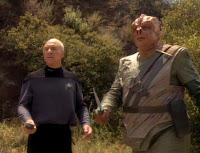
Soooooo.... now what are these sentences saying? We can’t really parse them without a frame of reference for those names. Is Ostariax the speaker’s wife, husband, or chosen deity? Heck, Tokar and Grothnixian might not even be names at all. Maybe they’re swears I made up and they’re just capitalized because they start the sentence. I mean, it’s clear to me, the writer, so I guess if you don’t understand it in context the problem’s just you...

The problem here is that when a reader stumbles across this, their brain’s going to make a decision and stick with it. It’s going to say Grothnaxian is a proper name, Ostariax is a god, and Tokar is one of those words you might use with your close friends, but not in polite company. You definitely wouldn’t use it on the internet where it might come back to haunt you years from now.

And when, fifteen or twenty pages later, my reader realizes Ostariax is actually someone’s sister... It’s going to break the flow. Like, shatter it. My reader’s going to stop and re-read those last ten pages to see how many things they misunderstood, or if some things make more sense now. And they’re going to double check Tokar to make sure they aren’t misunderstanding that name, too. Heck, odds are pretty good they’re going to be cautious moving forward, because I’ve shown I can’t really be trusted to be clear about this. All the names are suspect now.

As I said above, I need to be very careful about how I first introduce these.
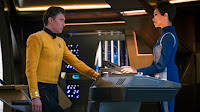
Also, as a quick aside, something to consider for distant past/future names. Truth is, they’re probably not going to be that different. I mean, how many Biblical names are still in common use today? Matthew, John, Mary, Joseph, Luke, Thomas (and let's not forget Peter). Odds are you even run into some of the Old Testament ones on a regular basis—David, Abigail, Joshua, Leah-- heck, Adam and Eve. Regardless of your religious beliefs, it’s clear these names have been around historically for thousands of years. It’s not hard to believe a lot of our present names will go that far into the future. I mean, does anyone even think twice about it when names from today show up in the hundreds-of-years-from-now world of Star Trek? Christopher, Michael, James, Will, Beverly, Ben, Miles, Katherine, Tom, Harry...

You get my point. Do I really need to create “ancient” or “futuristic” names? Probably not.

As for making up words for regular things—calling eyeglasses optykwear or motorcycles bipulsors or a breastplate torsarmor—maybe I should stop for a moment and consider why I’m renaming them. Am I doing it because it actually matters to the story or plot somehow? Or is this a cheap, quick attempt at worldbuilding? Just hitting something with a coat of literary paint to try to make it look shiny and new?

Here’s one of those easy rules-of-thumb I mentioned up top. Try to sum up your whole story in about two pages. You don’t actually need to write it all out, but try to at least have the whole thing organized in your head so you could jot it down or explain all of it to me in under five minutes. This is the long-ish elevator pitch.

Got it?

Okay, if at any point find myself simplifying some of my terms for this summary—just talking about my character’s glasses or her motorcycle or the breastplate that saves her life—then this is the term I should probably be using in my story. Why force the reader to remember an awkward name for something common? Let’s just call a sword a sword and be done with it. We’ve got better things for our readers to spend their time on, right?

Y’see, Timmy, I don’t want to overcomplicate my story with details that are just going to slow it down and drive readers away. If I don’t need to make up a name or a term... then why would I? It’s better just to keep it simple and let them enjoy the read without me getting in the way.
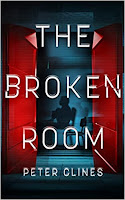
Speaking of getting in the way, this is the point where I awkwardly insert a reminder that my latest book just came out this week. The Broken Room is an action/thriller/sci-fi/horror story with a lot of heart. No, really. One blurb called it “a cosmic horror John Wick” which I was kind of fond of. You can pick it up at your friendly local bookstore, and probably in any format you could want. Fair warning—it does sound like there may have been some supply chain issues this week, so try to be patient with folk if they can’t put something in your hands right this second.

On which note, I did a signing with Mysterious Galaxy last night and scribbled in their extra copies. You could give them a call and they could ship you one. And this Saturday, for you LA-area folks, I’m going to be at Dark Delicacies in Burbank, scribbling in even more books. If you’d like one personalized, please swing by. Or give them a call ahead of time.

And speaking of time... next time, I’d like to talk about framing things.

Until then, go write.

Monday, December 20, 2021

Going With It

Holy crap how is this year almost over? Why is time moving so fast? What did all of you do? Who touched the red button?!?!

So, not to keep mining the past, but I wanted to talk about one more thing that came up at the SDCC Writers Coffeehouse. During the Q & A someone asked what I generally think of as an “impossible” question—although just looking at that written out I really should find a better term. See, it’s not so much that these questions are impossible to answer, it’s that there’s really only one person who can give a definitive answer. And it’s usually the person asking the question.

Y’see, there are questions that are very specific to my story, and the “correct” answer for me probably isn’t going to be the same correct answer for you. Things like, how many characters should I have in an ensemble? What’s the correct point of view to use? How much sex is too much? How much detail do I really need? See what I mean? There’s no real way to answer that unless I know the whole story, how it’s written, the context things are happening in...

Somebody at the Coffeehouse asked (paraphrasing from memory here) “how many made up words can you have in your first couple pages before an editor stops reading?” And my immediate answer was, well, I couldn’t really answer that. Again, the right answer for me won’t be the right answer for you, and said answer’s going to change from book to book.

But about a week later it struck me there is a way that we, as writers, can at least get a sense of if something’s disruptive or not. And that’s by being aware of the flow of our work. So let’s talk about that a little bit.

I think we’re all aware of flow on one level or another. I first heard the term from a writing coach named Drusilla Campbell, but I knew what she was talking about as she explained it. Paraphrasing a bit more, she described it as why some books you can’t put down and other books make you think about how  the laundry needs folding.

I’d say flow is equal parts pacing, tone, and empathy. It’s about me understanding what’s going to jar my reader, either by nature of structure or material or vocabulary. What’s going to make them pause to remember these are just words on a page and not actual events. It’s about me stepping out of the way and not trying to be seen as the author. Letting people read my story rather than analyzing it. Really simply put, flow is what keeps people in my story instead of, well, knocking them out of it.

And that brings us to using words we’ve made up. Could be a simple portmanteau or clever bit of wordplay. Maybe terms from a technology we made up. Or a secret dark order. Maybe even a whole language. But I have to be careful, because  there’s a good chance I could kawonk someone right out of the story if I’m using a lot of words I’ve made up.

You all see what I did there, right? Or maybe you didn’t. Kawonk is a nonsense pile of letters I threw together, but in context you kind of understood what I was saying with it almost immediately. Some of you may not even have really registered it as a made up word and just read it as a funny onomatopoeic sound effect or something.

But something can only work in context when I understand the context. So the more words I swap out with made up ones, the less chance there is of my readers understanding what I’m trying to say. Like if I told you we needed to kawonk this dreeenil ptoob before we niknik ptar the cheegles. I mean, if we hit a sentence like that we’re going to instinctively stop and start parsing the structure to figure out what this whoa I just broke the flow, didn’t I?

And even if there is plenty of context, it can get annoying to read something where I’ve decided to substitute existing words with made up ones for no real reason. Say, for example, people in my fantasy world all duel with scheevs. Some are cheap and crudely made, some are works of art, but most people have one. You see, a scheev is a narrow, double-edged blade about 24 to 30 inches long (originally iron or bronze, but mostly steel now), with a strong grip, some sort of protective guard or crosspiece between the blade and the grip, and often a small counterweight at the base that also locks the blade in place. And if you’re thinking, wait, did I just spend a whole paragraph describing a sword you are correct.

Except here they’re called scheevs. For... reasons.

And again, imagine how frustrating that paragraph would be if instead of bronze and steel it talked about droker and ogyed, flokks instead of inches, and an oppomass instead of a counterweight. Hopefully I didn’t make up my own numerical system, Think about pausing to dig through all of that and try to glean a meaning out of it and realizing we’re just talking about goddamn swords.

I don’t know about you, but that’d bring things to dead halt for me as I groan and rub my eyes.

‘Cause here’s the thing we always to remember. Weird as it may sound, the words I use don’t really matter. I mean, of course they’re important and they’ll bring nuance to the story. But that’s my point—the story is what matters. The characters matter. The plot matters. The actual words are just a delivery device. They’re the corn chip getting all that delicious salsa and guacamole into or mouths. And if I’m focusing a lot of my time and energy on coming up with a new way to say corn chip, that’s a good sign something’s probably going wrong in my writing.

I’m not saying don’t make up words. I mean, I put squale out there into the world. But there should be a reason for them being in my story, and the reason should be better than “I wanted to make things sound different.” Ultimately, they should be adding to my story, not distracting from it. Definitely not knocking me out of it to diagram sentences, glean meaning, or just grind my teeth in frustration.

Next time...

Okay, this was super late, so next time will be in three days. And I’ll probably be talking about the holidays.

Until then, go write.

Let’s be honest, we’re not going to get a lot more in before 2022, so try to make it count.

Thursday, July 8, 2021

Dating Profile

I (finally) wanted to step away from the usual process stuff we talk about here—structure, dialogue, characters, editing, and so on—to talk about another important part of the process.

Dating apps.

When we’re looking to find that partner for life—or, y'know, maybe just for the weekend—these apps can be phenomenal. They’re not perfect, no, but they can save a lot of time by, well... weeding out a lot of folks that aren’t going to work for me. For whatever reason. Maybe I have some really firm personal philosophies. Perhaps I know exactly what kind of relationship I’m looking for right now. Maybe, hey, there’s a certain body type I prefer—or one I don’t. Regardless of what my criteria are, whether they’re right or wrong, these apps can help whittle down my prospects to a manageable size by matching me up with the people who meet my requirements.

Except... well...

Okay, look. Clearly there can be basic misunderstandings now and then. She said she likes football, I said “hey, I like football,” but it turns out she meant soccer and okay, well... this was awkward. Sorry I scheduled our first date during the World Cup.

Or maybe it was a little more deliberate. Maybe I realized I get a lot better matches when my profile says I’m six foot even and 179 pounds with a thick head of dark hair. Which, for the record, is a 100% accurate description of me that I’m just using for this example. Except then we finally meet face to face and now I can’t hide that, okay, yeah, I’m closer to 5’9” and 225 pounds (look, lockdown was very stressful) with a silver-gray widow’s peak that’s pulled back a bit over the past decade or so. But I have a great personality and I’m sure... well, it wouldn’t be much of a surprise if the matchee wasn’t too interested when they finally saw me. They might even be justifiably annoyed. I mean, they spent time looking for a good match on this app.

Hell, maybe I’m just going to be kind of obnoxious about it and rationalize away their criteria. Her profile clearly says she doesn’t want short guys and no sci-fi/superhero geeks, but she’s hot, dammit. I’ll just explain to her how short guys are more dependable (in so many ways) and that Star Wars is actually more in the science-fantasy genre, so we should definitely hook up. I mean, that’s what DMs are for, right? To make my case and skip over all those limitations she’s putting out there to weed out other guys exactly like... me.

Anyway, where were we? Oh, right, why the hell are we talking about dating apps on this here writing page? What’s going on?

Well, as I’m sure a lot of you have already figured out, using a dating app is a lot like submitting my work somewhere. It’s trying to find that perfect person who’s looking for what I’m offering. Either a long term partner like an agent or maybe just a quick, one-time thing like placing a short story in a magazine, anthology, or a contest. And I’m going to have my best results with these submissions if I’m being honest. With myself and with them.

Yeah, sure—there’s always going to be the occasional mistake. I might spell someone’s name wrong or misread a requirement. Hell, one time I submitted to a magazine and the editor politely wrote back and pointed out thanks but they’d gone out of print six months earlier. These aren’t a lack of honesty as much as signs I’m maybe rushing things a bit at times and need to slow down a bit.

But I really don’t want to be lying about what my manuscript is. I shouldn’t reformat it to make it hit a certain page count. I don’t want to call it a romance when it’s a thriller with a minor romance subplot. I definitely shouldn’t say it’s got strong religious themes without being clear the “religion” is a doomsday cult trying to summon the old gods to cleanse the Earth.

I especially don’t want to ignore what they’ve specifically said they want. Yeah, they don’t want urban fantasy novels—but they’ll want mine, dammit! All short stories have to be under 7500 words, but once they read mine they’ll understand why it’s 11,000. No explicit violence toward women or animals... but I mean, they just say that to weed out the real weirdoes, right? And I know I’ve mentioned the guy who sent his sex comedy to a Christian values screenplay competition... ?

If I want to make a connection—a serious one that’s going to lead to something, even if it’s only something short term—I need to be honest. I can’t lie about what I’m offering. I can’t ignore what they want. If I do, I can’t blame them when they toss my manuscript in that big pile on the left.

Or, y’know, if they swipe that way.

Next time, I really want to not talk about something.

Until then, go write.

Thursday, January 14, 2021

So. Much. Winning!

This is one of those posts some folks may feel the need to argue with. It’s a writing tip that’s going to feel obvious to some of you, and ridiculous to others, but I truly think a writer needs to follow if they want any measure of success.  And when I say “success” I refer to the classic definition—“making money off your material.”

If I want that kind of success, my hero has to win.

Fair warning, there’s going to be a couple spoilers coming up. Kind of necessary if we’re going to talk about how things end for a character in a story. They’re for pretty big things I’m sure most everyone already knows the ending of, but there’s the warning just in case. If you’re way behind in your required reading or viewing, you may want to stop here.

Also, I’m using hero in the gender-blind sense. If it makes you feel better, feel free to swap in heroine or protagonist. I’m not against any of these terms or the characters they attach to, I’m just using hero because it’s short, and quick and I’m trying to stay focused on this instead of everything going on in the world. So for this post, I’m just talking about the hero.

And the hero wins.

Pretty much always.

Now, there’s a belief in some circles that having the hero of the story fail and die somehow improves the story. That it’s more dramatic. It’s the belief that having something depressing and random happen to my hero is more “honest” because life is often depressing and random. I think this ties back to the frequently-waved buzzwords realism and art. Art imitates life, so if I’m imitating life, I must be making art. That’s just logic. Right?

As I’ve mentioned once or thrice before, this kind of ending sucks.  It sucks because we all inherently know the hero is supposed to win, since we identify with the hero. If the hero loses, it means we lost. We’re losers, identifying with another loser. 

Believe it or not, this sort of statement doesn’t go over well with most people. I mean (as we’re currently seeing in the real world) people have a lot of trouble dealing with it when a character they’ve invested so much of themselves in doesn’t win.

Now, before people start scribbling down below (for any reason, although I’m sure at least one person already has), let me finish. 

I’m not saying every book has to end with happy smiles and people rolling around on piles of money in their new twelve-bedroom mansion.  My hero doesn’t need to defeat the cyborg werewolves, save the world, and fly off into the sunset with nymphomaniac heiress Margot Robbie in her private jet.

Truth is, the hero doesn’t necessarily need to enjoy winning. I just said they need to win. They may be damaged physically, emotionally, or both. In fact, if my hero ends up wounded or broken after all they’ve done, it just makes us identify with them a little more, doesn’t it?  

When they win like this, we often call it a pyrrhic victory. Maybe our hero solves the murder mystery, but loses their best friends in the process. She got revenge, but her lover’s still dead and now she’s a wanted criminal herself. He won the contest, but now his family’s humiliated and wants nothing to do with him. The team tried to save all the hostages but only half of them got out alive. As I mentioned above, victory isn’t an all-or-nothing thing, and my hero can still have a pile of losses even though they’ve succeeded in their main goals. A partial win is still a win.

Hell, the hero doesn’t even need to survive the story in order to win.  There are plenty of characters in books and film who didn’t live to enjoy their victories. At the end of Rogue One (here’s that spoiler alert) our two surviving heroes are literally incinerated in the blast from the Death Star’s test firing. And note I say surviving heroes. The rest of their team has already suffered a series of brutal and violent ends. Nobody gets out of that movie. Same with Tony Stark in Avengers: Endgame, cooked from the inside with a single snap of his fingers. 

And yet, in both of these examples, the heroes win.  No question about it.  Anyone who’s seen these stories will tell you the good guys won and the bad guys lost.

A key thing here is my character’s motive. What are they trying to do? Keep in mind, their stated goals and their actual goals might not always be the same. Phoebe may say she wants to date the head cheerleader, but what she’s really looking for is romantic love and companionship. Wakko may say he wants revenge, but what he really wants is justice. So they may fail at that obvious, stated goal (dating the cheerleader) or even a broader, more universal goal (keeping their left leg attached), but still succeed with their actual, motivating goal.

Now, I want to mention one other thing, because my friend Stephen Blackmoore brought it up when I mentioned this theory of winning at the Writers Coffeehouse once. There are some stories (a lot in the noir genre, for example) where the hero doesn’t win. In fact, in some cases they fail completely, on all levels, and end up much worse off than they began. This can absolutely happen in stories. Great stories, some of which get a lot of praise and awards.

But...

I think if we named some stories where the hero fails in this complete way, we’d probably realize... they’re not all that well-known. And they’re probably read even less. Again, not saying they’re bad, but it is a much smaller niche of potential readers who’ll enjoy a story where the hero, well, doesn’t really accomplish anything. Even if it’s beautifully written. So there’s nothing wrong if those are the stories I want to write, but I should have my eyes open about how wide an appeal they’re going to have.

Y’see, Timmy... we encounter enough failure and losing in real life that most folks aren’t going to also enjoy it as entertainment. We want to see victories and success and heroic sacrifice because these are the things we dream of in our own lives, and we relate to those people because they’re the kind of people we wish we could be. Even if just for a little while.

So if I’m my plot ends with a massive failure or my hero dies for no reason... maybe it’s worth rethinking that.

Especially if I want to win.

Next time, I’d like to talk about Flashdance.

Until then, go write.

Thursday, September 3, 2020

Comedy Hour!

I know I said I was going to talk a bit about endings but I had this kind of funny epiphany at the grocery store the other day. As in, an actual epiphany about funny things. No, really...

I’ve wanted to talk about comedy for a while. I tried once years ago, but—to be really honest—I didn’t quite have the vocabulary for it at the time. I’m not sure I do now, but at least I thought up two things that sounds kind of clever. That’s better than nothing.

Once or thrice I’ve brought up my bad movie habits and explained them. A fairly common thing I’ve seen are movies that bill themselves as comedies or something-comedies. I say “as” because they’re rarely funny, and I think there’s two big reasons for that. Well, three, but the third one's not really relevant here. Maybe some other time. For now, two big reasons.

One is that comedy is very empathy-dependent. Possibly more than any other type of writing. If I can’t put myself in other people’s shoes, I’m going to have a tough time figuring out how to make them laugh.

The second reason is what I wanted to blather on about.

I’ve talked about genres and subgenres here a few times. Sometimes these subgenres have really specific rules. Take horror for example. Cosmic horror stories are not the same as slashers, which are not the same as supernatural thrillers, which are nothing like torture porn, which definitely aren’t monster stories. Or mysteries! There’s over a dozen sub-genres for mysteries, and publishers take them very seriously. Cozies, noir, capers, amateur sleuth, professional sleuth, procedurals... every one of them has their own expectations and requirements and guidelines. I can’t write a cozy mystery about a serial killer who collects his victims’ genitalia. They just don’t work that way.

Comedy is the same way. There are satires, spoofs, farces, romcoms, dramedys, and many more. And just like above, each of these has certain rules and expectations. I can’t just throw down a pile of funny things and declare it to be a spoof. And truth be told, no matter how big that pile of funny things is, I might not even be able to call it a comedy.

Y’see, Timmy, funny is to comedy the same way notes are to music (that’s clever thing #1). You need one to make the other, but that doesn’t mean a pile of one equals the other. I don’t expect thirty random notes to come together and make a song—we all understand I need to arrange them in a certain way, they need to work together, they need to have a certain flow to them. Just like a pile of random ideas doesn’t make a plot, just because I’ve got a pile of funny beats doesn’t mean I’ve got a comedy. What’s funny at the bar might not be as funny at work. That little bit of physical comedy from your date is definitely not going to go over the same way at work. Heck, it might not have even been that funny on the date.

If you don’t want to believe me, I had a chance to talk with Kevin Smith years ago and we discussed ad-libs. He pointed out something you hadn’t planned or scripted can be incredibly funny on set, but the important thing is that it works in the editing room. Just because it’s funny doesn’t automatically mean it’ll make sense in the final film. ”It’s not germane to the discussion,” was how he put it.

When I’m writing a comedy story or screenplay, I need to be aware of what kind of story I’m telling. Am I adding things because they work within the framework I’ve established and they propel the narrative forward... or am I putting it in because people laugh at poop jokes? Is this part of the comedy, or is it just some random funny element? One that’s hopefully still funny in this context. Hopefully.

More doesn’t always mean better. Just because I add more funny things doesn’t mean I’ve made a better comedy, in the same way that just because I added more types of robots doesn’t mean I wrote a better sci-fi story. And really... does anyone think a bunch of jump scares make for a better horror movie?

Remember, whatever it is I’m writing, my elements should serve my story, not my genre.

(and that’s clever thing #2).

Hey, speaking of whatever it is I’m writing, he said by means of a segue, the exclusive period on my novel Terminus has ended. That means you can pick up the ebook version of the book right now. It’s not narrated by Ray Porter, yeah, but I did include a nice-sized afterword where I talked about where some parts of the book came from and how a lot of the characters developed. And if you’ve been waiting all this time for it, I made it fairly cheap, too, as a small “thank you” for your patience.

Next time... endings. Definitely.

Until then, go write.

Thursday, August 13, 2020

Where B-Movies Go to Die...

And now for something completely different...

Everyone else is talking about how soulless IP is, so since that’s covered I thought instead I’d answer a question sent to me over on Twitter. Which was... 

“As a bad movie expert, where does one find the good b-movies that come out nowadays? Is there a modern day Roger Corman?”

Okay, first off, there are people who’ve put far more study and hours into B-movies (bad and good) than I ever have (seriously, check out Patton Oswalt’s Silver Screen Fiend). I watch a lot of them, yeah, but I freely admit there are some holes in my education. On the other hand, I also have a much more rounded film education than a lot of folks—being a huge fan, having worked as a film journalist, and having worked both above and below the line on film projects. I worked on a movie that spent three weeks at number one at the box office, another movie that’s considered one of the worst films ever made, and a double-handful of movies I guarantee you’ve never, ever heard of.

All that said, I think B-movies have a fascinating history, and I think we need to consider it—and how we define them—in order to answer that question.

Are you sitting comfortably? Then we’ll begin...

On the off chance you didn’t know, B-movies started out as the lower-billed movie on a double ticket. You’d go to the movies for your big-budget studio picture (sometimes costing hundreds of thousands of dollars), but the studio’d also tack on something a little simplistic and low-brow so you felt like you were getting your full 40¢ worth. Usually this was a genre movie—westerns, horror, comedy, early sci-fi stuff. Some of it was even based on hahahhahhaaaa comic books.

Double-bills became less common in the ‘50s, but it turned out there was enough of a market for these lower-budget genre B-movies to keep producing them and putting them out on their own. They were cheap, usually aiming more to entertain than artistically enlighten, and they tended to at least make back the meager investment in them (a winning formula by almost anyone’s standards).

Plus, this became an entry point for writers, directors, actors... Move to Hollywood, start with small positions on small projects, learn stuff, work your way up. Lots of film icons and heavyweights started out in B-movies. Seriously, pick your favorite actor/director/screenwriter and scroll down IMDb to their first few credits. There’s probably some B-movies there. Look—here’s a very young Leonard Nimoy in the giant ant movie THEM (1954).

Then came the 1970s. The 70s blew the idea of “B-movies” out of the water and upended the whole film industry. Jaws. Halloween. Star Wars. There was a sci-fi boom and a horror boom. Suddenly what had been B-movies were dominating the box office.

So we had an early 80’s rush of people trying to copy that success. Lots of studios tried to manufacture B-movies with the intent of them becoming megahits. And within just a few years of that we had even more radical changes in the industry. Cable television and home video. Now there was a desperate need for content. We need to fill video store shelves and tens of cable channels!

So this, in my opinion, is the second golden age of what we tend to think of as B-movies. Once again, we need stuff so people feel like they’re getting their money’s worth. Lots of cheaper movies aimed at pure entertainment more than art.

BUT...

It’s important to note these were all still people with a degree of training. They weren’t grabbing people in Tulsa to make these movies, they were grabbing people in Hollywood. Because Hollywood was where all the crews and actors and equipment were. And those cameras are super-expensive, so the studios weren’t handing one over to just anyone. They went to the people who were dedicated filmmakers—who’d moved to Los Angeles to be in the film industry, taken PA jobs so they could learn and office jobs to be near the decision makers. Yeah, sure maybe you had an 8mm camera at your home in Tulsa, but that just wasn’t going to cut it in the 35mm age.

(minor segue—go read Bruce Campbell’s If Chins Could Kill for a great story of him, Sam Raimi, and Rob Tapert trying to screen an 8mm print of their movie that they’d already blown up to 16mm and then tried to blow up again to 35mm)

(go on—support your local bookstore!)

So, in my eyes, this second golden age (silver age?) re-established B-movies as stepping stones. Studios were now willing to take some gambles on lots of lower-budget stuff, and there were a lot of films that needed filmmakers. And even if they were less experienced, they still had basic, baseline experience.

I also think this is why there are so many great B movies from this era. It was a perfect confluence of lots of experienced, dedicated people waiting for an opportunity and studios willing to take lots of chances. Or at least say “Yeah, sure, whatever... just have it done by the 15th.” Which also meant some people had a chance to slip in a little art after all...

But as studios evolved, we began to see less and less of these low budget B-movies as execs leaned more and more into what we usually now call “tentpole” movies. Things either got larger budgets or... got forgotten. Heck, there was a brief-point in the late 90’s when horror movies almost broke out of their low-budget niche and started getting $40, $50, and even $60 million dollar budgets. But it didn’t last long and that’s a whole ‘nother story.

And that brings us to what I think was the last big B-movie boom. Our bronze age. And this is an odd one, I admit.

SyFy. Or, as it was known then, the Sci-Fi Channel.

There was a solid seven-eight year period where SciFi Pictures put out a new original movie every single week. Plus a few multi-part miniseries. Remember that? It was one of their claims to fame. Seriously, go look up Sci-Fi Pictures and see how many movies they put out. And then they became SyFy and put out that many more again. There’s close to a thousand movies altogether on those lists, spread over a little less than a decade. Sci-fi, horror, fantasy. Were they all winners? Hell no. But even if we only say 20% of them are worth watching, that’s still around 200 solid movies. More importantly, it created opportunities again and gave a lot of skilled (and, yeah, some not-so-skilled) people the chance to move up a notch or three on the Hollywood ladder.

Now, with all that in mind, the original question. Where do we find B-movies today?

I don’t think they really exist anymore. Sorry.

I shall now explain.

One thing that defined filmmaking for ages was a level of *gasp* gatekeeping. As I mentioned above, like most arts, filmmaking required a lot of rare, specialized equipment and the knowledge to use that equipment correctly. Plus I’d need to understand narrative storytelling and visual storytelling. One thing you’ll notice throughout this little history is that most B-movies, in all eras, came from people who already had a degree of experience. They’d been exposed to filmmaking. They understood concepts like framing, camera angles, coverage, crossing the line, and more. Yeah, we can always point to a few exceptions here and there, but the vast majority of folks making B-movies came out of Hollywood.

Today we live in a world that’s both wonderful and, well, a little troublesome. Today most of us are carrying whole camera/editing packages around with us. You might even be reading this on one. It’s ridiculously easy to shoot a movie today. Anyone can, experienced or not.

And on one level, that’s fantastic. I’m a huge fan of giving everyone the tools to do the thing they love. I mean, how many fantastic filmmakers did we lose because they couldn’t make it out to Hollywood? It’s a huge, terrifying leap—said as someone who did it!

On another level, I think this easiness encourages a lot of folks to leap ahead before they’re really ready. They’re getting stuck in, as the Brits say, without understanding a lot of the concepts I mentioned above. And again—on many levels this is great. You can try different shots, experiment with lighting and effects, and find out if Wakko can really act or hasn’t improved since that fifth grade play. And you can do all this for free—no worrying about the price of film or equipment rentals or truck rentals to haul around the equipment.

But I think for a lot of folks the current mindset tells us this isn't practice, it's the finished product. It's done and ready to go. And there are lots of studios and distributors who are fine with slapping a logo on those practice shots, FX tests, and audition tapes and putting them out there. Honestly, if the technology existed back in the ‘80s and early ‘90s, they probably would’ve done it then, too.

That’s why, in my opinion, we don’t see those kind of quality B movies being made right now. Not in any sort of quantity, anyway. Studio/ distributors aren’t dependant on the pool of people who already know how to make movies and just need someone to make an investment in them. Distributors can get lesser movies for pennies, fill all the empty spaces in those digital shelves, and easily make back the minimal amount they paid for it.

Again, for the people itching to fight—I’m not saying there aren’t any good movies made this way. But they’re very, very rare. Much rarer than they were when the requirements tended to favor filmmakers who already had a degree of experience. I’ve been doing this Saturday geekery thing for a little over three years now, probably close to 45 weekends a year, easily averaging three movies each time. And in all that time of watching “B-movies” made in the past twenty years I’ve stumbled across... six? Maybe seven where I said “Holy crap, you all need to watch this.”

And as far as being a stepping stone, well... This is already super-long, but let me close with a quick story.

Way back in the day, a friend and I had worked up a pitch for a potential series, and we were toying with the idea of shooting a quick teaser trailer for it. This was when “sizzle reels” were really common, to give producers a sense of what the finished product would be like. We talked about it with a producer friend of ours and she shook her head, vigorously, and told us it’d be a waste of money.

The problem, she explained (and I’m paraphrasing) is that the people who make the big money decisions rarely have great imaginations. They don’t look at something and see potential, they look at it and just see what it is. If we shot a super low-budget, semi-professional trailer for our high-concept sexy-vampire-wars series, they wouldn’t imagine it with better lighting or hotter actors or cooler stunt work. All most of them would see is... a super low-budget, semi-professional trailer.

Which meant we’d probably make a super low-budget, semi-professional show, right?

Which is why a lot of these films never really work as stepping stones.

And that’s waaaaaay too much about B-movies. But to be honest, it was something I’d been thinking about before the question was asked.

Take care of yourself, wear your mask, go write.

Friday, July 24, 2020

B-Movie Mistakes

If you’ve been following me for any amount of time, you’ve probably caught on to my questionable Saturday viewing habits. Questionable in the sense of “why would someone keep doing this to themselves? And to their liver?”

I’ll sit down with some little toy soldiers to build, put on a movie with aliens or giant monsters or werewolves, and tweet out the occasional observation, critique, or scream of pain. It’s kinda fun, in a masochistic sort of way, and I’m a big believer that you can learn a lot from figuring out where bad things went wrong and how they could be fixed. And I’ve seen a lot of screenplays go wrong over the years. Some I worked on. Some I read for contests. And... some I watched while building little toy soldiers.

Over all this time, I’ve seen definite patterns emerge. The same mistakes happening again and again and again. It was part of what made me start this whole ranty blog way back when in the distant before-time.

And screenwriting is a form of storytelling, which means some of these mistakes—maybe even all of them—are universal. I might not have any interest in writing movie scripts, sure. Not everyone does. But these issues can show up in books, short stories, comics... all sorts of storytelling formats.

So maybe they’re worth checking out.

Anyway, here are my top ten B-movie mistakes, updated a bit since the last time I write them out. Some of it may seem generally familiar. Some of it... well, I’ve found new ways to look at some problems over the past three years.

10) Bad directing
Let’s just get this one out of the way, because it’s the easiest one. It’s also the most universal one. This’ll be a horrible blow to anyone who likes auteur theory, but while there are some phenomenal directors out there, the simple truth is there’s also a lot who have absolutely no clue what they’re doing. None. Yeah, even some directors you’ve heard of.  They have no concept of narrative, continuity, pacing... anything.

This is a killer because ultimately, the director’s the one interpreting the story on the page into a visual story on the screen. Even if they didn’t write the script, the best story can be ruined by a bad storyteller.  How often have we seen a book or movie that had a really cool idea or an interesting character and it was just... wasted?

Because of this—random true fact—whenever you see a horrible story on screen, it’s always the fault of the director and producers. Never the screenwriter. The only reason scripts get shot is because the director and producers insist on shooting them. If it was a great script and they butchered it—that’s their fault. If it was a bad script and they decided to shoot it anyway—that’s also their fault.

9) Showing the wrong thing
This kinda falls under bad directing, but I’ve seen it enough times that it really deserves it own number. Sometimes a story keeps pushing X in our face when we really want to see Y. Or Z. Sometimes the story calls for Y to be the center of focus, but we still keep putting X on camera. And sometimes there’s no need to see X at all—we understand it through dialogue and acting and other bits of context—but we show X anyway.

A lot of this is a general failure of empathy—the filmmakers aren’t thinking about how the movie’s going to be seen. I’ve also talked a couple times about subtlety, using the scalpel vs. the sledgehammer, and that’s a big part of this, too. Sometimes there’s a reason we’re seeing a lot of nudity or a swirling vortex of gore, but all too often... it’s just because the storyteller doesn’t know what else to show us.

8) Bad action
Pretty sure we can all think of an example of this. The almost slow-motion fight scenes that feel like they filmed the rehearsal. The medium-speed chase that drags on waaaaaay too long. The pointless shoot-out that clearly wasn’t thought through since everyone’s standing out in the open.

Action gets seen as filler a lot of the time, and it doesn’t help that a lot of gurus teach it that way. “Hit page 23—you need an action beat! Hit page 42—another action beat!” There’s absolutely nothing wrong with action, but bad action is particularly bad in the visual storytelling format of movies. Unnecessary action isn’t much better.

Think of scale, too. It’s always better to have a small, well-done action scene than a sprawling, poorly-executed one. We can relate to two people fighting so much better that two gangs of sixty people each slamming together. Especially when it’s supposed to be two gangs of sixty members each but there are maybe eight people on screen. Moving in slow motion.

7) Too Much Stuff
Remember when we were young and there was that one kid (we all knew this kid) who got so excited to be Dungeon Master? And he made that awesome dungeon with five liches and a dozen displacer beasts and twenty gold dragons and thirty platinum dragons and fifty minotaurs all wearing +3 plate armor and using +5 flaming axes and a hundred zombies and Demogorgon and half the Egyptian gods and...

I think we’ve all played that game, right? Let’s be honest... maybe some of us were that kid?

Some B-movies get like that.  The filmmakers have too many ideas—way more than their budget or schedule allows—and they try to stick everything into the story.  Every cool idea from every other cool story, sure to be just as cool here, right? Truth is, they almost never are.  All these extra ideas just end up being under-developed distractions at best. 

6) Killing the wrong people
There’s always going to be collateral damage in certain types of stories. Thing is, by nature of being collateral damage, the story doesn’t focus on these people and their deaths don’t really register.  And they shouldn’t. That’s what collateral means after all—they’re secondary. Not as important. But in the tight, compressed nature of a movie, we need these deaths to be important. They need to serve a purpose in the story, hopefully on more than one level.

I’ve talked about the awful habit of introducing characters for no purpose except to kill them.  We meet Phoebe, get three or four minutes of backstory and bam she’s dead without moving the plot forward an inch. Because Phoebe wasn’t really part of the plot, she was just there to wear a bikini top and let the FX crew show off their new blood fountain.

The only thing worse than this is when it’s time for the ultimate sacrifice... and my hero doesn’t make it. A minor character steps forward to throw the final switch or recite the last words. And the “hero” sits back and watches as someone else saves the day.

5) Wasting Time
This one’s the flipside of point #7. I just mentioned that in the limited space of a movie script, everything needs to serve a purpose. If that touching backstory linking two characters doesn’t affect the plot or story somehow, it’s just five minutes of filler I could’ve spent on something else... like the plot or the story. If these shouted arguments don’t somehow reveal something key to the progress of the movie... they may just be a lot of wasted time.

One of the most common time-wasters in B-movies is the unconnected opening. It’s when the first five or ten minutes focus on a group of characters we’ll never see again, usually never even reference again, and who have no effect on the rest of the plot. Honestly, I don’t think I’ve ever seen one of these openings that couldn’t be cut, and I’d guess 83% of the time the whole movie would be stronger—on many levels—without it.

4) Not knowing what genre my story is
I’ve mentioned a few times that I worked on a B-level sex-revenge-thriller-sequel where the director thought he was making a noir mystery. I’ve seen horror films done as sci-fi and fantasy movies that were done as horror films, and vice versa.  Heck, I’ve written stories where I’d planned it as one thing, and realized halfway through it was something very different.

I've talked about genre a lot over the past few weeks, so I won’t go into it much more here. To sum up quick if you don’t want to hit the link, all genres have certain expectations when it comes to tone, pacing, and even structure.  If I’ve got a story in one genre that I’m telling with the expectations of another, there’s going to be a clash. And that clash probably won’t help my storytelling.

3) Plot Zombies
All credit to A. Lee Martinez, creator of this wonderful term. Sometimes, characters do things that are unnatural for them just to further the plot. The brave person becomes cowardly. The timid person does something wild and unpredictable. People argue and storm off for no reason. Well, so one of them can get murdered by the monster after going for a calming nighttime swim in the lake, but past that... no reason.

Plot zombies just stumble around a movie, doing whatever the story calls for. They don’t have any personality or agency, and really, one plot zombie’s pretty much the same as any other plot zombie. If I have an inspiring speech or an act of wild abandon or a last minute moment of brilliance, and there’s no reason I can’t swap all the characters around in it... it means I’ve got plot zombies.

2) Horrible dialogue
Bad dialogue always makes for bad characters.  If we can’t believe in the characters, we can’t believe in the story.  If I can’t believe in the story... well, that’s kind of it, isn’t it?

So many movies have painfully bad dialogue. Pointless arguments. Annoying characters. Awful technobabble.  And sometimes—too much of the time—it’s just bad.  It’s lines that sound like they went back and forth through Google translate and then the actor’s seeing them for the first time on a teleprompter while they’re filming.

Personally, bad dialogue drives me nuts, because it means the storytellers have no idea what human beings sound like. It’s a massive failure of empathy, and that empathy almost always shows up elsewhere. I’ve never, ever seen a story with bad dialogue that excelled everywhere else. It just doesn’t happen.

1) Who am I rooting for?
This is still the number one killer in America. This is what brings so many B-movies—so many STORIES—to a gear-grinding halt. 

So many movies have absolutely no likable characters. Everyone’s self-centered, obnoxious, stupid, or arrogant... or a combination of these traits. They’re all awful, sometimes disgusting people. All of them. The bad guys and the good guys.  People start dying and I’m always glad, no matter who they are.

If I’m expected to sit here and watch this for ninety minute, I need a reason to follow someone besides “they’re the main character.”  I need to like watching their story play out. I need to be able to identify with some aspect of their personality. The movie needs to have someone I actually care about. ‘Cause if it doesn’t. I won’t care if they win or lose. And if I don’t care about that... well... I’m not going  to be sitting here for ninety minutes

And that’s my personal, current top ten B-movie mistakes.

Hey, speaking of movies... this Saturday I’m doing my usual Saturday geekery, but for SDCC @ Home I’m doing it as a watch-along party. Come hang out on Twitter starting at noon (PST) with Krull, followed by the Keanu Reeves Constantine at 2:30, and finishing up the day with Resident Evil at 5:00. It’s going to be fun and maybe a little informative. Plus there’ll be a couple other folks chiming in with the #KrullKon2020 hashtag, and even a few giveaways.

And next time here, I thought I’d talk a bit about editing this new book.

Until then... go write.

And maybe enjoy a movie or three.

Thursday, July 16, 2020

A Compass That Doesn’t Point North

A few weeks back I talked about things getting their genres mid-identified, and afterwards somebody asked an interesting follow up. Namely, how do we identify genres? What are the benchmarks? How do we decide if something’s sci-fi or a techo-thriller or a romance that just happens to be set in a sci-fi world?

I know this sounds like a simple question, but it isn’t. For a couple reasons. Which I shall go over now.

First and foremost thing to remember—I shouldn’t worry about genre while I’m writing. Genre’s really a marketing tool more than anything else, so it doesn’t have a lot of use on the creative/ artistic side of things. In fact, if I’m worrying a lot about the guidelines of a given genre while I’m writing, I may want to take a step back and make sure I’m not just trying to jump on a trend. In my experience... that doesn’t work out most of the time.

With that in mind... what even is genre? A great way to think of it is a compass (many thanks to Pierce Brown for this analogy). Genre points you in the general direction of things you’re looking for. You want to head south-west? Just keep going that way. You want to find horror novels? They’re all over there.

And that leads us to another good way to think of it, maybe an even more relatable one. Where would my book get stocked in the bookstore? Don’t think about getting misshelved or getting featured on that best-sellers endcap. No excuses, no avoiding the question. Picture your favorite store and decide where would it be shelved in that store. 

If I can’t answer this... I have a problem. Because this is how an agent’s going to try to sell my book. “It’s something new to go here.” Even if I’m just planning on self-publishing an ebook, Amazon’s going to want to know how to categorize it.

Let me tell you one last little story. My first published book was Ex-Heroes, which ended up becoming a series of books set in that world and all involving the same basic theme—superheroes fighting zombies in post-apocalyptic Los Angeles. When the series originally came out, it was through a small press that specialized in apocalyptic fiction, specifically zombie fiction. That was their niche, and they filled it perfectly. So they heavily emphasized the zombie/ post-apocalyptic aspects of the book in their publicity for it. That’s the direction their compass pointed.

But... by book three the series had moved to Broadway Paperbacks at Random House, and they wanted something that would promote well at comic conventions. So... the superheroes became the new focus. And so the compass needle for the books swung from the horror section (in the few stores the small press had gotten them into) to the sci-fi section.

My point being... life finds a way.

No, sorry, my point is that in both cases, the genre gave people a good idea what they’d find when they opened the book. Post-apocalyptic zombies. Superheroes.

So, that said... let’s talk very rough guidelines for a few basic genres. I won’t be able to touch on every genre (and may not even do a fantastic job with these), but I figure if you’re here looking for advice from me, there’s a semi-decent chance you’re writing the same kind of stuff you read. Which is me arrogantly assuming you ended up here because you read a couple of my books and liked them.

Science-Fiction—this is when my fictional elements have a rational, scientific explanation behind them. They don’t need to be explained (although hard science fans love it when you can), but they need to fall within a range of believability.

Science-Fantasy—This is when my story elements are hypothetically grounded in science, but (to paraphrase Arthur C. Clarke) they’re so far advanced they’re beyond all possible understanding and essentially magic.

Fantasy—This is when some aspect of the rules of reality are tossed out the window. It might mean magic. It might mean new races or species (dragons, elves, orcs, owlbears, what have you). Fantasy tends to have less technologically-developed settings.

Urban Fantasy—A subgenre I thought was worth mentioning. Here we’re still tossing some of the reality-rules out the window, but we’re specifically doing it in a modern (or near-modern), real-world setting, often with more modern technology alongside it.

Horror—Might sound obvious, but many aspects of these stories involve fear for both the characters and the reader. Depending on my exact subgenre, that fear can have many different causes and intensities.

Romance—again, might sound obvious, but in romance most of the elements revolve around two characters developing a relationship despite various challenges. There may or may not be a sexual element (of varying explicitness) again depending on my subgenre.

Mystery—This is when the main thrust is trying to find answers to a problem—very often (but not always) involving a crime of some sorts. Another good rule of thumb for mysteries—they tend to center around something that already happened. The mystery is past tense.

Thriller—Somewhat similar to mysteries, this is when the plot elements involve a current, ongoing problem. Because of this, thrillers also tend to have a strong action component and fast pacing. The rule of thumb—thrillers are happening right now.

That’s not all possible genres (not even close), and there are sooo many sub-genres, but it’s enough to get you started.

One last thing to tag onto this. You’ve probably heard of terms like young adult or middle grade. It’s worth noting these aren’t actually genres in and of themselves, but additional guidelines that get applied to a given story. It’s not about my story as much as it is about how I’m choosing to tell that story.

All of this leads me to my final bit of advice, which kind of ties back to that earlier post. If I had to give a one or two sentence elevator pitch about my story, what would be in that pitch? What would I be focusing on? Would I be talking about space elevators and moon colonies, or would I be emphasizing the zombie hordes rising from their graves? Remember—I’ve only got two sentences, and they can’t be run-ons. Elevator pitch. Very fast, very clear.

Consider Twilight. It has vampires and werewolves and more than a few deaths... but it’s not a horror story. It barely counts as urban fantasy. The thing we’d emphasize in our elevator pitch is the high schooler who falls in love with a vampire. It’s a romance novel. Supernatural romance if we want to start focusing down.

And remember—there may be elements to my story that’d normally be immediate signs of one genre, but they don’t come up in that elevator pitch. That’s okay. I shouldn’t try to cram them in. Tamsyn Muir’s Gideon the Ninth has lots of raunchy jokes and a few spaceships, but I’d bet 99% of the people who’ve read it don’t think of it as a comedy or a sci-fi novel--their minds jump right to the necromancy and the murder mystery.

And that’s all I’ve got to say about genre. Unless anyone has any specific questions?

Next time...
Well, in some beautiful, alternate world we all sheltered in place all through March and April, wore our masks for May, and now it’s perfectly safe for all of us to attend San Diego Comic Con next week! YAY!

But in this world, alas, SDCC was cancelled because of folks who refused to do those things. There are still going to be some virtual events, though. I’m doing a panel on sci-fi writing next Friday at 4:00. I’m hoping to have a new Coffeehouse video up by then. And I’m also going to be doing a special Saturday Geekery, live-tweeting a few B-movie classics with some friends. You should come join us.

And all this means that next time, I may revisit and revise my list of top B-movie mistakes.

So until then, go write.

And, c’mon... wear your mask.