Showing posts with label Frankenstein. Show all posts

Thursday, October 21, 2021

Scary But Funny

I wanted to talk a little bit about horror today, as I tend to do around this time of year. More I thought about it, though, I was having trouble thinking of an aspect or angle of horror I haven’t done before. Sometimes more than once. I’ve talked about sub-genres of horror. Talked about monsters. Talked about the victims.

So then I thought I’d talk about the mechanics of horror. But even that’s tough because of the wide and varied sub-genres. I’ve mentioned this before. The horror of Frankenstein is not the horror of, say. Experimental Film by Gemma Files which is not the same as Bradbury’s Something Wicked This Way Comes and none of those are The Devil's Rejects. Depending on what kind of horror I’m aiming for, I could be trying to do some very different things. Which means different rules and guidelines and expectations.

And this made me think, of course, about comedy.

Structure-wise, comedy’s a lot like horror. It’s got many levels and subgenres. It can be subtle and nuanced or in-your-face blatant and over the top. It’s really common for people to like one form of it but not another. I  also think they’re both something that’s kind of ever-present in our lives, on some level or another. There’s a lurking dread or a potential for laughs in almost any situation.

I made what I thought was a semi-clever observation about comedy a while back, and I think the same parallel holds for horror as well—scary is to horror the same way notes are to music. One is made up of the other, but just having a bunch of those components doesn’t automatically make the bigger thing. Just taking a big pile of “scary things” and dumping them on the page doesn’t mean I wrote a horror story, in the same way that, well, having a big pile of meat and bones doesn’t automatically give me a person.

See? That was kind of creepy, right? So is this post a horror story now? No, of course not. No, not even if I add a jump scare. Or is it? Maybe as we keep going you’ll realize how I’ve lulled you into this false sense of security and then maybe you realize... you’ve been in this horror story all along.

Also, it kind of matters what’s in that pile. I can’t just have a big pile of bones, especially the same kind of bones. A big pile of skulls definitely isn’t the same thing as a person. I also can’t mix in random horse bones or gorilla muscles or insect DNA. I can’t just shove anything in there and expect to end up with a working person (or horse, or insect). And even when I get all those components right, they can only go together a certain way. These bones go here, those muscles connect there, that part... okay, look, that’s kind of optional. You can put it in or leave it out at your discretion, just remember what you did with it.

This might seem kind of boring, just putting together a person. Makes it sound like every person we make is going to be like every other person. And on some level... yeah, they are. There are a lot of basic similarities between people, but there are a lot of differences, too. Yeah, even on this basic constructional level. And even more so once we get to know them.

Also, quick pause before we move on. Please don’t get confused by my use of a body as a metaphor for a story. If I’m writing horror, yeah, obviously mixing horse parts with human parts can be an element in a great story. Mixing in some insect DNA has been the basis of several great horror stories. But that’s talking about things in the story, not the structure of the story itself. To fall back on said metaphor, that’s me focusing on an individual bone and saying there’s absolutely nothing wrong with it while ignoring the fact said bone is in a pile of meat that used to be a person.

Or that I’m trying to tell you is still a person...

So, anyway, how do I do this? How do I figure out which parts I’m going to sew together into this new person a.k.a. story? Which ones do I want in there, which ones need to be in there, and which ones... okay, look, the antlers are cool, yes, but people don’t have antlers. No antlers!

Okay. maybe very small antlers.

A lot of this is going to depend on two things. Knowing what I want to end up with and general empathy. The first one’s easy. Once I know what kind of horror story I want to tell, it’s easier to choose the parts I need to tell that story. Yeah, there’s some general stuff I’ll need, but after I’ve got the rough framework there I can start fleshing in (so to speak) all the little details and elements that are going to make this story unique. And this can be a multi-step process. I don’t need to get it all right on the first try, I can go back through and shape the story to better be what I want it to be.

The second part, general empathy, is a little tougher. As I’ve said here once or thrice, I can’t tell you how to have empathy. But it’s sooooo important in horror, because I need to know what my audience is expecting and I need to understand how they’re going to receive these elements in my story. Is that person being sprayed with blood and gore and slime supposed to be horrific? Awful-but-funny? Mildly erotic? Am I sure my readers are going to take it the way I intended it? Because having a beat land wrong can really kill the flow of my story.

And that would be... well, horrible.

So there’s some quick thoughts on horror. Should be easy for you to swallow, now that they’ve been deboned and cut into little bite sized chunks. Yeah, some of them are still moving, don’t worry about that...

Narrator: And as they choked down the morsels, they realized... it had been a horror story all along.

Next time, we could probably talk real quick about NaNoWriMo.

Until then... I’m not letting you out of the room until you swallow every last piece of this.

I mean, hahahahaaa, go write. That was it. Go write.

Thursday, February 18, 2021

The Cloverfield Conundrum

If you’ve been following this blog (or me on Twitter) for any amount of time, you know one of my favorite Saturday thing to do is watch B-movies. I’ve always had a certain love for them, and I think it’s a place to find some unsung gems if you’re willing to dig. Plus, lots of chances to flex your storytelling muscles and figure out some stuff. Where did this go wrong? Am I doing this in my own writing? How could it be fixed?

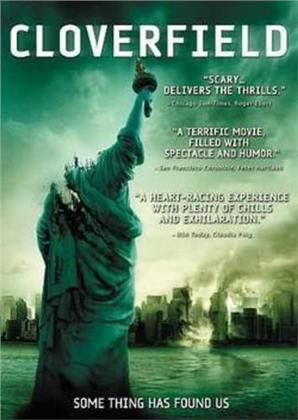
One type that always puts me on edge is found footage movies. After movies like The Blair Witch Project and Cloverfield became huge hits, shooting movies in this style exploded. Especially lower budget movies. There are dozens and dozens of them out there, covering topics from US forces in Afghanistan to dinosaur lost worlds to Judgment Day itself. Although you do have to ask... who found that particular footage...?

The catch, though, is found footage is one of those storytelling methods that looks very simple and forgiving. In fact, it’s an incredibly difficult way to tell a story, especially if I want to do it well. Possibly one of the hardest ways. And I’ve thought a few times about scribbling up a bunch of points and warning signs to watch for in such things, but the simple truth is I don’t offer a lot of straight screenwriting (or filmmaking) advice here anymore. Nothing major, anyway.

But it recently hit me there’s a way this ties to prose writing, and that’s through the epistolary form. If you’re not familiar with it, it’s when the story’s told through letters, journals, news articles, and other bits of found media (aaahhhhh, sound familiar?). Dracula and Frankenstein are both classic epistolary novels. There’s a magnificent one that just came out from Dan Frey called The Future is Yours, which uses emails and blogs and text messages. I used it for a section of one of my own books, Ex-Communication, where we get a look at a young girl’s journal, and in the very first story I ever sold for cash money, "The Hatbox."

But just like found footage, an epistolary novel or short story can look deceptively easy. And it turns out they hit a lot of the same basic problems as found footage movies. So I thought I could take a few minutes and talk about four major flaws I see in both of these related formats—the movies and the books..

As always, none of these are die-hard absolutes, and it’s always possible someone could do this in a movie/ novel and make it work beautifully. But I also think they’re common enough as flaws that I need to be 100% sure what I’m doing is flawless if I decide to use one of these devices, because the automatic assumption is going to be... it’s a mistake. And when people hit the third or fourth obvious mistake in my story, they’re probably going to move on to something else. And that’s all on me, not them.

So... first thing.

Mistakes must be deliberate and clearly be deliberate
A lot of storytellers see the found footage/epistolary style as, well, an excuse to be lazy. Yeah, they do. Sorry.

Sure, there are lots of spelling mistakes, but that’s only because my narrator doesn’t know how to spell. Yeah, there are gaping holes in the plot, but the narrator wasn’t there for everything—they can only tell what they know. Yeah, this isn’t what we want to see or hear, but it’s more believable they’d be writing about this or pointing the camera at that. And, whoa, did we not once get the actress's face in that scene? Well, it’ll be fine, that’ll just look even more authentic.

What’s going on here is something I’ve talked about before. People are confusing reality—that thing we walk around in most of the time—with fictional reality. Often they fall back on this to excuse bad dialogue or behavior in prose. Here I’m using it to excuse my writing in general. Or, in the film case, horribly framed and/or lit shots.

The bigger aspect of this, though, is my audience (readers or viewers). I mean, we can all spot mistakes when we see them. Clearly I wasn’t supposed to see that crew member in the mirror, or the battery pack and wires for her mic pack, and we all know the difference between there and their and they’re (don’t we...?). So when we see these things, our automatic gut reaction isn’t “gosh, this seems so real,” it’s just “Mistake!!” and maybe a pointing finger.

That’s why I need to be super cautious about “mistakes” in this sort of storytelling, because they’re going to be interpreted as, well, actual mistakes. Not something wrong with my character’s spelling ability, but a failure on my editor’s part. Its just an actual mistake in the film or book. And that’s the kind of thing that ruins the flow.

Cause here’s the thing... Absolutely no one went into Cloverfield thinking they were looking at actual footage of a giant monster attacking New York. They knew it was a movie (or a book in their hands). The format pulls it a little closer to home, maybe bulks up the willing suspension of disbelief a bit, but everyone still knew this was something that had been created and promoted for months in advance.

So if I’m going to make mistakes, they have to be super-blatant mistakes. Things nobody could’ve missed. Things a spellchecker would catch. I don’t want to put their instead of they’re, I want to see there’re or theyer. Really clear, very deliberate mistakes.

Cameras are not characters
There’s a scene (or series of scenes) in every found footage movie where the camera moves too much. It’s imitating the gaze of the character holding it rather than, y’know, being a camera they’re holding. These moments can be subtle and ring a bit false—looking back and forth between two things, for example—or they can be big and make the audience shout “Why are you still holding the camera?!!?” Y’know, like when you stop to point the camera at the giant monster opening its mouth to eat you.

We all recognize in these moments that no human being would still be carrying a camera on their shoulder or holding a cell phone out in front of them. They definitely wouldn’t be turning, aiming, resizing, refocusing, and so on. It’s a cheat, and we all recognize it as one.

Likewise, there are things it’s tough to buy in epistolary form. A journal is close to first person POV, but it’s still something different and distinct. If I just spent six hours fighting the zombie horde with an axe, am I really going to sit down and write out those six hours in meticulous detail? Would I write out what all the zombies looked like, what I was thinking of when I decapitated them, some random observations about the human condition? Or would my entry just be—

Feb. 18th (??? Thursday???) – brutal day killing zombies. friggin exhausted. most everyone made it. maybe write more tomorrow if there’s time.

Heck, would I even write that much? I mean, with everything going on, am I really going to spend any of my precious downtime writing? And by... flashlight? Campfire?

And it’s not just fighting zombies. How much would you want to write after eight hours of hiking or a twelve hour work day? Seriously, think of the writing you’ve done in your own life. Letters, journals, diaries—how much detail did you really go into? How often? How many things did you just skim over? I know my attempts at journaling were never that great, and I know they would’ve been worse if I was in the middle of a custody battle or an alien invasion. Or both. Heck, I still write physical letter to a few folks, but there are long gaps between them and lots of stuff I never include. Yes, Kevin, I know I’m very behind—sorry.

I need to have amazingly rock-solid reasons for why people would continue to point that camera or keep up those journal entries. And doing this can’t conflict with that first flaw up above. There’s only so many times we’ll buy “oh, I thought I turned the camera off.”

Cameras are not eyes
When watching my Saturday geekery movies, it’s pretty common for me to give a movie crap for jump scares. Especially ones where the monster/ ninja/ cyborg is leaping into view of the camera but it clearly would’ve already been in view of the characters. This is a really common problem in found footage movies—confusing what the camera sees for what the character sees.

This is more a mechanics of storytelling issue. Understanding there’s more going on than we’re seeing, and that my characters have thoughts and experiences beyond what they share with the audience. We know they’re hearing and seeing things the camera isn’t, so it’d be bizarre for them to act as if the only things they experienced were the things that appeared on camera.

A weird flipside of this that happens enough to make it worth mentioning—I can’t show something on a found footage camera and then say my characters didn’t see it. Either they were looking through the viewfinder or they watched it reviewing the footage (because why else did they have cameras running?). So characters acting like they didn’t see what we, the audience, saw just makes them look stupid.

Likewise, journals aren’t really narrative. They’re one person’s very limited view of a narrative Even more limited than regular first person. We’re removed from the actual events by the narrator and by the narrator’s personal biases and limitations—again, how much they actually write and what they write about vs. what’s actually happening in the narrative.

If that sounds a little confusing, think of it in terms of an unreliable narrator. We know they’re telling us a story, but we also know it’s not the real story. Maybe they’re leaving things out or putting a spin on the facts or just don’t understand what’s going on around them. We understand we have to translate what they’re telling us and fill in some facts ourselves.

And this is what every journal is like. They’re all kinda unreliable. They’re filtered by our individual experiences, our knowledge, our maturity, and our own views. There’s always going to be more going on than what’s on the page.

Super short version of this--I can’t have piles of story beats that are only about how the audience will react to things—I need to consider the characters too. How are they interpreting and reacting to the events going on all around them?

It’s all just random incidents and coincidences
This is what usually happens when more than one of the above flaws happen. The narrative starts to break down because it can’t actually be supported in this form. A lot of time when this happens, filmmakers will give up on the found footage conceit altogether and just have random camera views from, well, anything. It was 90% cell phone footage until we had a car chase, so now it’s all random traffic cams or ATM cameras. How did we get that footage? Not important!

Likewise, as tension mounts in a story, it becomes less and less believable that someone’s taking the time to write out more and more details in their diary. It makes us aware that the zombies could burst in at any minute, but I took half an hour to scribble down all the gory details of how Wakko died. It’s either the story grinding to a halt or the story getting skimmed over because who has time to be writing right now?!?!

A common sign of this in both films and journals? The story just stops. It doesn’t end, mind you. It just... stops. The movie that goes black or the journal that ends in mid-sentence. Which, I mean, is still slightly better than...

I hope this letter gets to you somehow, Yakko, because I hear footsteps on the stairs. There’s no way out for me but remember what I told you! Oh no!! They’re right outside my door!!

Anyway...

There are the four common flaws I’ve seen in this type of storytelling. Each one is pretty bad. I think any two of them together will pretty much sink my story. So if I’m going with the found footage/ epistolary style, I need to make sure I avoid them.

But hang on! All of this means it’s going to be a lot harder to tell the story, right? I’m going to have to figure out new scenes and sequences. Probably change dialogue. Maybe restructure some things. And then still make it a good story?

Well... yeah. I mean, I chose to tell something in this format. This is what the format needs. What am I complaining about? Can you imagine if I started writing a romance novel an then said “awwww, geeez... there’s all this relationship stuff and kissing I have to deal with. I don’t want to write any of that.”

Like so many artistic things, I need to do a lot of work to make it look easy.

Hey, speaking of work and advice... WonderCon is coming up, and I’m going to be doing another Writers Coffeehouse with a bunch of professional writer-friends. We’re recording next week, so if there’s any writing-related question you’d like to get a consensus answer on, this is your big chance. Just toss it in the comments below or hit me up with it on Twitter. Outlining, characters, dialogue, daily schedules, editing, tell us what you need.

And next time here, I’d like to talk to you about the one time when all these rules don’t matter.

Until then, go write.

Or shoot something with your phone.

Thursday, May 30, 2019

Who’s the REAL Monster...?

Tomorrow’s my birthday. One of those big landmark/milestone birthdays. Which seems impossible because I don’t feel a day over 200 most of the time.

Anyway... to celebrate my final day as a young man, a couple of us are going to go see the new Godzilla movie tonight (I’ll be watching it at midnight when I become old), and that got me thinking about monsters. 

Monster stories are one of those sub-genres of horror I think get glossed over a lot. I’ve mentioned them in passing before, but it’s worth taking a closer look. Just because I have a monster in my story doesn’t automatically make it a monster story. And it’s my birthday so screw you all, we’re going to talk about monsters.

Horror is, simply put, the scary genre, so it’s not shocking to say that monster stories almost always involve some element of fear. It’s worth noting this fear should involve the characters and the audience. If only the audience is scared, this is more of a suspense situation.  If only the characters are scared... well, that could mean a lot of things.

The big thing that sets monster stories apart, I think, making them their own little sub-niche-genre, is that they’re about unstoppable things.  Go back to Frankenstein.  No matter what happens, the creature always breaks free, always survives. I’d tie this all the way back to the original novel, where even in the end the monster can’t be defeated—he just wanders away on his own terms to die. Except even in Shelly’s original book, we don’t know he dies. Even she left this window of “maybe he’s still out there.” Heck, go all the way back to Greek myths—we can cut off Medusa’s head and she’s still the most dangerous thing in a ten mile radius.

Because of this, a major element in pretty much every monster story is “getting the hell away from it.” Maybe it’s just the two of us running through the forest, trying to catch up with that bastard Wakko who left us behind (he’ll get his, don’t worry...). It might be a full scale evacuation of a city. There may be other elements, maybe even more dominant ones, but trying to get away is pretty much always going to be a big part of a monster story.

Another thing most good monster stories involve is a degree of self-reflection and sympathy. We’re scared by the monster but we also tend to feel a bit of pity for it. Every version of Frankenstein (well, okay, every good version) recognizes that the monster is horribly lonely, desperate to find any sort of companionship. The original Rodan has a complete gut-punch of an ending (I rewatched it recently and holy crap I did not register so much of it when I was a kid). Yeah, the monster in Super 8 is killing people, but it’s also been imprisoned and tortured by humans for the past twenty years or so.

This ties back to a common character trait I’ve mentioned one or ten times—relatability. We feel sympathy for monsters—even if it’s just for a few moments—because they reflect some basic truth about us, or humanity in general.  We all know what it’s like to be lonely. We’ve all lashed out. We’ve all growled at people and waved our arms and retreated up to the old windmill to fight off the villagers.

Anyway...

That leads to another point. Monsters tend to be characters in their own right. They aren’t nameless, unknown, unseen threats. They have personalities and motivations. They often have names. Like, actual, personal names, not just vague titles or pronouns. We all understand the difference between it and It, right...?

And one last thing. This one’s less of an absolute, but I think you’d find it to be a very common element. Comedy. Most of the best monster stories have some kind of comedy element. At the very least, they’re not dry and humorless. Partly because comedy is just unavoidable, and it naturally comes out at the most bizarre times.  But also because it lets us hang a lantern on the inherent absurdity of a lot of monster stories. Yeah, come on.  Be honest. I mean, seriously—how does a 350 foot tall lizard go unnoticed for so long? He’s five times bigger than a blue whale. Think how much it’d need to eat.

I mention all this because monsters are cool.  And because knowing my genre is important. All genres come with expectations, and the more often my genre story deviates from those expectations, the better the chances are it’s going to fall flat with my chosen audience.  If an anthology editor is looking for monster stories and I send in a piece of torture porn... that’s not going to work out well for me.  If I’ve led my agent to expect a monster story and instead I give him a fantasy romp with dragons, he’s probably going to start over from square one in a lot of ways. And if every movie in a franchise has been a slasher film and I suddenly decide to make a sci-fi monster movie...

Well, I’ve just made Jason X. Which isn’t a bad movie at all (I kinda love it), but it went against a lot of people’s expectations and stumbled hard because of that. It’s a monster movie in the middle of a slasher series.

Anyway, there’s some thoughts on monsters. Ponder them while you cheer on your favorite kaiju this weekend.

Speaking of this weekend—even though it’s my birthday, I’m helping out Jonathan Maberry by taking over the San Diego Writers Coffeehouse on Sunday.  So swing by Mysterious Galaxy between noon and three as we talk about writing, publishing, and all that.

And next time, maybe we’ll talk about worldbuilding a bit.

Until then... go write.

Thursday, January 10, 2019

Let’s Start at the Very Beginning...

            Sound of Music reference for the WIN!!!!  
            Okay, maybe not
            So I’ve been thinking about what would make a good first topic for the start of the year.  Which made me think of a topic that comes up a lot at the Coffeehouse or at different con discussions.  And that topic is “how should I start my book?”
            Now, right up front, here’s the catch.
            I can’t tell you.
            I mean, it’s not like it’s a secret and I want to make you beg or pay for it.  I can’t tell you because I don’t know.  Nobody knows how your book needs to begin except you.  It’s because every writer is different and every story is different.  We each have our own styles and preferences, and each story has its own needs and narratives.
            Heck, even if we’re telling the same story it’s going to be different.  If I told you to write a modern take on Frankenstein (the monster, not the scientist) you’d be telling a different story than me and we’d both be telling a different story than her and a much different story than him.  I mean... seriously, what the heck is that guy doing?  That’s a seriously weird take on Frankenstein.
            But the point is, even though we’d all be telling more or less the same story, we’d also be telling very different stories.  I might decide to start with the lightning storm, the night the monster awakens, but your version might start with Victor in medical school and she might decide to begin with the event that inspires Victor to create the monster.  All of these are completely valid ways to begin a narrative about Frankenstein.
            And this is why nobody else can tell me how to begin my story.  There are so many elements to consider, it’s pretty much impossible for anyone to know but me.  You and I could talk for an hour about your story, and I might get a vague sense of where it should start.  But that vague estimate is still based off a very limited amount of information, and it only applies to that one specific story.
            So... yeah.  I can’t tell you where to start.  Sorry.
            BUT...
            (you didn’t think I’d leave you hanging like that, did you?)
            I can offer you a few general ideas of what you should and shouldn’t use as starting points.  Not things specific to a story, but things specific to storytelling.  As a wise man once said, the code’s more what you’d call guidelines than actual rules.
            I’ve talked about a lot of these things before, so be prepared for links.
            So, when I consider how to start my story...

            DO start with action.  I’ve talked about this one before, so I won’t go into too much detail here.  “Starting with action” often gets misunderstood as “my manuscript needs to begin with a ninja stopping a hostage situation on a high-speed train with his explosive throwing stars.”  This is, of course, a really weird way to begin a romantic fantasy novel, but people try to do it anyway.
            All starting with action means is that I need something to happen.  Being fired from my job (or written up, or promoted) is action.  Getting beaten up (or asked out) by the quarterback in high school is something happening.  Buying groceries is something happening.
            And, yes, so is having a ninja stop a hostage situation with explosive throwing stars.

            DON’T start with someone writing their novel or screenplay.  Seriously, don’t.  Yes, technically, it’s someone doing something, but it’s a minimal, inactive something that involves one character sitting alone at a desk.  Plus, it’s an opening every editor, agent, and producer has seen at least a thousand times.  Seriously.  One thousand times, minimum.  I don’t want to begin with something everyone’s already bored of seeing.

            DO start with something relevant.  Relevant to this story.  Relevant by at least a third of the way into the story.  An opening scene that makes no sense until the end of my book is an opening scene that makes no sense (and we’re going to forget).  Which means we don’t need it.
            My opening pages should hook the reader right into my story.  They should pay off soon, and that payoff should draw them in even further.  The goal is always to draw them in, not to push them away or hold them at arm’s length.  If I’m trying to distance the reader in the first chapter... that’s not going to work out well.
            
            DON’T start by killing everyone.  Nine times out of ten, if every character from chapter one is dead by the end of chapter two, it means chapter three is where my story really starts.  No matter how cool chapter one and two were.
            A lot of folks stumble into this trap.  They “start with action” (see above) by having a bunch of nameless, unimportant people get killed by some threat, and then they introduce their actual characters and get on with the story.  Which tells right me there that those opening bits are just more wasted pages.

            DO be aware that the story started long before page one.  There were events in my protagonist’s (and antagonist’s) life that made them the person they are now.  They already have relationships and jobs and histories. We all instinctively understand and acknowledge this (Clive Barker wrote a beautiful introduction about this idea in his book Weaveworld).
            Right from the start, I need to keep in mind that my characters are in this world.  They’ve been there for a while.  It doesn’t surprise them or catch them off guard.  Neither does the existence of their siblings, lovers, employers, or their own body parts.  If my opening is my protagonist expositing about her apartment, her girlfriend, her own body, or the dual nature of this amazing futuristic world she lives in, my readers are going to be rolling their eyes.

            And that's a few things to keep in mind when deciding how to start my story.  Again, these are just guidelines, but... y’know, guidelines exist for a reason.  I should think long and hard before ignoring them and declaring that my story’s the exception they don’t apply to. 
            Because odds are... it’s not.
            Oh, in other news for SoCal folks, this Sunday is both the Writers Coffeehouse (at Dark Delicacies in Burbank) and the dystopian book club We're All Gonna Die (at the Last Bookstore in downtown Los Angeles).  Please stop by and hang out.  Although for the book club, you may want to pick up the book first...
            Next time, I’d like to talk about something really powerful.
            Until then, go write.

Thursday, August 3, 2017

Stop Hitting Yourself...

            Just want to thank you all for your patience while I was off at (and recovering from) SDCC.
            Now, back to our usual rants about storytelling...
            I’ve mentioned once or thrice before that I like watching (and commenting on) bad movies.  Sometimes I find a hidden gem.  Most of the time, though, they’re just fodder for these little rants. Much like when I used to read scripts for screenplay contests, if I watch three or four bad movies in a row I almost always find some common flaws and teachable moments.
            So I saw a Dracula movie recently... 
            He’s arguably the most commonly-filmed fictional character on Earth.  It’s not that big a surprise I stumbled across one.  Actually, it was a three-Dracula geekery day, if memory serves.
            Anyway, this one was set back in the 16th Century and went the ancient-noble-prince route.  It’s a not-uncommon take on the character (Fred Saberhagen wrote a whole series that used it). Dracula used his supernatural powers to protect Transylvania and had this whole warrior code and all that.  And I’m kind of guessing 16th century.  Vlad Tepes lived in the 15th, but these people were actually dressed in a more medieval-fantasy style.
            Except... we also had Jonathan Harker and Mina and Lucy and Van Helsing.  Medieval versions of all of them.  Again, not terribly uncommon.  We’ve seen lots of interpretations of these characters (looking at you, Hugh Jackman).  So Mina and Lucy being kickass demonhunters isn’t that odd.
            Except... we also had this huge biblical subplot, where vampires are all descended from Cain and can only be truly killed by descendants of Abel.  Which, I mean, I’ve heard stories that tied vampires to the bible before.  So it wasn’t really an outlandish, crazy thing.
            Except... we also had the romance.  You know the one.  Mina is a near double/reincarnation of Dracula’s long-dead princess.  Long scenes of wistful staring and passionate confusion ensue.
            Man, that’s kind of a lot for a ninety-odd minute movie, isn’t it?
            I think one or two Saturday geekeries later I ended up watching this twisty-turvy thing about dead children and stalkers and swapped identities and second marriages with creepy undertones.  That could all balance out kinda cool, right?  But there was also this whole parallel plot about guardian angels and angel sex (no, seriously) and sin and redemption.  And the plots didn’t so much as dovetail together as butt heads for a while and then have a high-speed impact (which also involved some fatalities...)
            What’s my point here?  Well, I have two, believe it or not.  They’re kinda related, but still—bonus tips for you.
           First, in both of these movies, the plot kept getting in its own way.  There were so many clever ideas that none of them really got developed to a satisfying degree.  We’d start dealing with one and then have to rush off to deal with another one before people forgot about it.  Or the ideas would collide head on, which led to analyzing the story instead of... y’know, enjoying it.
            I’ve talked about this problem a few times before—where a plot or story is just overpacked with ideas.  And what tends to happen is the plot will overwhelm the story, the story will smother the plot, or sometimes they’ll just collapse into this mess of well... random plot and story points.
            This is a really tough idea for new writers to grasp, because it feels counterintuitive to everything we’ve been led to believe as storytellers. If the idea’s good, how can it be wrong for a story?  Thing is, sometimes a really good idea just doesn’t work in the story I’m telling.  If it’s not driving the plot or motivating the characters, if it’s pulling us too far off course or just filling space that could be used for something else... it probably doesn’t belong there. 
            I got to interview Kevin Smith a few years back, and we talked for a few minutes about his legendary hatred of ad-libs. He was quick to point out that he didn’t hate ad-libs. His problem was that ad-libs rarely fit into the final story. Sure, they might be hysterically funny at the moment while filming on set, but then you’d get to the editing room. Now they had to fit in with the tone and pacing of the overall movie.  And more often than not... they didn’t.  It’s not that they weren’t funny or clever, they just didn’t fit. And then Smith even made a point of praising his then-leading man, Seth Rogen, for the ability to fire off lots of funny lines that were, as he put it “very germane to the discussion.”
            Y’see, Timmy, when we come up with these really cool ideas for a new take on werewolves, some really hot and sexy dialogue, or an incredibly cool way to describe the feeling of a knife piercing the flesh... well, we want to use them.  That’s our job, after all.  To take cool ideas and make cool stories out of them.  But sometimes—a lot of the time—our job is really knowing when to take the cool ideas out.  It’s being able to cut away the excess, to figure out what our story’s about and what parts are just wasting time and space.
            Which brings us to my second clever point...
            There’s a general idea  I see crop up a lot that stories can be any length.  Any length at all.  I can make the story whatever it needs to be—fifty pages long to five hundred pages long.
            And while, in a general sense, there’s some truth to this, the stark reality is that there are a lot of limits on how long a story can be.
            Look at screenwriting. We all acknowledge that movies are generally ninety minutes to a little over two hours.  It’s just how it is.  When a movie’s only seventy-plus minutes... we feel kinda cheated.  It can be really good, but almost always there’s a response of “That’s it?  Only seventy-one minutes?”  Likewise, when a film stretches out over two and a half hours, it usually feels pretty excessive.  There are a few really great just-shy-of-three-hour movies, but there are a lot of really bloated, desperately-in-need-of-editing ones.  So if my screenplay doesn’t fall in the 90-130 page range... I might get some folks to look at it, but not many professionals are going to take me seriously.
            And if I’m publishing... well, paper costs money.  And shelf space in book stores is precious.  Most publishers don’t want to see a massive, beef-slab of a book unless they know they’re going to sell a lot of copies of it.
            Ahhh, I say, well I’ll just publish it myself, then nobody can turn it down for financial reasons.  True, but a lot of the POD sources still work off page length to calculate costs, and they’ve got much more hard ranges. Just a few pages this way or that can mean a price jump of three or four dollars per copy. And somebody’s got to eat that cost.  It’s not going to be them, so it’s either me or my readers.  This is why I had to cut almost 30,000 words out of my book 14 --the small publisher couldn’t afford to have it stretch into the next page-range.
            Heck, even if I just give up on print altogether and go with epublishing only—check the numbers. Shorter books do better as ebooks, especially from self publishers.  The vast number of folks who’ve had any degree of success with ebooks are doing it with books under 100,000 words.  I think many of them are under 70,000. The “why” of this is a whole ‘nother discussion we could debate for a while, but for now we just need the simple numbers. Ebooks tend to do better as shorter books.
            Y’see, Timmy (yep, a double Y’see Timmy—haven’t had one of those in a while) what all this adds up to is limited space.  Those pages are precious.  My words are precious. I don’t want to waste them on irrelevant things.  I want them to be moving things along for the plot and for my characters.  I want the ideas to work for the story, not to be flexing and contorting my story to accommodate some ideas.
            A while back a friend of mine was working on a Frankenstein-esque story, and he had this super-cool idea for a detail about the monster’s origins.  And it really was a cool idea.  Thing is... his story was all structured around the idea that we never really learn much about where the monster came from or how it was built.  That was part of the mystery.  There wasn’t anywhere to use this idea, but he was soooo determined.  Even when it made no logical sense for this detail to be revealed, he kept trying to force it into different chapters. Because it was too cool an idea not to use... even though the rest of his story was suffering because of it.
            You may have heard that old chestnut—kill your darlings. This is kinda like that.  I may have the coolest line of dialogue, the neatest way to explain something, or the most fantastic description of a giant robot ever, but if it doesn’t work in my story...
            Well, then it doesn’t work.
            And if it doesn’t work—if it’s not adding to my story—then it shouldn’t be there.
            Next time, unless someone has some other ideas, I was going to toss out a few quick little tips about genre and devices.
            Until then... go write.

Friday, January 13, 2017

Time for Torches and Pitchforks

            So sorry this is a bit late.  Deadlines. They can suck, but they pay the bills.
            Anyway, with some of the awful changes we’re already seeing this year, I thought it’d be good to try some positive changes.  In the next few weeks I’m hoping to do much more regular (and frequent) posts and also address a few different topics people have tossed my way.  And maybe even a big overhaul of this whole page.
            But first, I wanted to talk to you about the little European country of Switzerland.
            I’m guessing everyone reading this has seen some version of Frankenstein, yes?  Maybe the iconic Universal film or one of its many sequels.  Or the Abbot & Costello movie.  Or even the comedy remake Mel Brooks did.
            (For the record Frankenstein here is the name of the movie, not the monster...)
            One standard in all of these is the little nearby village.  It shows up in every version of the story I just mentioned, plus a few dozen more.  And yeah, in the movies it’s in Switzerland.  Weird, I know.
            Anyway, I’m sure most of you reading this can picture it in your minds, yes?  The wall with the big gate.  The houses with the exposed timbers and big fireplaces.
            Okay, got all that in mind?
            When is that small town?
            No, no, don’t try to reason it out. Just answer the question.  In what time frame is that little town set?
            I bet that made your brain seize up for a moment.  Y’see Frankenstein was written back in the early 19th Century, and is actually set in the back half of the 18th.  It’s a contemporary of Ben Franklin and his lightning experiments.
            (For the record, Frankenstein here is the name of the book, not the monster...)
            And yet...
            The films kind of updated the story and gave it a slightly more “modern” setting.  The clothes and some of the doctor’s technology hint at a story set closer to the Victorian era.  There’s mention of trains in some of them.  The Abbot and Costello movie is set in “modern” times.  There are cars, planes, telephones--they’re full-on into the 20th century at that point.
            And yet... the little hamlet below the castle looks exactly the same in every movie.
            It’s not impossible.  There are lots of villages in Europe that still look a lot like they did two or three centuries ago.  Even here in the US we’ve got towns that haven’t changed much since the fifties.  Or the twenties.
            What’s my point in this?
            I read a book recently that was set in a village a lot like the one in Frankenstein.  There were even a couple of castles.  And one of the annoying things was I couldn’t tell when this story was supposed to be taking place.  No mention of electricity, radio, or cellphones, but also no mention of horses, woodpiles, or outhouses.
            The author described the clothes on a few characters, but these days having an eccentric, oddly-dressed character is kind of commonplace.  So maybe that woman’s clothing is a hint as to what era the story’s set in... or maybe she’s just really into steampunk or some kind of retro cosplay.  One guy carried a crossbow but... well, kind of the same thing, right?  These days crossbows, longbows, swords—they’re not that unusual in stories from any time period.  Look at The Walking Dead.  Heck, Warhammer 40,000 is set... well, about 38,000 years from now, and people are still using swords in that.
            Yeah, there’s always going to be that time where I want to misdirect my reader into thinking it’s 1944, but Cap really just woke up in 2012.  Or that the high-tech lair is in the future, not inside an Egyptian tomb in 1250 BC.  The thing I need to keep in mind is that these aren’t cases where I’ve just forgotten to mention the time—it’s being deliberately withheld to create an effect later.
            Y’see, Timmy, knowing the when of a setting is just as important as the where.  It’s one of the things we use as writers to help the readers relate to elements of the story. And it helps to define the world I’m creating.  Without knowing when my story’s set, it’s tough to tell when something’s exceptional or important in that world.  A soldier talking on a walkie-talkie isn’t exactly earth-shattering stuff, but if I tell you this soldier’s with George Washington in 1776, that walkie-talkie conversation becomes interesting on many more levels. And it immediately tells my readers what kind of story they’re reading.
            So remember the when along with the where.
            Next time, I’d like to talk about something I’m not going to talk about anymore.
            Until then... go write.

Thursday, April 2, 2009

What's In A Name?

Yes, we’ve hit a bold new level here at the ranty blog. People are making requests for me to pontificate about things. Well, one person is. Still, there’s only about seven of you looking at this, so that still puts it up around 14% of the readership giving feedback and asking for specific topics to be covered.

Anyway, by request, let’s talk about nomenclature, as the fancy folk like to call it.

As a wise man once said, all things that men fear have a name. To expand off that, pretty much everything has a name, especially in the world of fiction. Try to write for more than a few pages without naming something and you’ll see how difficult it gets. The unnamed thing may be scary as hell, but it’s also very difficult to write about. So we give names to the things that scare us (even if that name is just ‘It’) and to the characters who fight those things, and even to the people who just stand on the sidelines, oblivious and unaware.

Now, one school of thought is that character names are specific and symbolic things. That a writer has a very specific reason for naming him John and her Elizabeth. They hint at a character’s true nature, or perhaps they’re grim hints at their ultimate fates. Said school is why that character has a Shakespearean name, this one’s named after a philosopher, and that guy’s name is an anagram for “other man.”

I’d also like to take this time to point out the fun of having characters be all-too-aware of their name and what it symbolizes. In the opening of Ex-Heroes, one of the characters laments the fact that his parents hung him with the name George Bailey. If nothing else, in these cases you can assure the audience that you’re well aware of the symbolism-laden name you’ve given your character. Allow me to demonstrate with a quick snippet from a story I’ve been poking at for a while.

---------------

Some poor bastards are cursed from the day they arrive in the world. They’re born into a certain family, with a distinguishing feature, or perhaps get hung with a poorly-chosen name, and that’s really it for them. One such poor bastard, submitted for your approval, is Andrew Sleight.

With a name like that, you’d think his life had been planned from the start. On paper, it even reads like the start of a bad novel. Andrew was abandoned and never knew his parents, getting his name from the officer who amused him with shell games and coin tricks until child services arrived on the scene. He slid invisibly through the foster homes and orphanages, and had a brief brush with crime at the age of fifteen which is now sealed away and will not enter this story again. The other six, more recent brushes (more like broad strokes, really) weigh on him quite heavily. Two petty thefts for shoplifting, three larcenies for pickpocketing, and one grand theft auto, which is self-explanatory.

---------------

The other school of thought about names is... well, you don’t do any of that. Just skim the phone listings or the authors of some books on your desk and there you go.

Odd as it may sound with all that I’ve just scribbled down, I’m not really for or against either method. I think having names with subtle layers and meanings behind them can add to a story. I also think it won’t subtract from a solid story if they’re not there. In my experience, there are times having extra meaning behind a name can add a beautiful level of nuance. There are also, however, times you just get tired of being beaten with the symbolism stick and want to get back to the story.

So, anyway, a few clever ways to find names...

Adjectives. Here’s an easy one. Just rattle off a dozen or so words that describe your character. Odds are you’ll hit one that’s close to a name. Think of Mary Shelley-- she gave her character who figures out how to beat death the name Victor. George Lucas named his self-interested space pilot Solo. This can also be the chance for some grim irony, as well. In The Incredibles, there’s something subtle and touching about the man who can lift freight trains being forced to spend the rest of his life as Mr. Parr (or par, as in average).

Baby books. I think we’ve all seen those little books at the checkout counter offering diet tips, how to train pets, or common crossword clues. If you look, there’s usually one with a few hundred baby names and what they mean. Browsing through one of these is an easy way to find the perfect name for your character. Priscilla means dutiful. Oscar means “spear of God.” Yoko means determined or ambitious (no, seriously).

Established names. I mentioned poor George Bailey above. I went to school with a girl named Natalie Wood. Alien Nation features the poor Newcomer cop named Samuel Francisco squaring off against alien crime boss Rudyard Kipling. God only knows how many poor kids have been named after presidents. Sometimes it’s perfectly acceptable for a character to have the same name as a famous figure, either because they have similarities or they’re polar opposites. As I said above though, if you’re going to use this one, you have to acknowledge you’re using it in some way.

Make it up. Cheating, you say? James Barrie made up the name of Wendy for the girl who accompanies his most famous creation. Edgar Rice Burroughs made up most of his character names, since so very few of them were either A) human, B) terrestrial, or C) both. In both cases, the important thing is that they sound right. Wendy reminds us of windy, and the “eee” sound is... well, a bit girly. It’s a young, fresh, happy name. Burroughs, on the other hand, used lots of hard consonants in his names. You never forget the peoples of Mars are all tough warrior races.

(Although—for the fantasy and sci-fi folks—I will toss out that if you make up a totally unpronouncable name, you’re going to be breaking the flow of your story. One of my favorite niche genre novels has a character named aM!xitsa, and it should tell you how good the story is that I could make it past that name a few hundred times...)

Again, despite all this stuff, I don’t think a lack of triple-layered names means you’re a bad writer, and it will not kill your manuscript. Catcher in the Rye would not have fallen apart if the main character was Fred Phelps. To Kill A Mockingbird would still be one of my favorite books if the narrator was nicknamed Chief instead of Scout. Odds are we all still would’ve cheered if the hero of Raiders of the Lost Ark was going by the name Irv Smith when he shot that swordsman in the marketplace.

In the end, the most important thing is just to give some thought before you name a character. Not deep thought. Not meaningful thought. But if you want to bring them to life, you’ve got to put something into that choice.

Next week, I’ve been thinking of a few things I wanted to say about having a few things to say.

Until then, get back to writing.


Saturday, March 14, 2009

Professor Plum, in the Library, with the Lead Pipe

We’re all familiar with that title reference, yes? Even if you never played as a kid (or a semi-drunken college student), you’ve probably seen or heard about it. Clue is the classic mystery game, where you have to determine the murder weapon, the scene of the crime, and (of course) the killer.

A game of Clue isn’t much of a mystery, however. It’s more of a puzzle you just need to solve though the process of elimination. We never find out why the good professor felt the need to cave in Mr. Boddy’s skull. Was it an act of revenge, long-overdue justice, or just a heated argument that boiled over into violence? Similarly, Plum never offers any sort of defense or alibi. He just ends up being the only person who can’t account for his location at the time of the murder, so we cart him off to life behind bars.

Motives and alibis are what really separate a mystery from a puzzle. They’re the human element that makes things either a little more complicated or a lot more difficult, depending on your point of view.

The motive is why someone does what they do-- the personal reasons behind the action. Why does the Monster (sometimes called Adam) kill Victor Frankenstein’s bride-to-be? Why does Lando betray Han? Why does Romeo kill Tybalt?

If you really think about it, though, most characterization comes down to motives. Knowing why someone’s doing something—anything, not just criminal acts-- tells you a bit about them. We learn a lot about the good Doctor Jones simply because of his desire to go looking for the Ark of the Covenant, but also because he mocks the ideas behind the fabled treasure. You can ask these sort of questions about most great characters. Why is it so important to Atticus Finch that Tom Robinson receive a fair trial? Why is young Edmond Dantes so determined to escape from prison? Why does Dot keep hitting Yakko with that hammer when he’s not looking?

You can even look at motives in a negative light to help define characters. Not why characters do something, but why didn’t they do something else? Sometimes people make difficult, troublesome decisions that are going to cause problems, and that can tell your audience something about them as well. Why won’t Nick Andros abandon Tom Cullen (M-O-O-N spells Tom) so he can travel faster to Denver? Why doesn’t Louis turn Rick over to the Nazis for shooting Major Strasse? Why won’t Prince Hal acknowledge his friendship with Falstaff?

Motives don’t need to be big, elaborate things, mind you. “Bob doesn’t want to get beaten up,” is a perfectly acceptable motive. So is “Beatrice wants to sleep with Larry” or “Pinky is hungry.” Not everyone has to be hiding a dark secret, keeping themselves out of the electric chair, or protecting the Holy Grail.

The real failure comes when characters do things not for their motives but for the writer’s. If you ever look at a character action and the reasoning behind it is “because X needs to do Y,” that’s false motivation. The writer is looking forward in the story rather than back at character development. And character development is where all your motivation is going to come from.

Now, in mystery stories, the alibi often walks right alongside the motive. Simply put, the alibi is the reason you couldn’t’ve done the crime, even if you had a reason to. It’s contradictory evidence. We know Miss Scarlet was in the greenhouse and Colonel Mustard can’t lift anything over his head since the war, so they’re off the hook for Boddy’s murder. We may find out later Scarlet was in the bedroom with Mrs. White and Mustard’s medical records were faked, but that just makes the mystery a little juicer.

In fact, alibis make most stories a little more tasty, because keeping something hidden makes other characters (and the audience) think twice. It’s when you want to deceive your audience and keep a little something from them to improve the story. Most romances wouldn’t be as interesting if at least one of the two parties involved wasn’t completely denying an attraction. Stu Redman must die in that ravine, because none of his friends ever see him again. And there’s no way those robots can do anything wrong, because the Three Laws will keep them on the straight-and-narrow path every time, right?

Note that in many of these examples, the writer isn’t even lying to the audience. If the reader chooses to interpret things a certain way (a wrong way), that’s hardly our fault is it? Well, okay, it is, but we’re doing it for a good reason. The key thing is, none of these alibis are cheats. There’s a good reason none of Stu’s friends ever see him again. The robots really are following the Three Laws (as best as their little positronic brains can, anyway). And, come on, who’s really going to admit they’re attracted to a guy like Chuck, right?

So, even if crime doesn’t pay, you can still get something useful out of it. If your characters always have honest motives, they’ll be real. If they always have compelling alibis, they’ll be interesting.

Next week, since it’s been brought it up once or thrice, we’re going to talk about the rules. To be more specific, we’re going to talk about being the exception to the rule, because that’s what most folks are more interested in.

Until then, get yourself motivated and go write.