Thursday, February 10, 2022

How Long Did It Take...

I’d already planned this week’s topic and then the writing discourse, as some call it, veered toward length anyway. So call it happy coincidence. Or serendipity.

Okay, granted, they were talking about how long a manuscript should be, and we’ve talked about that here before. It’s old news, right? This week, when I’m talking about length, I wanted to talk about time. How long some of this takes.

I’ve blathered on before about how easy it is to follow your favorite writers on social media these days. So many of them are active to some degree on one platform or another. And they toss out advice and updates about their work. Plus, we can find authors at our own level, people who are going through the same struggles and frustrations.

Not surprisingly, we end up comparing ourselves to these other folks. Yeah, there’s dozens of reasons not to, but we can’t help ourselves. It’s human nature. We’re curious how we measure up. Has she written more than me? Does he write faster than me? How did their career take off so much faster than mine?

And a lot of the time, the answers to these questions are a bit intimidating. Maybe even discouraging. I mean, I’ve been working on this book for over a year now and she just pumped one out in eight weeks? What the hell? I know other writers aren’t my competition but seriously... how am I supposed to compete with that?

So the point I wanted to make is that... well, art’s a little subjective. It’s not like a construction project where we can say we broke ground last May and people are moving in this month. A lot of the starting and stopping points of art can be a little fuzzy. And some people... well, play with that fuzz. So to speak.

Like, we’ve talked before about how long it takes to write a book. Some folks consider the starting point when they started outlining. Some consider it when the idea first struck them. And others say they started writing when they typed Chapter One.

Let’s consider my first published novel-- Ex-Heroes. When did I start writing it? Well, I made up a lot of the characters before I hit high school, so that was the early ‘80s. I jotted down my first rough notes in the summer of 2006, but I didn’t start actively working on it until mid-2008. So when did I start? Depending on how you want to look at it, we could say it took twenty-five years or about six months to write.

That’s not even considering most traditionally-published novels go through an editing process that can be a few months, and it might be even more months before the book’s actually out there in the world. So when are we saying the book’s done? When I turn it in? When the publishers edits are done? When the layouts are locked and it goes to print?

Or how about this one--a common yardstick people like to look at. How long was it from when you started writing until your first novel? But again, both of those points are kind of debatable. Yeah, I sold Ex-Heroes in late 2008, but it didn’t actually come out until early 2010. And there were a couple novels before it, but they didn't sell. The first full novel that I actually completed was started in early ‘93 and finished in 2001... but then I spent about three years editing and rewriting. So when was my “first” novel?

And when did I start writing? When I was eight and blocking out original Star Wars stories in my Kenner Death Star playset? When I started using my mom’s massive electric typewriter? When I first started submitting stuff? When I started writing the first novel I actually finished? When I quit my film job to start writing full time? When I quit that job to start writing fiction full time? Any of these is a valid starting point, but they cover about thirty years.

Hopefully you see what I’m getting at. I can easily—and truthfully—say I started writing anytime between 1979 and 2010 and give solid justifications for why that’s the point I chose. Likewise, I can manipulate how long it took to go from “starting to work” to “first sold novel” and make it look really fast or really slow. I mean, we’ve talked once or thrice about the overnight success with a decade or more of work behind them.

And there’s a lot of reasons people might give these different figures. It could be a marketing thing. It might just be what they think counts as actual “writing.” Maybe it’s a deliberate attempt to fudge the numbers to try to make themselves look more impressive. It might be how some MFA professor taught them to do it and they’ve never shaken that particular habit.

My point is... don’t worry about these numbers. I shouldn’t worry abut how long it took to write my book. I don’t have to freak out because it feels like my career hasn’t taken off yet. My speed is my speed. Yeah, we’re all going to compare ourselves to other people’s numbers, but just remember... those numbers may have a bit of range to them.

Next time...

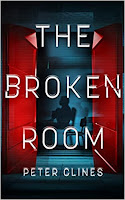
Actually, before I talk about next time—if you happen to be of the reviewing type and have access to NetGalley, my new novel The Broken Room is now there and can be requested. For the rest of you... holy crap, only eighteen more days!

Anyway, next time let’s talk about... the unknown.

(cue spooky music)

Until then, go write.

Tuesday, February 1, 2022

Who's Driving This Thing

Wow, talk about running late. All of January with no posts. Sorry about that. Start of the year and I’m already struggling for stuff to talk about.

Well, that’s not true. There’s a lot of stuff I’d like to blather on about, but I sometimes worry that I’m not really up to the task. There’ve actually been a few topics I’ve set aside when I realized I couldn’t quite articulate the ideas I wanted to get across. I don’t want to try to explain something, do a poor job one way or another, and actually make things worse for anybody. “I’m not sure if he was serious about that whole ‘mellonballer’ thing but what the hell, I’ll try anything if it gets my foot in the door.”

Another way to look at it is I’m worried the decisions I make here might have a negative effect on you out there. I mean, the goal is to have an effect, yeah, but hopefully not one that has you tossing your laptop or burning your idea notebook. I’m hoping this’ll be an overall encouraging, educational place, and my actions will help you out.

And this, if you didn’t guess, is my clumsy lead-in to this week’s topic.

I’ve talked several times here about the idea of plot and story and how the two bounce off each other. Really simply put, plot is what happens outside my character, story is what happens inside my character. Plot forces my characters to make decisions and adapt. Story is that growth and change, and how it leads them to make different decisions and take different actions. Which then, in turn, affects how the plot progresses. Makes sense?

Personally, I think this is really helpful to have in mind when people start arguing about plot-driven vs. story-driven narratives (I’m using narrative here to avoid the confusion of using story vs.story). If I’m not having this back and forth—if plot isn’t driving story which is driving plot which is driving story—then what is making things happen?

Consider what we usually think of as “character-driven” narratives. If there’s isn’t some outside influence forcing them to adapt and change... way are they changing? Truth is, without outside pressure most of us tend to just sort of stay the course. We need a little nudge or maybe a hard shove to get us out of our ruts, and it’s not really possible to shove yourself. Sure people make random decisions sometimes, but if somebody in my narrative does something wildly out of character... well, I mean it’s clear that decision didn’t come from inside the character, right? So if they decide to change without any sort of outside influence—without a plot—where are the decisions coming from?

Well, they’re coming from the writer. I mean, yeah, the narrative always comes from the writer. But in this case it’s coming directly from them without bothering to guide that motivation through a plot.

Another point worth mentioning—an all-too-typical thing in character driven narratives is when what little plot there is comes to a dead crashing halt for twenty or thirty pages so someone can reminisce and/or lament about... well, something that has absolutely nothing to do with the plot. And they can do this because there’s no actual outside stimulus, nothing urging them into some sort of action. Yeah, the bank’s foreclosing on the farm, the tractor broke down, the dog’s gone missing, mom has cancer, but let me tell you about that time Lizzie Metcalfe invited me to the school dance and I turned her down. Y’know... that’s always gnawed at me. Especially right now, with all of this going on. I mean, isn’t life just one big school dance when you really think about it...?

No? Okay, well, never mind...

When the plot bends or twists to shape itself around my character, it doesn’t feel like anything outside of my character has any real agency, does it? Yeah, my protagonist should have agency, but so should my antagonist. And the bank manager and the waiter and the maitre’d. They’re not there just to give my protagonist more dramatic meat to chew. All of them should be acting or reacting like real people would, not in a way that just lets the character continue working through whatever issues or problems they’re dealing with (or not dealing with) at their own pace.

So we need a plot. We need forces outside of our character, things affecting them and driving them to change. Often at a pace or in a way they don’t like.
And this brings us to the flipside, the so-called plot-driven story. Which is kind of silly because, again, pretty much every good story is going to have a plot, and that plot will lead to changes in the story. Like we’ve been saying.

Plot driven stories are all exterior. We don’t really get to know the characters or their inner needs. Everyone tends to respond to things in very basic, shallow ways. Good people do good things, bad people do bad things, cowardly people do cowardly things, and yes, Benedict McTraitorson did stab our hero in the back. We see a lot of stereotypes (or archetypes, if you prefer) in these kind of stories, not fleshed out past a few obligatory descriptions (“No, she’s different because she’s got
red hair and wears hiking boots...”)

I think another big clue for a plot-driven story is that people rarely have any real choices. The ongoing, dynamic plot gives the illusion of choices being made, but really the characters are just sort of getting carried along for the ride. If people are shooting wildly in my direction and I run away... I mean, this isn’t me really choosing to do anything. It’s an automatic reaction for 99.9% of all people. Yeah, sure, we can argue about what constitutes a choice in the same way some people might nitpick about what counts as action, but at the end of the day we want to believe characters are actually having some effect on the world around them.

One other, slightly less common thing... I’ve noticed plot driven stories often (not always, but often) have hyper-capable characters. They have a flawless plan and even if it somehow goes south they’re so well-trained and prepared they’ll figure something out on the fly. Because they never fail and nothing rattles them in any way, they don't have to make any hard choices (see above) or suffer any sort of repercussions. Which means they never have to grow or change as characters. Again, nothing interior, all exterior.

Is this helpful? Hopefully most of you see why it’s kind of important I have both plot and story in my narrative. And this is the kind of stuff of stuff I want to keep in mind while I’m writing (or maybe outlining) my story. Has this introspective monologue brought things to a halt? Are events making my character grow or change in any way? If we don’t have both of these things going on

Think of it this way. Plot and Story are playing an exhibition game of ping-pong. They’re knocking the ball back and forth and back and forth. How Plot serves is going to shape how Story returns, and that return is going to effect how Plot hits the ball back, and so on, and so forth. If one of them stops doing anything (or just walks away altogether) the game’s going to get boring really fast. Oh, sure, watching Story bounce the ball on his paddle might be interesting for a minute or two, maybe watching them swat it against the far wall like a racquetball. But ultimately we showed up to watch these two play against each other, not, well... play with themselves.

Although here’s another name for that which also fits well here.

Next time, I’d like to talk about how long this takes.

The writing, not the playing with yourself bit.

Oh, also, shamelessly, we’re exactly four weeks out from the release of The Broken Room. If you want to preorder it from your favorite local bookstore I’d greatly appreciate it. Preorders mean you get the book as quickly as possible while also telling the publisher they made a good choice picking up said author’s books. So if you can... well, I’d appreciate it.

And next time, how long this takes.

Until then, go write.

Wednesday, January 5, 2022

A New Year? Let’s Start With...

Welcome back. Glad to see you all successfully made the transition to 2021. Crap, I mean 2022. Anyway, for me, it's been new year, new computer. Which really meant two days setting up said computer after two weeks of stressing over a new word processing program.

But that's all in the past now.

Normally I’d post this start-o’-the-year ramble (or any other post) on Thursday. But that’s one of the things I want to change up this year (more on that below). Plus there’s a chance tomorrow might be a little chaotic this year (and that chaos could come in many forms and/or directions), so I figured I’d get this out a little early.

And what is this, you ask?


Well, the ranty blog’s about writing advice. It used to be a lot more ranty, but I’ve tried to mellow out over the years. I always wanted this to be a more positive place for aspiring writers and I’m always trying to bend things that way. Less “don’t do that” and more “try to do this,” if that makes sense? A lot of times I’ll revisit a topic just so I can do it from that angle.

In the past, the majority of the posts were writing advice. Not publishing, but writing as the art of stringing words together into a narrative that will connect with an audience. That was the original point of this, to make up for the lack of basic writing advice out there. But over the past two years, with everything going on, people have asked questions about the business side of things and the greater writing meta-verse, so to speak, and I’ve been trying to help out by answering those.

The ranty blog’s also about a little bit about motivation. Helping you to sit down and get those words out. Maybe suggesting some easier ways to do something. Maybe giving you a little challenge or a tip or a trick to play with when your brain’s stuck on whatever. I’ve tried to do this a few times and a few different ways. For a lot of folks, the biggest, toughest part of writing is actually sitting down and writing, so I’m here to give you the occasional firm kick in the butt. Or a gentle one. Whatever works best for you.

Finally, if I’m doing this right, I’m giving you a little reassurance. There’s so much information flying around out there. We can go looking for it or just get smacked in the face with it on social media. How fast and productive this person is. What a great deal they got. How easy this was for them. It's easy to see something like this and feel like I must be doing something wrong. I mean, if I'm not writing 3000 words a day and I struggle with dialogue and I don't understand structure at all... maybe this just isn't for me? Hell, I only wrote 15,000 words for NaNoWriMo last year, so I must be screwing this up somehow...

If any of this sounds familiar... don't worry about it. Seriously. Hopefully I can convince you you're not wrong, you haven't screwed up, and you should definitely keep at this. Again, everybody approaches this a little differently, and just because somebody's faster or finds this part easier or accomplished that quicker doesn't necessarily mean we need to change how we're doing things.

I suppose at this point it's also fair to say I use this space for self promotion. Not a lot--I don't want to be that guy shoving a book in your face every five minutes--but when the time comes, we do what we need to do. And, y'know, I do have a new book coming out in a few weeks so.... be prepared for that.

(The Broken Room, available this spring at your favorite local bookstore, chain bookstore, or monolithic online retailer)

And if you've made it this far, a couple changes in the weeks ahead. I'm probably going to be posting a bit more... well, erratically. Still at least once a week, but it won't always be on Thursday. That was just kind of an arbitrary day and more than a few times I've felt kind of stuck and that a few things stumbled because of it. So watch for posts, y'know, whenever. Still probably a lot on Thursday, but other days, too.

Also... I may finally be migrating the ranty blog over to my own webpage-- PeterClines.Com . It's just kind of been sitting there for years and I want to get better about keeping it updated and making it somewhere for people to actually visit, y'know. Plus, that way the ranty blog's a little more under my own control and not subject to the whim of some corporation. I'll make sure you all know if it happens.

And I think that's everything. Any questions? Comments? Requests?

Next time I'm probably going to talk about the people driving this thing.

Until then... go write.