Showing posts with label agents. Show all posts

Thursday, December 9, 2021

Two Rights Don't Make...

Jeeez, it’s been so long. You’ve both been very patient.

I got a question a few weeks back about using the world of my books in a game setting. Not, like, a question from Blizzard or Bethesda or something. Just someone running a tabletop campaign who (very graciously) asked my permission to use a bunch of these elements I’ve created in the game they were playing.

And this put me in such an odd spot I didn’t respond to it for a while. The more I thought about the answer, the bigger and more sprawling (and apologetic) it became. And then there was a semi-related question that came up while I was blathering away at the Writer’s Coffeehouse for SDCC, which reminded me I’d never answered it here.

So... let’s talk about rights a little bit. This is one of those terms that doesn’t get discussed a lot. Well, not in the correct way, I think. I’ve seen a couple people get screwed over because they didn’t realize what they were giving up and/or who they were giving it up to.

Also, to be clear, I’m just going to talk about what rights are. If any of you want to talk about how much rights cost or how long they should be held, that’s a different conversation, and not quite relevant to all this. For now, just defining rights and a little bit on how they move around

The easiest way to think of rights is that they’re legal permissions. I’ve created something (for our purposes, a long story of characters and events) and I can give, sell, or rent out (so to speak) all the assorted rights to this story. You’ve probably heard of some like First North American Publishing Rights. This means the person who has those rights is (surprise) the person who gets to legally publish the story for the first time in North America. My agent likes to talk about foreign-language rights a lot—German rights, Spanish rights, Thai rights. That means who gets to tell my story in those languages. And we all love to talk about movie rights, television rights, and action figure rights.
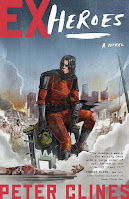
You might’ve chuckled at that last bit, but it’s worth mentioning. The number of rights is pretty much infinite, because there’s a near-infinite number of things that can be done with my story. It can be turned into a hardcover book or a Portuguese eBook. It can be a French stage play or a Russian movie or an episodic Korean podcast with a dozen voice actors. It can be adapted into a comic book or a video game or a line of collectible stickers. It’s sort of like, well, Rule 34. If I can imagine a right, that right exists. Because I own ALL the rights to my work, no matter how bizarre or absurd they are. I still hold all the collectible blind bag phone charm rights to the Ex-Heroes series and you’d better believe nobody’s getting those cheap.

Also, remember when I mentioned renting some of my rights up above? That’s what an option is. If someone can’t afford to buy the rights (or maybe doesn’t want to commit that much at the moment), they may option them. It means they get to act like they own the rights, but there are certain limitations and a very strict time limit.

This is one of the reasons contracts tend to be long. We want to be very specific about what rights the writer’s giving up and what the other party’s getting (and for how long). F’r example, let’s say I’m making a deal with a company for the audiobook rights to a book. If I just say they get all audio rights, there’s a strong argument that I’ve also just included podcasts and live audio streams and maybe even recordings of performances. Yeah, if someone finally decided to make that stage musical of The Eerie Adventures of the Lycanthrope Robinson Crusoe, a good lawyer could argue that those folks couldn’t release an album because this other company has all the audio rights.

So rights get divided up and different groups get permission to do different things with my story. For example (again), right now there’s at least eight entities (probably closer to a dozen, but eight off the top of my head) who all legally have different rights to my book 14. Some have them for a few more months, some have them for years, one has them for more than a decade. And it takes my agent a bit of work to make sure there are no overlaps, or that things are very specific when there are.

Make sense so far?

This brings us back around to that original tabletop game question. Which was, if you remember, about getting permissions. Sound familiar? So this moves us into tricksy legal grounds. Because this is a discussion about gaming rights and also (looking at the original question) streaming rights. And there’s a good chance (in this specific case, a really solid chance) these rights are already tied up. Someone else has them, which means I legally cannot say “yeah, sure, go for it,” because I’m not the person who can give those permissions anymore.
And I know some of you might say “No, no, Pete, this is just a casual game between friends. We don’t need to be this serious about it.” Which I absolutely get. Seriously, I do. Believe me, I used to work stuff from books into my games all the time. But this is one of the weird downsides of our modern world. It’s fairly easy to reach me (or any other creative person you admire), but it puts us in the weird position of having to respond in writing. And we all know what it means when something’s in writing.

Which is why some writers often don’t answer or give a very definitive no when someone asks about things like this. It puts us in a potentially bad position. There’s a lot of deals and contracts out there, lots of rights changing hands, and me (or someone else) putting something in writing that contradicts any of that long contract could be a real headache for me. Or for you. Or maybe for that new deal my agent’s been trying to put together that was going to cover my mortgage this spring. Somebody stumbles across that Twitch channel or YouTube video and suddenly, hey, why are these people saying they’ve got permission to do this? I thought these rights were available?

Which is why a lot of folks—including me—tend to be a bit cold when people message us about this stuff. Because there’s business stuff going on that we might not be able to talk about, but we legally need to respect.

And two quick notes—first, don’t take this to mean you can do whatever you want with someone else’s material as long as you don’t ask. Not what I’m saying here and you know it, so don’t try to use that as justification—to someone else or to yourself.

Second—the simple truth is almost every writer I know loves to hear they inspired people this way. That people want to play in their worlds, literally or figuratively. They’d want you to have that fun. Just because you can’t say anything in writing doesn’t mean you can’t tell them in person (as we creep closer to having public events again).

And that’s some quick facts and thoughts about rights.
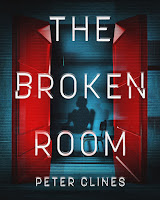
Oh, shameless plus in case you missed it. Yesterday we had a cover reveal for my new book, The Broken Room. Out everywhere in just a little over two months, and I'd really appreciate it if you stopped by your friendly local bookstore and pre-ordered a copy. They'd appreciate it too.

Next time... well, there was another question I got at the Coffeehouse that I’d like to answer a little better than I did there.

Until then, go write.

Seriously, the holidays are coming up and you know you’re probably not getting any writing done then. So write now.

Thursday, July 8, 2021

Dating Profile

I (finally) wanted to step away from the usual process stuff we talk about here—structure, dialogue, characters, editing, and so on—to talk about another important part of the process.

Dating apps.

When we’re looking to find that partner for life—or, y'know, maybe just for the weekend—these apps can be phenomenal. They’re not perfect, no, but they can save a lot of time by, well... weeding out a lot of folks that aren’t going to work for me. For whatever reason. Maybe I have some really firm personal philosophies. Perhaps I know exactly what kind of relationship I’m looking for right now. Maybe, hey, there’s a certain body type I prefer—or one I don’t. Regardless of what my criteria are, whether they’re right or wrong, these apps can help whittle down my prospects to a manageable size by matching me up with the people who meet my requirements.

Except... well...

Okay, look. Clearly there can be basic misunderstandings now and then. She said she likes football, I said “hey, I like football,” but it turns out she meant soccer and okay, well... this was awkward. Sorry I scheduled our first date during the World Cup.

Or maybe it was a little more deliberate. Maybe I realized I get a lot better matches when my profile says I’m six foot even and 179 pounds with a thick head of dark hair. Which, for the record, is a 100% accurate description of me that I’m just using for this example. Except then we finally meet face to face and now I can’t hide that, okay, yeah, I’m closer to 5’9” and 225 pounds (look, lockdown was very stressful) with a silver-gray widow’s peak that’s pulled back a bit over the past decade or so. But I have a great personality and I’m sure... well, it wouldn’t be much of a surprise if the matchee wasn’t too interested when they finally saw me. They might even be justifiably annoyed. I mean, they spent time looking for a good match on this app.

Hell, maybe I’m just going to be kind of obnoxious about it and rationalize away their criteria. Her profile clearly says she doesn’t want short guys and no sci-fi/superhero geeks, but she’s hot, dammit. I’ll just explain to her how short guys are more dependable (in so many ways) and that Star Wars is actually more in the science-fantasy genre, so we should definitely hook up. I mean, that’s what DMs are for, right? To make my case and skip over all those limitations she’s putting out there to weed out other guys exactly like... me.

Anyway, where were we? Oh, right, why the hell are we talking about dating apps on this here writing page? What’s going on?

Well, as I’m sure a lot of you have already figured out, using a dating app is a lot like submitting my work somewhere. It’s trying to find that perfect person who’s looking for what I’m offering. Either a long term partner like an agent or maybe just a quick, one-time thing like placing a short story in a magazine, anthology, or a contest. And I’m going to have my best results with these submissions if I’m being honest. With myself and with them.

Yeah, sure—there’s always going to be the occasional mistake. I might spell someone’s name wrong or misread a requirement. Hell, one time I submitted to a magazine and the editor politely wrote back and pointed out thanks but they’d gone out of print six months earlier. These aren’t a lack of honesty as much as signs I’m maybe rushing things a bit at times and need to slow down a bit.

But I really don’t want to be lying about what my manuscript is. I shouldn’t reformat it to make it hit a certain page count. I don’t want to call it a romance when it’s a thriller with a minor romance subplot. I definitely shouldn’t say it’s got strong religious themes without being clear the “religion” is a doomsday cult trying to summon the old gods to cleanse the Earth.

I especially don’t want to ignore what they’ve specifically said they want. Yeah, they don’t want urban fantasy novels—but they’ll want mine, dammit! All short stories have to be under 7500 words, but once they read mine they’ll understand why it’s 11,000. No explicit violence toward women or animals... but I mean, they just say that to weed out the real weirdoes, right? And I know I’ve mentioned the guy who sent his sex comedy to a Christian values screenplay competition... ?

If I want to make a connection—a serious one that’s going to lead to something, even if it’s only something short term—I need to be honest. I can’t lie about what I’m offering. I can’t ignore what they want. If I do, I can’t blame them when they toss my manuscript in that big pile on the left.

Or, y’know, if they swipe that way.

Next time, I really want to not talk about something.

Until then, go write.

Friday, May 21, 2021

Daily Supplements

I’m going to be honest with all of you. The clown thing isn’t coming together. I’ve got an idea but I haven’t been able to focus on it enough. My attention’s been split a couple of ways with that big pitch document I told you about and a few other things I can’t tell you about (not yet, anyway). Plus, while you’re reading this, there’s a good chance I’m in the twisty line of cars at the Del Mar Fairgrounds while my lovely partner gets her second shot.

Have you gotten your shots? Faster we all get ‘em, the faster we get to an actual herd immunity. Which means faster we get back to Writers Coffeehouses, conventions, book signings, book clubs... all those things where we get to meet face to face. Get vaxxed!

Anyway. No clowns. We’re putting that one on the back burner.

For now, I’ve got another question from Tantilloon, who decided to push their luck and see what other bits of advice I might have. It’s a bit of a submitting/ publishing question... but it also isn’t.

“I've created some drawings, maps, and renderings of things from the story. Do you think these supplemental materials add value when trying to find an agent?”

This is the main question, although Tantilloon also brought up blogs and playlists. And it’s one of those questions that has the answer in it. Which makes it great for me on days like this where I’m a bit behind.

Really, all of this boils down to “supplementary material.” It’s stuff that, well, supplements the work. Stating the obvious, yeah, but it’s one of those things where I think it’s important to make the distinction. Supplemental material, pretty much by definition, is separate material that adds to my work. But it can do this in a couple of different ways...

First off, it’s really common—I’m tempted to say it’s standard—that we create more than we put into a manuscript. We know details about characters that never get used. We write out whole scenes that get cut. We have diagrams in our head showing where and when and how things happen. This is a normal part of the writing process, for all this background material to exist. And, as I mentioned above, for it not to be in the book. But its existence still adds to the book and enhances it.

For example, I scribbled out a bunch of base diagrams for Dead Moon. I knew how the Caretaker bases were laid out. I had three or four diagrams for Luna City—big overall ones and smaller ones that had details for the different streets. And these added to the story because it let me write about Osiris and Luna City as if they were real places.

Which brings me to the second kind of supplemental material. Sometimes this behind the scenes stuff I just mentioned (or other, original stuff) gets used for marketing purposes. Little added bonuses to tease people who haven’t read my book and please those who have. Because I think a lot of folks like seeing that other layer of things. To get a peek behind the curtain, or to get parts of the story from a slightly different point of view. And when it’s so easy to spread things across multiple media... why wouldn’t you? Lots of folks release free short stories involving the settings or characters of their books. Sylvain Neuvel did a fantastic (and very educational!) series of videos about rockets and the space race to promote his latest book, A History of What Comes Next. Hell, I called in a bunch of film favors and created some book trailers for the Ex-Heroes books (about four months before they moved to Broadway Paperbacks). I also made up a side-blog about the Kavach building and its residents for 14. And an early chapter that got cut from Paradox Bound became a digital bonus for a PageHabit promotion.

Important sub-note. If you’re actually a fan of my writing, there’s a good chance you haven’t heard of any of this. This stuff is great, but most of the time getting our bonus material seen takes just as much effort as getting our actual work seen.  Which really means my marketing plans were really more like cautionary tales.

And all of this brings us to the third type of supplemental material. I see... well, I don’t know if I should say “a lot,” but I definitely see a number of folks who view the supplemental stuff as part of the whole storytelling experience. They need this other material to understand the story. The readers will find hidden clues to the mystery if they check out those two or three blogs, more details in the lyrics from my playlists, and a better understanding of the nuances of my protagonists’ relationship if they sign up for the OnlyFans account I created.

The catch here is that what I’m describing is less a book and more of  a... a multi-media experience. Or cross-platform non-linear narrative. Whatever buzzphrase currently describes this kind of thing. Point is, it’s not a complete, contained book. Not if I have to go here to understand the plot and there to make sense of their motivations and subscribe to that if I want Chapter 16 to make any sense whatsoever.

Y’see, Timmy, complete books are what agents represent and publishers buy. Not most of a book. Not 83% of a book but all the character arcs are right over there on a website I set up. If I’m submitting to an agent or an editor—especially as a first time writer—I need to have a coherent, contained manuscript. If this playlist is necessary to understand something in the book, then it needs to be part of the book.

And if I don’t need it... then it’s probably a marketing tool. Nothing wrong with that, but it means nobody needs to see it until after the book’s found a home somewhere. Maybe not for a while after that, even. Even for an agent, that’s real cart-before-the-horse stuff.  I’m talking about wedding venues and they haven’t even decided if they want to go on a first date.

“But... I mean, come on. Won’t they be glad to know I have a plan to market the book? It has to improve my odds a little!”

Look, think about it this way. A publisher’s either going to have their own plan to market the book (one thought up by their marketing and publicity people), in which case my plan’s very likely irrelevant to them. Or they’re going to be expecting me to take care of all the marketing and publicity myself, in which case it’s still irrelevant to them because I’d be doing it no matter what.

And I feel like I’m babbling now. So to end on a slightly happier note... here’s a picture of my friend Tammy dressed as Stealth for those book trailers I mentioned, They’re still up on YouTube if you go look.

Oh, also--this Sunday at 5:00 (Pacific) I'm doing an online interview with my friend Elena Taylor, talking about writing and publishing and whatever else you might have to ask. It's completely free and open to everyone, just sign up to reserve a space and have your questions at the ready.

Next time, I may have a little worldbuilding tip for you. Or maybe I’ll be answering another question. Only one way to find out...

Until then, go write.

Tuesday, April 20, 2021

A Social Media Question

 Hey, remember when I said if you post questions in the comments I’d try to answer them?

Well, last week, Tantilloon asked,..

“Do you think it's still possible to get a book published without any social media presence? Asking because I finished a manuscript. I'm just opposed to social media in general, so I'm sort of wondering if my book is DOA just because the idea of using something like Facebook is a deal breaker.”

Not word for word, but that was the thrust of their question. And questions get answers!

Okay, I’ve seen variations of this floating around the interwebs for a few years now, and it’s come up once or thrice at the Writers Coffeehouse. Y’know, back in the before-time. When we all met in person.

I’m getting my second shot next week. How about you?

Anyway...

This isn’t an easy yes or no question, but I’ll try my best. As always, this is based off my own experience, but I’m also considering what I know/have seen from other authors, things I’ve bounced off a few agents I know (including my own), and talking with some editors.

First, the answer depends a lot on if we’re talking about fiction or non-fiction. Overall, it definitely helps a non-fiction book if I’ve got a good-sized social media presence. Simple reason why—if I’m writing a non-fiction book, the implication is I’m an expert in some field, and a strong social media following shows that people are interested in my expertise. Yes, it’s possible people are just following me because they’re interested in my novels even though I’m an expert in all behind-the-scenes, non-fiction things related to Rom Spaceknight, but the overall assumption is still going to be that a strong social media presence is a very big plus for a non-fiction book.

So a big following on Facebook, Twitter, Instagram, TikTok, or... I don’t know, is Tumblr even still a thing? A big social media following isn’t strictly necessary for a non-fiction book, but it’s definitely going to help if I’ve got one. And what counts as “big” is going to depend a lot on how niche my book is. If I’m writing a political book intended to reach half the country, I probably want a larger following than if I’ve written a book on, say, the psychology of Rom embodying the sci-fi trope of paranoia vs. trust.

If we’re talking about fiction, this is kind of flipped. Most agents and editors neither require nor expect a big social media following. They don’t. Honest. Because, realistically... why would I have one? I mean, sure, I’ve got family and friends, and maybe a dozen or so people follow me for my insightful takes on Rom, but that’s still only going to add up to what... fifty or sixty people? Those publishing folks are aware that one aspect of being an unknown author is being, well, unknown. Seriously, think about it. If I’m not a known entity, why would I possibly have an online following of a size that could notably affect book sales?

Plus, sad truth is... social media doesn’t sell a lot of books. Either partaking in it or advertising on it. It sells one or two, sure, and it lets the fans I already have know I’ve got a book coming out. But let’s be honest—you and I both get hit with promoted tweets and Facebook ads every day. Well, okay, I deleted my Facebook account over a year ago. Instagram ads, then. Point is... we ignore them most of the time, don’t we? And we ignore that guy who’s always going “Hey, buy my book! Buy my book! Buy MY book! Buy my BOOK! HEY! MY BOOK! BUY IT!”

It’s just not what most of us are on social media for, and publishers know this. Because they’re people too. And their business is selling books.

True story—almost exactly ten years ago Nathan Fillion tweeted a few times how much he loved the Ex-Heroes books. Seriously, he did. I think he had a little under two million followers at the time. So let’s just say a million people saw him say how much he loved the books. One million potential readers.

We barely saw a ripple in sales. The book sold a little more that quarter, but it was selling a little more every quarter. Even with a million sets of eyes, there wasn’t a big spike we could call “the Fillion Effect” or anything like that.

Now, in all fairness—a publisher usually wouldn’t be upset if I did have a few hundred thousand followers and I liked hanging out on social media. It does make getting the word out there a bit easier. But again, it’s not going to affect if they pick up my book or not, because it’s not really going to sell a lot of books.

And if it does affect how a publisher's looking at my book... that’s a little bit of a red flag, in my opinion. If they're that concerned with my social media, it might be a sign they’re expecting me to do all the marketing and publicity. And since social media doesn’t sell books (see above), that’s not really a winning strategy.

So, no. Absolute not necessary to have a social media account.

Now, let me toss out one last bit of advice that kind of applies either way...

Social media is about, well, being social. Honest interaction. When people interact with me on Twitter or Instagram or whatever’s coming next, they’re expecting to interact with me. Not my assistant. Not my sales plan (as mentioned above). Not my month of pre-scheduled posts. They just want a sense of... me. That’s why most of my Twitter and Instagram is about interacting with friends, toys, cats, and B-movies. Occasionally some tabletop games or politics (if I’m especially frustrated by something). And most people seem to like it. That’s just who I am, and I enjoy sharing the stuff I'm interested in and/or love. I’ve got friends who put up pet pics, some who play random games, some who like taking weird photos of the world or themselves. It’s whatever you enjoy doing, because that honest enjoyment shines through.

If someone’s not really into social media, if they don’t want to deal with that interaction or whatever level of responsibility they think it needs to be... fine. Don’t do it. Seriously. People will sense that insincerity, that I see this more as an obligation than an honest interaction. And they won’t be that into it. Better to honestly not be on social media than be on it in a dishonest, disinterested way.

One last thing, which ties back to that insincerity. Let’s say I decide I don’t want to leave anything to chance. If a big follower count only increases my odds of getting picked up by 0.83%, I’ll still take what I can get! In this scenario, it might be tempting to do a lot of things in an attempt to artificially boost my follower count. Following back everyone who follows me, for example, trying to jump on whatever trend I can, or maybe even paying for likes and followers.

Editors and agents can spot this stuff just like you and I can. Again, they’re people. A lot of them have social media accounts of their own. And if they see I’ve got 50,000 followers but I’m following 49,892 people... well, they’re going to have a good sense of how wide my reach really is.

But again... it doesn’t really matter for a fiction book.

Anyway... regular post on Thursday. Clowns and true love. See you then.

Thursday, October 31, 2019

Ultimate NaNoWriMo Tip

Hey! I know it’s the day of costumes and candy, scary movies and fun photos, and all that sort of stuff. Writing’s probably the last thing on your mind right now. Heck, it might be sometime Friday afternoon when you read this.

Which, oddly enough, is what I wanted to talk about real quick.

As some of you are probably aware, Friday’s also the first day of November, which means it’s the first day of National Novel Writing Month.  People sit down at their keyboard, scoop up a legal pad, put a new sheet of paper in their old vintage typewriter, jam that USB16 plug into the hexadecimal cerebral port behind your left ear, and try to get an entire novel written—start to finish—in just 30 days.

Are you one of said people? Maybe you have been in the past. Maybe this is your first time. It’s my first time. Yeah, I’m going to try to get my current work in progress finished this month. Granted, I’m about 25K into it already, but my hope is to hit at least 100K this month. Yeah, even with the parents coming out for Thanksgiving.

(this will also be my convenient excuse later)

Anyway, lots of people are tossing out NaNoWriMo tips right now and I wanted to offer my own good news/bad news advice for you. More of  a mindset thing. I know it helped me a lot when I finally figured it out.

The bad news is this isn’t going to be a book. Not even close. See, the name NaNoWriMo is kinda deceptive, because we’re not really going to be writing a novel this month. We’re writing the first draft of a novel. Just a first draft. And, as we’ve discussed here a few times, there’s a big difference between a first draft and a polished, completed manuscript. 

And really, we’re writing a rushed first draft.  It’s going to have plot holes and dropped threads and factual errors and punctuation mistakes and typos.  Sooooooo many typos.  Incredibly embarrassing ones. It absolutely will, trust me.  Having a finished first draft is a fantastic starting point, but it’s going to need a lot more work after December first. No question about it.

Very sorry if you had any great plans about this finding an agent before Christmas. I’ve actually heard stories about agents who... well, I shouldn’t say they dread the first weeks of December. Or that they all physically cringe when they see “NaNoWriMo” in the introductory paragraph of the cover letter. But I think it’s fair to say they go into these things with a few strong opinions already formed.

Now, the good news is... well, it’s a first draft. We can stop worrying if an agent or an editor is going to like it because they’re never going to see it.  This draft is just for us to do whatever we want with.  I shouldn’t spend a minute second-guessing what those other people will want to see.  They may see later drafts, sure, but what we’re doing right now? This is just a big bowl full of cake batter. It’s got potential, sure, and it’s kinda yummy as is, but the truth is this isn’t even halfway through the process. There’s so much more that needs to happen before it’s ready to serve to anyone.

So forget ‘em.  Right now we can crank up the music and let our imaginations run wild.  We can do whatever we want.  We can tell our story.  We can drop all expectations and inhibitions and just write. Feel free to mess up, to use the wrong word, to make drastic changes, to leave things blank or marked [FIX THIS LATER]. Don’t worry about critics or agents or book covers or any of that

Seriously. NaNoWriMo is about the first draft so be selfish. Make it all about you and what you want to do. This is, as the youths say, the “dance like nobody’s watching” part of the process, so dance your ass off.  Hemingway said write drunk, edit sober, and well... we shouldn’t be doing a lot of editing this month. Let your creativity off the leash, eat nothing but corn chips, drink nothing but whiskey, run naked in the park, and don’t worry about anyone else and what they may think.  Do what you want to do with this one.  Do anything, free of worry or expectation.  Because this is just a first draft.

Also, don’t actually run naked in the park. You’ll probably get arrested, and that’s going to eat up a big chunk of your writing time.  Plus it’ll end up on YouTube and let’s be honest... unless you’re in really good shape that’s not going to help your career, either.

Although these days, who knows. Dad bod is kinda in with some folks.

You know what? If running naked in the park is part of your process, go for it. You do you. Tell the police I said it was okay.

Anyway, that’s my big NaNoWriMo tip for you.

Next time, I’d like to talk about twists. Really, about what happens before them.

Until then, go write.

Thursday, November 1, 2018

NaNoWriMo—FIGHT!!

            Hey!  It’s November.  Like, just barely scraping into November.  By hours.  You’ve probably still got the taste of chocolate in your mouth, don’t you?
            Yes you do.  Don’t lie.
            Anyway, if you’re even a semi-regular reader of this site, you’ve probably heard of a certain November writing event that starts... well, probably right about now, depending what time zone you’re in.  Some of you may have been writing for the past hour or two, fueled by miniature Heath bars and Reese’s cups.  Power to you for starting right at midnight.
            On the off chance this is all new to you, I’m talking about NaNoWriMo.  National Novel Writing Month.  You sit yourself down at the keyboard, scoop up your legal pad, jack in to your hexadecimal cerebral port, and try to get an entire novel done—start to finish—in just thirty days.
            And when you finish, you get...
            Well, bragging rights, basically.  Pride.  A feeling of accomplishment.
            Sounds a bit intimidating, yes?
            It sure as hell is. 
            Don’t get me wrong.  It can be fun, recharge your batteries, stoke the fires, and lots of other clever aphorisms.  But the simple truth is, it’s a huge, exhausting undertaking.  I do this full time, for a living, and the idea of writing an entire book in thirty days makes me feel a bit overwhelmed just thinking about it.
            So here’s four quick thing to keep in mind so you don’t get as intimidated or overwhelmed.

            1) Don’t be Hard on Yourself—this is supposed to be fun.  You’re on a deadline, yes, but it’s a self-imposed deadline with no consequences if it’s missed.  Seriously, relax.  Don’t beat yourself up if you don’t make your daily or weekly word count.  That’s the kind of thing that makes you feel bad about yourself and about your ability as a writer.  It doesn’t help anything, it just makes you enjoy the act of  writing less.
            Push yourself, but don’t pressure yourself.  The big goal here is to improve, so any and every improvement counts.  Have fun and enjoy all the little victories this month.  This is a time when coming in second or third is still a great achievement.

            2) Pace Yourself—nobody wins a marathon by sprinting the entire way.  Trying to fill every single waking moment with writing is going to burn you out quick.  And it’ll show in your work.
            Try to be aware of diminishing returns.  A lot of times when I’m on a deadline, I’ll work late into the night.  Sometimes it goes great, but sometimes... I start to slow down.  My productivity drops.  And eventually it hits a point where I would’ve been better off going to bed two hours ago because I would’ve gotten just as much done in half an hour on a good night’s sleep.
            It’s so friggin’ simplistic, but think of the Tortoise and the Hare. Slow and steady gets the worm and the second mouse gets the cheese.  Something like that.  You get the idea.

            3) Rest and recharge—if the last two pieces of advice got together and had an advice baby, it would be this.  Don’t be scared to step away, just for a little while.  Have a nice meal and maybe a drink.  Go for a walk.  Take a nap.  Take a shower.  No, seriously, take a shower.  You should probably do that before going out—you’ve been sitting there for days typing and you’ve got writer stink on you.  Play a game.  Call a friend.  Curl up with somebody on the couch and watch an episode of Legends of Tomorrow or The Chilling Adventures of Sabrina or something.
            Point is, don’t feel bad about stepping away from the computer for an hour.  You’re trying to get a lot done, yeah, but with that in mind you don’t want to overwork the machine to the point it overheats and seizes up.  Give it time to cool down and refuel.  I’m not saying take a day or three off in the middle of this, but don’t be scared to get up, stretch, and walk away from your computer for an hour.  In the end, it’ll run smoother and faster overall.

            4) This Won’t Sell—no, seriously.  It’s won’t.  Kick that idea right out of your mind and stop worrying about it altogether.  It’s just not going to happen.  You’re worrying about your wedding venue and playlist when you’re not even dating anybody right now.
            The name NaNoWriMo is kinda deceptive, because you’re not really writing a novel this month.  You’re writing the first draft of a novel.  Maybe even just the first draft of a novella.  And there’s a huge difference between a first draft and a polished, completed manuscript.
            Most importantly... nobody’s going to buy a first draft.  No agent’s going to look at it.  No film studio will pre-emptively buy the rights after a prolonged bidding war.
            This draft is for you.  It’s to do whatever you want with.  Don’t spend a second second-guessing what those other people will want.  They’re never going to see this.  They may see the third or fourth draft—and be interested in it—but what you’re doing right now?  This is just a mess of cake batter.  It’s barely halfway through the process.
            So forget them.  Right now, just crank up the music and let your imagination run wild.  Do whatever you want.  Tell your story.  Drop all inhibitions and expectations and just write.

            Keep these things in mind over the next couple days.  Hopefully they’ll make things a little easier for you. Which’ll make the writing a little more enjoyable.
            Next time...
            Well, it’s been a while, so I figured we could talk about characters.  Or, to be more exact, who deserves to be a character in my story.
            Until then... go write.

Monday, November 6, 2017

NaNoWriMo Tip

            Hey, y’know what I realized over the weekend?  It’s NaNoWriMo!  Who’s trying it this year?
            I’ll be honest. I’ve never tried it myself.  By the time I first heard of it, as it was just starting to gain popularity, I’d already been writing professionally for a year or two.  Might’ve even already been writing full time (non-fiction, but still).  For the past eleven years... well, every month’s been about word count for me.
            That doesn’t mean I don’t have some ideas and thoughts on NaNoWriMo.  In fact, a lot.  At this early point in the month, I have one very firm reassurance, and one solid tip.
            Which I shall share with you now.
            First piece of reassurance.  No matter who you are, I can tell you with absolute certainty, you are not going to sell the manuscript you write this month.  No agent will consider it.  No editor will look at it.  It’s just not going to happen.
             HANG ON!  This isn’t a kick-in-the-gut thing.  This is liberating.  It’s freeing.
            I’m not saying nobody will ever buy this book.  But what we’re doing during this month is a first draft.  A rushed first draft at that.  It’s going to have plot holes and factual errors and typos.  It will, trust me.  It’s a fantastic starting point, but it’s going to need more work after November 30th. No question about it.
            Again, this is a good thing.  Stop worrying about if an agent or editor or your significant other is going to like this. They’re never going to see it.  This draft is for you and you alone. Be selfish.  Go crazy.  This is the “dance like nobody’s watching” part of the process.  Let your creativity run wild, eat nothing but chips, drink nothing but whiskey, run naked in the coffeeshop, and don’t worry about anyone else and what they may think.  They can see the second or third draft, maybe, but not this one. Do what you want to do with it.  Do anything.  Because this is just the first draft.
            Okay, don’t actually run naked in the coffeeshop.  Yeah, I know they smile at you a lot there, but they’re paid to be nice to you.  They don’t want to see that. Especially not in a place that sells food.
            Second thing—the solid tip.
            Write.
            That’s it. Just write.
            I know that sounds kind of flip and arrogant, but stop and think for a moment.  Like we just said, this draft isn’t for anyone else.  We’re not going to worry about spelling, research, current hot genres, book advances, any of that. All that matters for this month is getting words on the page.
            Sooooo... get the words on the page.
            In my first drafts, I change character names halfway through.  I snip off plot threads and remind myself to pull them out later. I snip off some characters halfway through, and then jump to the alternate timeline version of the book where I killed them sixty pages ago (like I now know I should’ve done in the first place).  And I can do all this because this is going to get another draft.
            For now, the most important thing is to just write.  Put words on paper or on the screen or on your arm or your friend’s shirt or whatever medium you’ve decided to work in. Stop trying to filter or rein in your creativity and get it all out.
            So for now...
            Go write.

Tuesday, August 16, 2016

In Response To Your Query...

            Hey, a quick bonus post or Writers Coffeehouse folks.  Or any of you who are interested in such things...
            One of our Coffeehouse topics this past weekend was querying agents, and I told the folks there about how I actually got attention from two fairly well-known, high profile agents because I had a good query letter and could talk like a professional in one-on-one meetings. And I thought it might be useful to some folks to have said letter as a rough template.
            Ironically, the book I was querying with was The Suffering Map, my early novel that I use so often here as an example of how not to do things.  Seriously, I use it so often there’s a tag for it.  A big one.  You could figure out a lot of the book  just by reading about all the elements I screwed up in it.
            Anyway...
------------------------
                                                                          May 15th, 2003
                                                                          My Old Address
                                                                          San Diego CA 92116
Name
Agency
Address
New York NY

Ms. ########,

            If you could travel in an instant to anywhere, or any-when, in the world, where would you go?  Now, what if there was a price?  What if each journey submitted you to a nightmare of pain and torture before you arrive, unharmed, without a mark on you, at your destination.  Getting there is not half the fun.  So why would Rob Fable do it a second time?  Or a third?  And what would happen if he got addicted to it?

My novel, THE SUFFERING MAP,  is a suspense/ horror novel that also involves a great deal of mythology, history, and a sprinkling of pop culture.  It's set in my home city of San Diego, and the title refers to a mysterious device, found (well, stolen) by Rob, which allows him to travel while submitting him to the whims of a being called Bareback.  It also brings him into contact with Sondra, who develops an unusual bond with the Suffering Map, and Gulliver, who has his own plans for the mechanism....

        Rob comes to realize the financial potential of the device and travels with it more and more.  When he discovers some of the historical results of using the Suffering Map, though, he finds it isn't that easy to stop using it.  In the end, Rob must come to terms with his addiction to the ancient machine as his friends try to save him and themselves, for Bareback has his own plans, and the power of history is on his side.

            I would like to send you either the full manuscript of The Suffering Map (approximately 120,000 words), or some sample chapters and a synopsis, at your preference.  Please find a SASE enclosed for your convenience.

                                                                          Sincerely,

                                                                          Peter Clines
-----------------------

            So, look at what we’ve got here. First off, it’s short and simple--one page only.  I introduce the four major characters and explain the title.  Also notice that while pretty much the whole thing is talking about the story--this could almost be a back of the book/inside flap description,  I also slip in a bit of humor (okay, maybe he didn’t find the Suffering Map...) and some credentials (I’m not just writing about a city I’ve never been to or visited once).
            I wrap it up with a professional closing.  At the time this particular agent hadn’t set out firm guidelines past “query first,” so I suggested some options, each one showing that I have an understanding of the process.  By offering the full manuscript (with a word count) I’m confirming it’s done, and I have an idea how long such a book should be.  Offering a synopsis implies I either have one ready or know how to prepare one.  And all of that helps show that I’ve got an idea how to use words to convey ideas.  Y'know, like a writer...
            One more thing. The little device of asking questions—good, semi-rhetorical questions—encourages people to consider answers.  So even though I address these questions a bit later (to some degree), I’m still leaving room for the agent to wonder about what the answer is. The Suffering Map, as implied, has a mystery element to it, so questions worked well for me. YMMV.
            However... I hear that "asking rhetorical questions" has been getting used in queries a lot lately, and the device is bordering on gimmicky.  Most agents hate gimmicks, because even though it may be new and clever to me, odds are they've seen it a hundred times.  This week.  Some might just roll their eyes and keep reading, for others it may be a dealbreaker.  So be cautious with gimmicks.  Or something that may be bordering on gimmick-hood.
            And, again, please don’t forget—this is an example of what worked for me. Your individual query letter needs to reflect your book and your skills as a writer, so copying this and making minor tweaks won’t really help.  This is just a guide, so when you’re talking about your book you’ll have a sense of what to say.
            On our regularly-scheduled Thursday post, I wanted to talk about sucker punches.
            Until then, go write.
            And if you’re at that stage... query.

Thursday, June 23, 2016

Rejected by Inspector #12

            If I can shamelessly namedrop a bit,  I heard a great Richard Matheson quote from Jonathan Maberry a while back, which I will now paraphrase as such.
            Writing is the art of telling stories.  Publishing is the business of selling as many copies of that art as possible.
            If you break it down, this collection of rants is probably 98% about writing, maybe 2% about publishing.  This week, if I may, I’d like to step away from the straight writing stuff that I normally do and touch on an issue more on the publishing side of things.
            Nobody here likes getting rejected. Not for an apartment, not for a job, not for a date. Definitely not for our writing.  But that's life. Rejection happens all the time, even to the folks who get considered professionals.  I had a short story rejected from an anthology last year.  I’ve been trying to pitch a book trilogy to my editor for two years now, and he’s just not interested. Heck, my agent’s not even that interested in it.  These things happen.
            I bring this up because there’s a meme, or sometimes an article, that floats around a lot, presenting a bunch of facts that go something like this... 
            “Famous writer X showed their manuscript Y to twenty-three editors before someone bought it.  Not only that, bestselling novel Y2 by famous writer X2 was rejected by forty-two editors. Can you imagine that? Forty-two people passed on Y2?  Ha ha ha, how many of them are kicking themselves now?”
            This list can be ten or fifteen authors/books long, and I see it get used a lot to show how A) I shouldn’t give up hope just because of all my rejections, B) editors don’t know anything, C) the publishing industry is a dinosaur that’s going to die out any day now, just wait and see, or D) all of the above.
            So, at first glance, this list can seem like a really awesome thing. It makes me feel more positive about rejection.  It makes me feel more positive about that stupid editor’s decision.  It validates my feelings about big publishing and their ongoing habit of ignoring my letters.  And this is good, right?
            Thing is, there’s three problems here.  And I think they cause more issues than all this positive affirmation solves.  Y’see, Timmy, this list isn’t as clear-cut as it seems...
            First problem is the false parallel that often gets drawn because of this list.  Carrie was rejected many times and my early book-- The Suffering Map --was rejected many times.  Therefore, logically, my book must be just as good (and just as worthy of being published) as Stephen King’s breakout hit.
            We can all see the flaw there, right?  Just because an editor rejected a good book doesn’t mean all the books they reject are good. Some of them—let’s be honest—some of them are not good.  Some of them are bad.  We can all probably name one or two folks who aren’t as good at writing as they think they are.  And they can probably name two or three folks, too.
            I can freely admit, I’ve had books rejected by agents.  And they deserved to be rejected.  They were awful.  Honestly, in retrospect, I’m kind of ashamed I submitted one of them. 
            The next problem, to be blunt, is that writers don’t always send stories where they’re supposed to go.  Sometimes we get overeager or don’t do all the research we should.  If I’d sent Ex-Heroes to Harlequin, of course they would’ve rejected it. So would the Black Library (a very specific niche press), Razorbill (a young adult press), or Lonely Planet (a travel book publisher).  Getting rejected from these places would be completely understandable, but would it really say anything about the quality of my writing?  Or that editor's ability to recognize good writing?
            So should I consider those when I say that my book’s been rejected half a dozen times?
            Heck, a while back I spoke with a woman online as she lamented that her story had been rejected four times.  Ignoring the fact that four times is nothing, it turned out she’d submitted to four radically different markets.  She’d tried marketing it as young adult, sci-fi, fantasy, and as a horror novel.  Which really meant she’d been rejected once.  Once as a young adult story, once as a sci-fi story, and so on.
            Is that worth calling it quits over?
            Also, there are some writers out there who... well, who can’t take a hint.  They’re the literary equivalent of the guy who thinks if he keeps asking Phoebe out every Friday night, eventually she’ll break down and say yes. When an editor rejects a manuscript... that’s it.  Unless they specifically ask to see it again, I shouldn’t try to sneak it back in their pile six months later. No, not even if I explain that I tweaked three of the chapters. My goal is to convince them I’m a professional, and that’s not how professionals work.  But some people do it anyway, often the folks who tend to do “carpet bomb” submissions of twenty or thirty editors at a time.
            If Phoebe rejects my advances twenty times, is that twenty rejections?  Or is it just one (and I’m really bad at taking a hint)?
            So rejection numbers don’t necessarily tell a complete story.
            Finally, this list implies a really big misconception, something a lot of beginners (or willfully uninformed folks) don’t get.  When they hear that bestselling author Wakko Warner was rejected thirty times, they make the assumption that Wakko sent out the exact same book with the exact same query letter thirty times.  Thirty editors all saw the same book that got published, letter for letter, and every one of them passed on it.
            As someone who’s made those rounds, I’d be willing to bet some serious cash that’s not true.
            After a given number of rejections, a good writer’s going to take note that something isn’t working.  It might be a low number, just two or three.  It might be as high as a dozen.  But only a really deluded person is going to keep doing the exact same thing again and again and expect the results are going to radically change.
          Personally, I’d rewrite my cover letter after every fourth or fifth rejection.  Sometimes it would be to update it with a new sale or credit.  Other times I’d come up with a cleaner, slicker way to get a point across.  All too often, it was to fix the typo that had slipped past three revisions and didn’t get noticed until after I sent things out.   Whatever made me do it, it was rare for more than a handful of editors to get the exact same letter from me.  And  different people interpret those letters different ways
            Not only that, if I was lucky enough to get any sort of feedback... I listened to it.  I didn’t always follow it word for word, but if the people who were in the position to buy my stories offered suggestions, I considered them.  The Suffering Map went through a pretty decent revision halfway through my submissions, and then another one right after I attended the SDSU Writers’ Conference. 
            Out of its dozen or so submissions, I’d guess at least three different versions of it went out under three or four different cover letters.
            So, with all of this in mind...  is it that amazing a particular book was rejected forty-two times? 
            It seems kind of, well, normal, doesn’t it?
            It’s always fantastic to look back at the people who inspired us and how they got their start.  If I want to walk that same path, though, I need to look at that start without any blinders or preconceptions. Which is going to make the path look a lot tougher.
            But it’ll also make it easier to follow.
            Next time...
            I don’t know. Between the ranty blog and the Writers Coffeehouse, it feels like I’ve been going on and on about so many things, it all feels a bit repetitive to me.  Is there an appropriate writing topic anybody’d like to hear me babble on about?
            If not... I’ll put something together...
            Until then, go write.

Thursday, March 12, 2015

Quitters Prosper

            Never say never...
            I wanted to blather on about quitting for a couple of minutes.  There comes a point in many endeavors when you realize you’re not getting ahead.  That all the time, effort, and enthusiasm that’s been expended on this project just isn’t enough. For one reason or another, I didn’t make the cut.  The team picked that skinny kid with the limp and the glasses over me.
            At which point, I need to make a choice.  Do I keep trying to get on this team? Do I continue throwing myself unto the breach?  Forging on despite all odds with the strength of my convictions?
            Or should I give up?
            Honestly?  After working at this writing thing on one level or another for a good chunk of my life...
            I think it’s time to quit.
            If I’ve spent the past decade trying to get any publisher in the world to just look at one of my book manuscripts, and they’re not interested... that’s a sign.  If I’ve spent thousands of dollars on screenwriting classes and books and contests over the past ten or twelve years, but I still don’t even have a toe in the door...I should consider saving my money this year.  When I submit a story to a hundred magazines, journals, and anthologies and get back a hundred rejections... I need to take that hint.
            I should quit.  Cut my losses.  Stop beating my head against the wall, demanding to be recognized, and move on.
            No, hold on.  Don’t leave yet.  Keep reading ‘till the end.
            What I’m getting at ties back to an idea I’ve talked about a few times here.  I need to be able to look at my own work honestly and objectively.  Knowing when to give up on a project is part of that.  After querying a hundred or so reps or editors and not getting a single nibble, I need to consider the fact the problem may not lay with them.  My writing may be perfect, it may be gold, it may be what everyone in America is dying for.  At the moment, though, for one reason or another, it’s not what those specific people—those, dare I say it, gatekeepers—are  looking for.  And, right or wrong,  they’re  the ones who make that decision. 
            Now... here’s that important part.
            I’m not saying I’m going to stop writing altogether.  This doesn’t mean I should never touch a keyboard again or that it’s time for me to forget the big leagues.  It’s just time to sit back and look at what I’ve done and how I’m doing things.  Maybe the problem is the characters.  Maybe it’s dialogue.  Perhaps even something as basic as an overwhelming number of typos.   Heck, it could just be my cover letter.  At the end of the day, something is holding me back, and that needs to stop happening.
            I’ve met people who wrote one novel way back in college and have spent the past twenty years sending it to agent after agent, publisher after publisher.  They haven’t changed a single word since they first set it down on paper.  They haven’t written anything else since (“Why should I write something else nobody’s going to pay me for?”).  They’ve just got that one novel going out again and again and again...
            Same thing in Hollywood.  People write a screenplay over a long weekend, never polish or revise it, but try to use it as a calling card for years.  I know of a guy on the contest circuits who pushed the same script for almost a decade.  He hasn’t done anything else in the meantime, just sent that same script to contest after contest, waiting for fame and fortune as if winning was a lottery and he had to keep playing his lucky numbers.
            Knowing when to quit and move on isn’t a weakness. It’s not a flaw in my approach.  It’s a strength.  It’s the only way I can grow and learn new things, because I won’t get any better if I keep rewriting the same manuscript again and again for decades.  Sometimes you just have to give up on something. 
            It took me almost eleven years to finish my first solid novel, The Suffering Map.  Not an idea, not a work in progress, not something I’ve been poking at.  A complete, polished book manuscript, first page to last page.  Beginning, middle,and end.  Yeah, that’s a long time, but close to a decade of that was the film industry convincing me to go work on screenplays instead.  It probably only took about two years of actual work.
            So, eleven years of on-again-off-again work, and then the querying.  Letter after letter, rejection after rejection.  Go through it again, create a new draft, and then start the letters again.  Some folks asked to see it (one or two of them were powerful, well-placed folks).  Many letters and emails were traded back and forth. 
            In the end, though, after almost a dozen very major revisions, all of them passed on it.  And then I realized, this was done. I’d been working on that book on and off since graduating from college.  It was time to expand my horizons and write something else. 
            And that something was an early draft of a book about a government teleportation project gone wrong.  Which I followed up with a book about superheroes fighting zombies.  And then a few things since then.
            If I’d stayed focused for years on that novel no one wanted to see, though, I wouldn’t’ve done any of it.  I’d still be back there at square one.  And my list of published credits wouldn’t be the size it is now.
            I’m not saying I’ll never go back to The Suffering Map.  Many writers will tell you if your screenplay or novel gets rejected, put it in the drawer and wait a few years.  I’m also not saying it will sell in a heartbeat if I decide to try again in five years.  For now, though, I’ve given up on it. 
            So the next time you’re frustrated by months and months of trying to find a home for your work... stop and really think about it.  Maybe it’s time to move on and try something different.  Something new.
            Because that next thing could be the big thing.
            Next time might be a bit delayed.  Sorry. But when it happens, let’s flip this around.
            Until then... go write.